
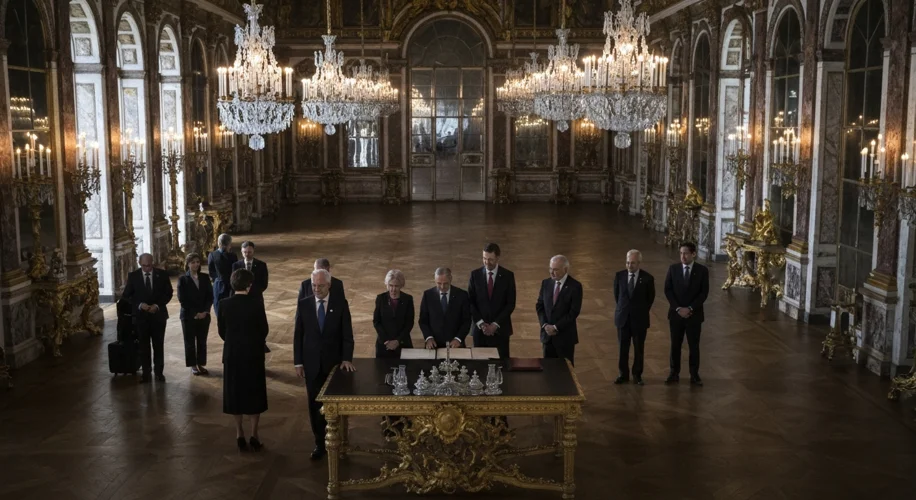
June 28, 1919. The air in the Hall of Mirrors at the Palace of Versailles was thick with a mixture of relief and apprehension. Sunlight, usually a symbol of hope, glinted off the polished surfaces, illuminating the faces of weary diplomats and stern-faced victors. Four years of brutal conflict, unprecedented in its scale and devastation, had finally ground to a halt. The Great War, as it was then known, was officially over. But as the ink dried on the Treaty of Versailles, a new, more insidious conflict was, perhaps unknowingly, just beginning.
Imagine the scene: the opulent grandeur of Versailles, a stark contrast to the muddy, shell-pocked battlefields that had scarred Europe. The victors – primarily France, Britain, and the United States – had gathered to dictate the terms of peace. For France, still reeling from two German invasions in less than fifty years, the desire for security and retribution was paramount. Britain, while also seeking to curb German power, harbored a more pragmatic approach, wary of crippling Germany too severely. And then there was President Woodrow Wilson of the United States, an idealist who envisioned a new world order built on self-determination and collective security, a vision starkly at odds with the continental powers’ more territorial ambitions.
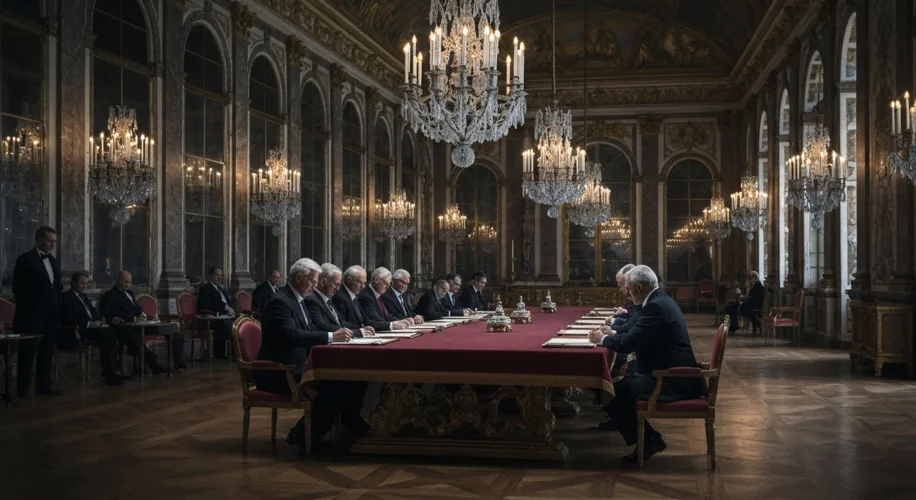
At the heart of the treaty lay Article 231, the infamous “War Guilt Clause.” This declaration, deeply humiliating for Germany, forced the nation to accept sole responsibility for the war. It was a bitter pill to swallow for a people who had endured immense suffering and loss, and who believed they had been drawn into the conflict by a complex web of alliances and political miscalculations, not solely their own aggression.
The terms imposed on Germany were undeniably harsh. Territorial losses were significant: Alsace-Lorraine was returned to France, the Saar Basin was placed under League of Nations control, and large swathes of land were ceded to the newly formed Poland. The German military was drastically reduced – its army limited to 100,000 men, its navy severely curtailed, and its air force and heavy artillery forbidden altogether. The Rhineland, a vital industrial region, was demilitarized, leaving Germany vulnerable. And then came the reparations – a staggering sum that Germany was expected to pay to the Allied nations to cover the costs of the war. The exact figure was not even determined at Versailles, but the implication was clear: Germany was to be bled dry.
The atmosphere within Germany following the treaty’s signing was one of shock and outrage. The democratic Weimar Republic, already struggling to establish itself in the turbulent post-war landscape, was immediately burdened with the pariah status imposed by the treaty. The civilian population, facing economic hardship and a deep sense of betrayal, found it difficult to comprehend how a war they believed had been a defensive struggle had resulted in such punitive terms. This resentment festered, providing fertile ground for extremist ideologies.
Key actors on the German side, such as Foreign Minister Hermann Müller, signed under duress, later describing the experience as a “criminal peace.” The military leadership, though not directly signing, had lost the war and could offer no alternative. The treaty was seen by many Germans not as a resolution, but as an imposed diktat, a “Diktat” that would forever stain their national pride.
The consequences of Versailles were profound and far-reaching. Economically, the reparations crippled Germany, contributing to hyperinflation in the early 1920s and ongoing economic instability. Politically, the treaty delegitimized the Weimar Republic, making it easier for nationalist groups, particularly Adolf Hitler’s Nazi Party, to exploit public anger and promise a return to national greatness. Hitler would later campaign relentlessly on a platform of repudiating the treaty and reclaiming Germany’s lost honor and territory.
Furthermore, the treaty’s emphasis on national borders and the redrawing of maps, while attempting to satisfy self-determination, also created new ethnic tensions and minority issues in Eastern Europe. The League of Nations, envisioned by Wilson as a forum for international cooperation, lacked the enforcement power and the universal membership (the U.S. never joined) to effectively prevent future conflicts.
In hindsight, the Treaty of Versailles stands as a stark lesson in the complexities of peacemaking. While it ended World War I, its punitive nature sowed the seeds of future conflict. It failed to achieve a lasting peace, instead creating a generation of Germans who felt wronged and dispossessed. The treaty’s legacy is a somber reminder that true peace requires not just the cessation of hostilities, but also the establishment of justice, reconciliation, and a shared vision for the future. The echoes of Versailles would reverberate for decades, tragically culminating in another global conflagration just two decades later.
Categories: World History, European History, 20th Century History
Tags: Treaty Of Versailles, World War I, German Resentment, Interwar Period
SEO Title: The Treaty of Versailles: Peace or Prelude to War?
SEO Focus Keyphrase: Treaty of Versailles
SEO Meta Description: Explore the Treaty of Versailles, the treaty that ended WWI but bred resentment and laid groundwork for WWII. Uncover its harsh terms and lasting impact.