
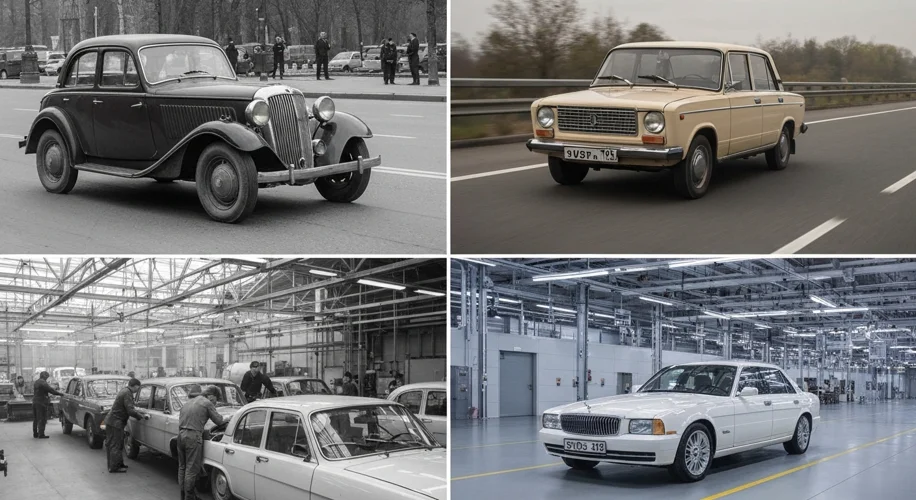
In the vast, often unforgiving landscape of Russia, the automobile was more than just a mode of transport; it was a symbol of progress, a tangible link to the future, and a testament to industrial might. Yet, the journey of the Russian auto industry, particularly through the tumultuous 20th century, is a story etched in steel, fueled by ambition, and ultimately marked by the unpredictable winds of political and economic change.
The seeds of this automotive dream were sown in the early 20th century. While Western Europe and the United States were already embracing the horseless carriage, Russia was playing catch-up. The first stirrings of domestic production began in the 1920s, a period of fervent industrialization under the nascent Soviet regime. The goal was clear: to build a self-sufficient industrial base and to equip the nation with the tools of modernity. Factories like AMO (later ZIL) in Moscow and GAZ (Gorky Automobile Plant) in Nizhny Novgorod became the cradles of this nascent industry.
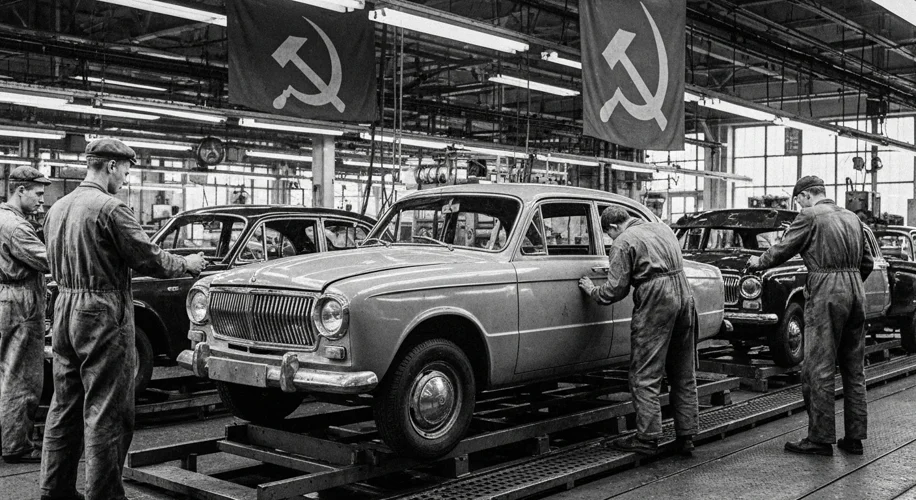
These early ventures were often a mixed bag of innovation and imitation. The GAZ plant, for instance, relied heavily on American expertise, famously partnering with Ford to produce vehicles like the GAZ-A, a Soviet version of the Ford Model A. This reliance on foreign technology was a double-edged sword. It allowed for rapid development and the creation of robust, if somewhat unsophisticated, vehicles. However, it also meant that the industry was vulnerable to external shifts and less inclined towards true indigenous innovation in its formative years.
The Great Patriotic War (World War II) cast a long shadow over all Soviet industry, including automotive manufacturing. Factories were retooled for military production, churning out trucks, armored vehicles, and jeeps essential for the war effort. The resilience and ingenuity of the workers in these factories, often under unimaginable duress, were crucial. After the war, the focus shifted once more to civilian production. The legendary Lada, based on the Italian Fiat 124, emerged in the 1970s and became an icon of Soviet motoring. For many Soviet citizens, owning a Lada was a significant achievement, a symbol of status and a hard-won reward.
The experience of a factory worker during this era, say at the Izhevsk Automobile Plant (Izh), would have been one of predictable routine and a sense of collective purpose. Days were long, the work was physically demanding, and the emphasis was on meeting production quotas dictated by the state’s five-year plans. The quality of the vehicles could be inconsistent, and waiting lists for new cars could stretch for years. Yet, there was a palpable sense of pride in contributing to the nation’s industrial might. The factory was more than just a workplace; it was a community, often providing housing, social services, and a structured life.
The 1980s brought a new set of challenges. The Soviet economy began to stagnate, and its automotive sector, once a symbol of progress, started to show its age. The designs were outdated, the technology lagged behind the West, and the quality control issues persisted. The fall of the Soviet Union in 1991 ushered in a period of unprecedented upheaval and transition. The centrally planned economy was dismantled, and the state-run factories suddenly found themselves adrift in a sea of market capitalism.
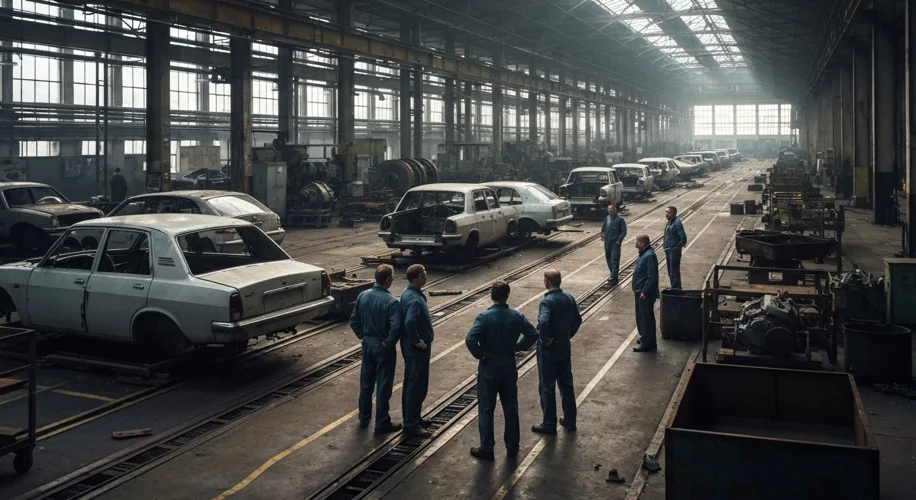
The post-Soviet era, leading up to the year 2000, was a period of crisis and adaptation. Many factories struggled to survive. The demand for their aging models plummeted as cheaper, more modern imported cars flooded the market. Some factories, like GAZ, managed to secure foreign partnerships, notably with Volkswagen, to modernize their production lines and introduce new models. Others, like ZIL, faced a slow decline, their grandeur fading as their once-essential products became obsolete.
Workers found themselves facing layoffs, wage arrears, and an uncertain future. The sense of job security and collective identity that the state-run system provided evaporated. Yet, amidst the economic hardship, a spirit of entrepreneurship and resilience emerged. Small workshops sprung up, attempting to repair and recondition imported vehicles, or to create aftermarket parts. The demand for affordable, reliable transportation remained, and individuals and businesses adapted to the new reality.
The story of Russia’s automotive industry before 2000 is a microcosm of the nation’s tumultuous journey. It reflects the ambitions of the Soviet era, the sacrifices made during wartime, the iconic status of domestically produced vehicles, and the profound, often painful, transition to a new economic system. It is a narrative of steel and sweat, of innovation and imitation, and of the enduring human spirit that continued to build and drive, even as the ground beneath them shifted.