
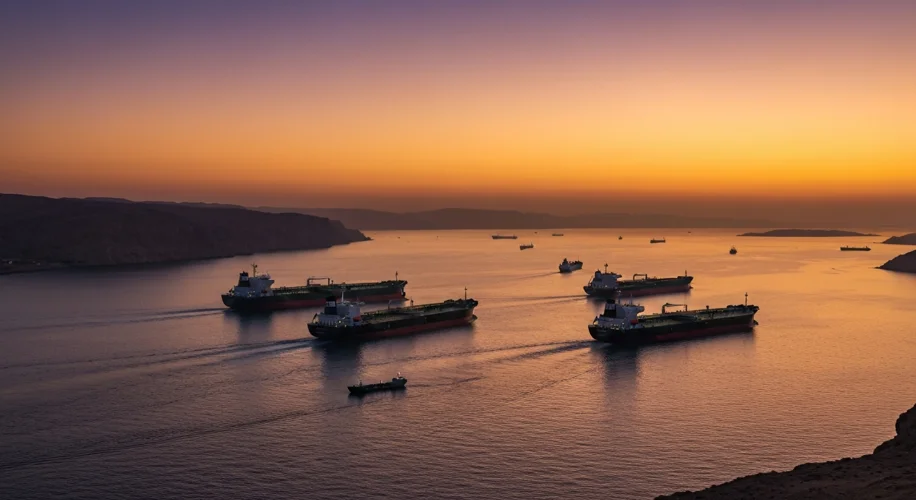
Imagine a slender ribbon of water, no more than 21 miles wide at its narrowest point, yet holding the power to dictate the flow of global commerce and ignite international tensions. This is the Strait of Hormuz, a maritime artery so vital that control over it has been a perennial flashpoint for centuries, particularly concerning the world’s insatiable appetite for oil.
For millennia, this strategic waterway, nestled between Iran and Oman, has been a crossroads of civilizations. Ancient mariners navigated its currents, trading precious goods between the Persian Gulf and the Indian Ocean. Empires rose and fell, their fortunes often tied to their ability to control these vital sea lanes. From the Silk Road traders seeking passage to the Arab empires safeguarding their riches, the Strait has always been more than just a geographical feature; it has been a crucible of power and a gateway to prosperity.
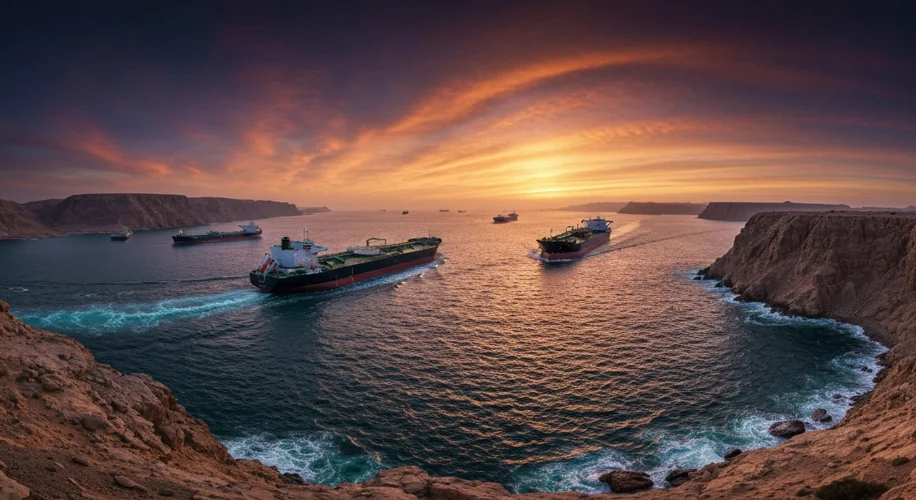
But it is the modern era, with its dependence on fossil fuels, that has elevated the Strait of Hormuz to its current geopolitical significance. Today, an astonishing one-third of the world’s seaborne oil trade, and a significant portion of global liquefied natural gas (LNG) shipments, traverse this narrow passage. Major oil-producing nations of the Middle East, including Saudi Arabia, Iran, Iraq, and the United Arab Emirates, rely on the Strait to export their precious commodity to markets across the globe. For countries like China, Japan, India, and South Korea, a disruption here could mean economic paralysis.
The cultural backdrop to these geopolitical machims is one of ancient rivalries, shifting alliances, and a complex web of regional and global interests. The Strait is a physical manifestation of the broader tensions in the Persian Gulf, a region shaped by religious divides, political ambitions, and the enduring legacy of colonialism. The presence of major global powers, particularly the United States with its naval presence, seeking to ensure freedom of navigation and oil flow, further complicates the delicate balance.
The historical narrative of the Strait of Hormuz is punctuated by moments of intense drama and near-catastrophe. The Iran-Iraq War in the 1980s, for instance, saw the waters become a deadly battleground. This period, known as the Tanker War, witnessed brutal attacks on commercial shipping, naval clashes, and the very real threat of the Strait being choked off entirely. The scars of this conflict serve as a stark reminder of the human cost when this vital waterway becomes a theater of war.
More recently, tensions have flared between Iran and the United States, with Iran periodically threatening to disrupt shipping as a response to sanctions or political pressure. These threats, often accompanied by naval exercises or the seizure of vessels, send ripples through global energy markets, causing oil prices to spike and international diplomatic efforts to intensify. The potential for miscalculation or escalation is ever-present, transforming this narrow strait into a global powder keg.
The consequences of any disruption are immense. Beyond the immediate economic impact of soaring oil prices, a prolonged closure would trigger a global recession, disrupt supply chains, and could potentially lead to wider military conflict. The very stability of nations, both in the region and across the world, hinges on the unimpeded flow of commerce through this critical chokepoint.
Analyzing the Strait of Hormuz reveals a complex interplay of strategic geography, economic necessity, and political will. Its narrow confines amplify the stakes, making it a constant focal point for international diplomacy and, at times, military posturing. The world watches, often with bated breath, as events unfold in this vital waterway, understanding that its calm passage is intrinsically linked to global peace and prosperity. The Strait of Hormuz remains a stark testament to how a seemingly small geographical feature can wield immense power on the global stage, a reminder that the currents of history, like the waters themselves, are constantly shifting and can carry both immense promise and profound peril.