
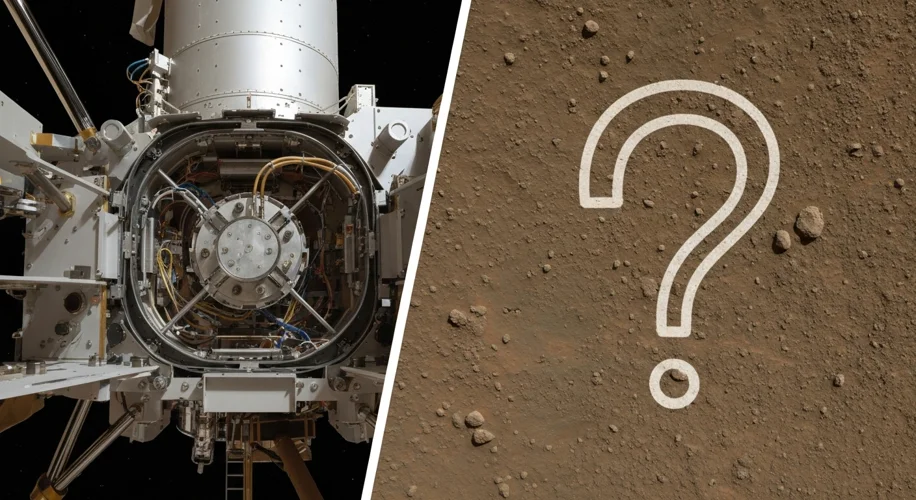
Fifty years ago, on a crisp autumn day in 1975, a new chapter in humanity’s quest to understand its place in the cosmos began. NASA launched two ambitious spacecraft, Viking 1 and Viking 2, on a singular mission: to land on Mars and search for the tantalizing possibility of life.
These weren’t just any probes; they were the culmination of years of pioneering work, representing humanity’s first concerted effort to truly explore the Martian surface up close. The world watched with bated breath as these metal emissaries hurtled through the void, carrying with them the hopes and dreams of a planet eager to know if we were truly alone.
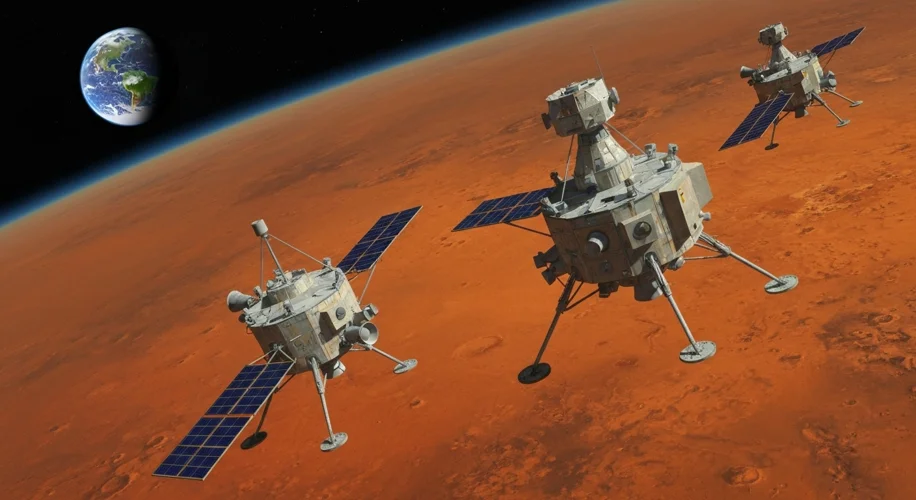
Launched in August and September 1975, the Viking program was a marvel of engineering. Each mission consisted of an orbiter, which mapped the Martian surface from above, and a lander, designed to descend through the thin atmosphere and touch down on the alien soil. The orbiters provided stunning, high-resolution images of Mars, revealing a world of vast canyons, towering volcanoes, and polar ice caps – a landscape both familiar and profoundly alien.
But the true heart of the Viking missions lay in their landers. Equipped with robotic arms, cameras, and a suite of sophisticated scientific instruments, they were tasked with a question that has captivated humanity for centuries: Is there life on Mars?
The landers touched down in July and September 1976, on the plains of Chryse Planitia and Utopia Planitia respectively. For the first time, humans were seeing Mars not as a distant red point of light, but as a tangible, albeit desolate, place. The images transmitted back were breathtaking – a panorama of reddish-brown soil, rocks, and a dusty pink sky. It was a stark, beautiful, and seemingly lifeless world.
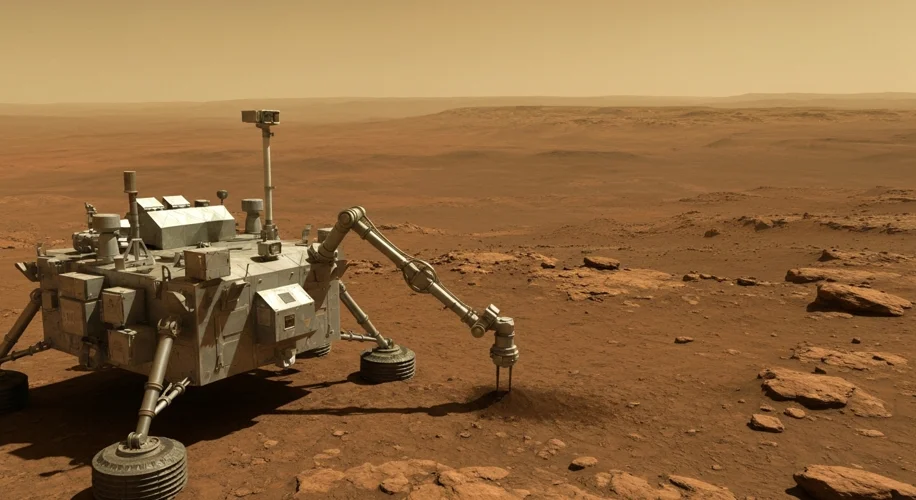
The most anticipated part of the mission, however, were the biological experiments. The landers carried a miniature biological laboratory designed to detect metabolic activity in Martian soil. Three key experiments were conducted: the Gas Chromatograph Mass Spectrometer (GCMS), the Labeled Release (LR), and the Pyrolytic Release (PR). The GCMS was designed to identify organic molecules, while the LR and PR aimed to detect biological processes by looking for the uptake or release of gases.
When the results came in, they were, to say the least, perplexing. The GCMS found no significant organic compounds in the Martian soil. However, the LR experiment yielded a positive result, detecting the release of gases that suggested metabolic activity. The PR experiment also showed some signs of biological activity, though less conclusive. The data was a tantalizing paradox: no organic molecules, yet signs of life?
Scientists were divided. Some argued that the positive results from the LR and PR experiments were indeed evidence of microbial life, perhaps in a dormant state, that had been stimulated by the nutrient-rich water added during the experiment. Others proposed that the results could be explained by unusual, non-biological chemical reactions occurring in the Martian soil, possibly due to the presence of highly reactive chemicals like perchlorates, which were later confirmed by later missions.
The debate raged for years, fueled by the ambiguity of the data. Viking had not provided a definitive “yes” or “no” to the question of life on Mars. Instead, it offered a complex riddle, a scientific enigma that would continue to be analyzed and re-analyzed for decades to come.
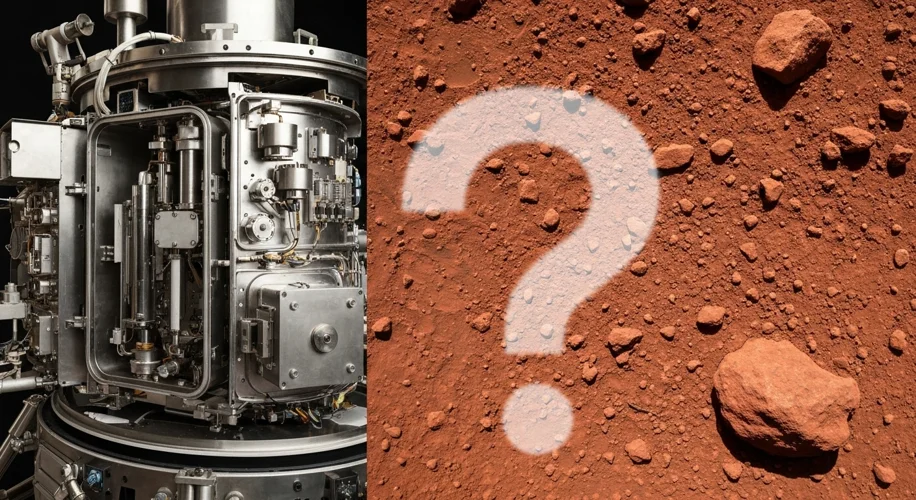
The legacy of the Viking missions is profound. They provided an unprecedented understanding of the Martian environment, paving the way for future explorations. More importantly, they ignited a scientific and public fascination with the search for extraterrestrial life that continues to this day. The unresolved question of the Viking biology experiments spurred the development of more advanced instruments and more sophisticated experimental designs for subsequent Mars missions, such as the Mars Pathfinder, Spirit, Opportunity, Curiosity, and Perseverance rovers.
Today, as we stand on the cusp of potentially sending humans back to the Red Planet, the whispers from those early Viking landers still echo. The data they collected, the images they sent, and the profound questions they raised continue to shape our understanding of Mars and our place in the universe. The Martian enigma, first probed by Viking half a century ago, remains one of science’s most compelling mysteries, a testament to the enduring human drive to explore the unknown and to seek answers among the stars.