
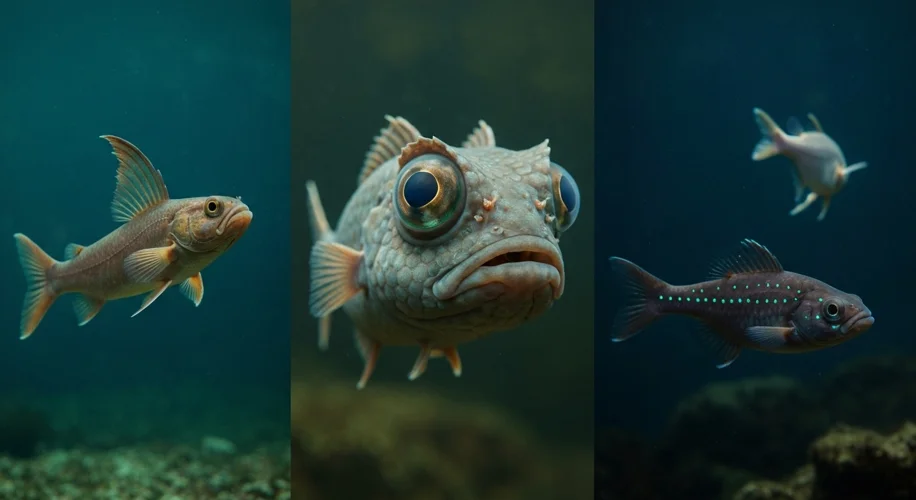
For centuries, the deep, dark waters of our planet have held their secrets close, cradling creatures that seem to have swum directly from a bygone era. These are the ‘living fossils,’ organisms whose forms have remained remarkably unchanged for millions of years, offering us tantalizing glimpses into prehistoric life. Now, the veil has been lifted once more, revealing not just one, but multiple new species of these ancient fish, hidden in plain sight for over 150 years.
The story of discovery is often one of patience, keen observation, and sometimes, a touch of sheer serendipity. Imagine the scientific community in the mid-19th century, a period brimming with exploration and the fervent desire to classify the natural world. Linnaeus had laid the groundwork, Darwin was formulating his revolutionary theories, and expeditions were charting the globe, bringing back wonders previously unimagined.
In this era of burgeoning biological inquiry, many of the planet’s remarkable fish species were cataloged. Yet, the ocean depths, with their immense pressure and perpetual darkness, remained largely an enigma. It was during this period of intense scientific activity that a particular group of fish, belonging to a lineage thought to be well-understood, was being observed and documented. However, subtle differences, overlooked or perhaps not fully appreciated at the time, were waiting to be unveiled by future generations.
The newly identified species belong to ancient families, fish whose ancestors swam in the Devonian seas, a time when the first vertebrates ventured onto land. These are not mere variations; they represent distinct branches on the tree of life, species that have followed their own evolutionary paths, diverging significantly from their known relatives while retaining the characteristic ‘fossil’ appearance. This appearance is a testament to their evolutionary success – their body plans were so well-suited to their environment that they required little alteration over vast stretches of time.
Consider the coelacanth, perhaps the most famous living fossil. Discovered in 1938, it was thought to be extinct for 66 million years, a relic of the dinosaur age. Its re-emergence sent shockwaves through the scientific world, proving that life could persist, hidden and waiting, for eons. The newly discovered species, while perhaps not as dramatically absent from scientific records as the coelacanth, represent a similar triumph of discovery.
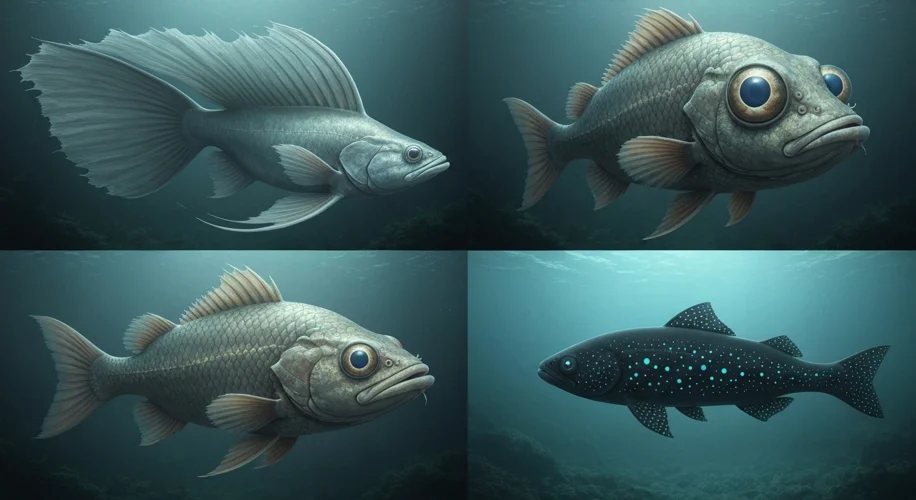
The process of identifying these new species was meticulous. Researchers, armed with advanced genetic sequencing technology and a deeper understanding of fish morphology, revisited museum collections, specimens collected over a century ago. They analyzed anatomical details, compared genetic material, and found that what were once considered mere variations within known species were, in fact, distinct evolutionary lineages. Each new species represents a unique chapter in the ongoing story of life on Earth.
The implications of this discovery are profound. Firstly, it underscores how much we still have to learn about our own planet. Even in the age of satellites and deep-sea submersibles, vast ecosystems remain largely unexplored, and countless species likely await discovery. Secondly, these findings provide invaluable data for evolutionary biologists. By studying these ‘living fossils,’ scientists can gain insights into the genetic and developmental processes that allow certain traits to be conserved over immense periods. They can also learn more about the environmental conditions that favored these ancient forms and the pressures that led to the diversification of other lineages.
The longevity of these species is a narrative in itself. It speaks to their adaptability, their ability to thrive in specific ecological niches, and perhaps, their avoidance of major extinction events that wiped out their contemporaries. They are living testaments to the power of natural selection and the resilience of life.
This revelation is more than just a biological curiosity; it’s a profound reminder of the deep history embedded in the natural world around us. These newly identified species, having navigated the currents of time for over 150 years unrecognized, now emerge from the shadows, inviting us to look closer, to appreciate the enduring marvels of evolution, and to continue our quest to understand the planet we call home.