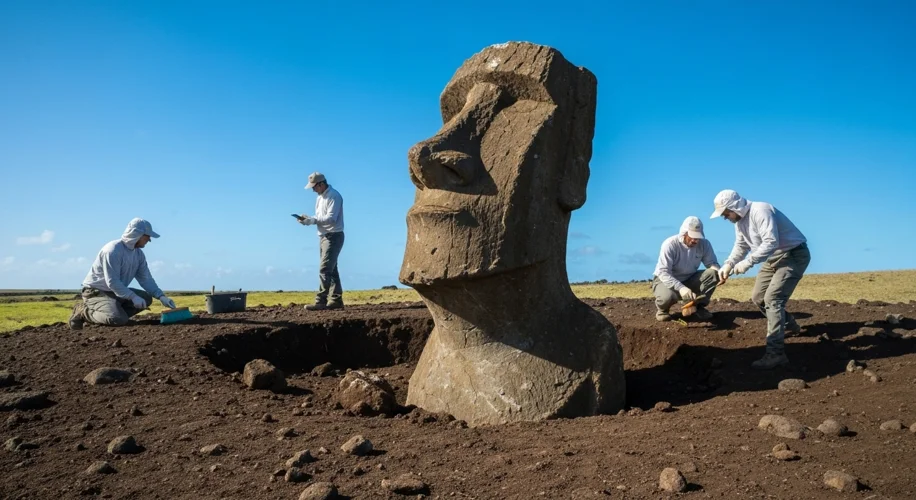
The windswept shores of Rapa Nui, often called Easter Island, are no strangers to secrets. For centuries, its enigmatic moai statues, silent sentinels of a lost civilization, have guarded the island’s mysteries. But even these ancient giants can yield new revelations. In a recent breakthrough, archaeologists have unearthed a previously unknown moai, a monumental discovery that promises to deepen our understanding of the Rapa Nui people and the enduring challenges of preserving their priceless heritage.
The island, a speck of land in the vast Pacific, holds a captivating history. Settled by Polynesian voyagers around 1200 AD, Rapa Nui developed a unique and sophisticated culture, famously creating the colossal moai statues. These stone figures, carved from volcanic tuff, represent deified ancestors and were central to the Rapa Nui spiritual and social life. They were moved across the island, a feat of engineering and human effort that continues to astound researchers.
This latest discovery, made in August 2025, has sent ripples of excitement through the archaeological community and the Rapa Nui people themselves. The statue, partially buried and remarkably intact, was found during routine monitoring and conservation work near the Rano Raraku quarry, the birthplace of most moai. Its existence had been hinted at in oral traditions, but its physical unearthing marks a significant moment.
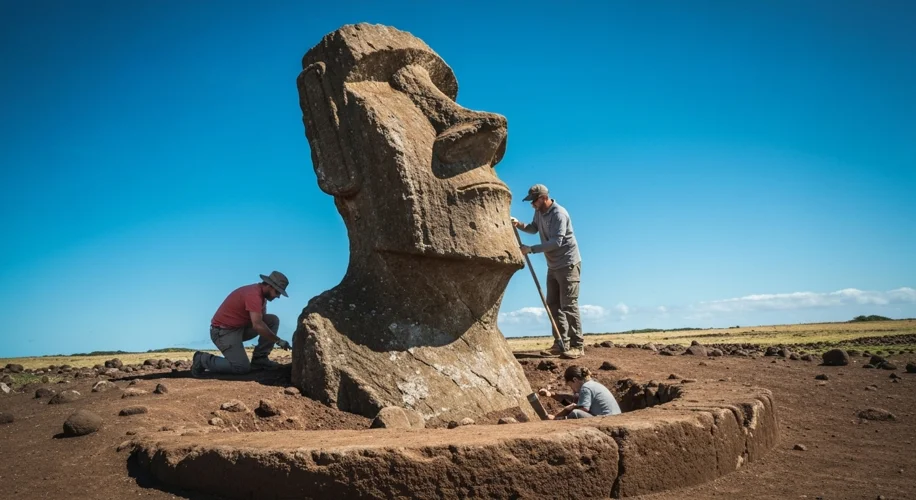
The significance of this find extends far beyond its mere presence. Preliminary analysis suggests the statue may offer new insights into the carving techniques, artistic styles, and possibly even the specific individuals or lineage groups honored by the Rapa Nui. Dr. Elena Petrova, a leading archaeologist on the project, shared her initial thoughts: “Every new moai is a chapter in Rapa Nui’s story. This one, being previously unknown, is like finding a lost volume. We are eager to learn what it can tell us about the social structures and beliefs of its creators.”
However, the discovery also brings into sharp focus the ongoing battle against the elements and the pressures of tourism that threaten these irreplaceable cultural treasures. Rapa Nui faces constant challenges: erosion from wind and rain, seismic activity, and the delicate balance of allowing visitors access while protecting the fragile archaeological sites. The newly discovered moai, like its brethren, will require careful study and meticulous conservation efforts.
“The very act of uncovering it is a delicate process,” explained Mateo Haoa, a Rapa Nui cultural heritage guardian. “We are not just digging up stone; we are awakening a powerful ancestor. Our responsibility is immense, to ensure its story is told respectfully and that it remains protected for generations to come.”
The story of the Rapa Nui people is one of remarkable ingenuity, deep spiritual connection to their land, and ultimately, a cautionary tale about resource management and societal transformation. The island experienced significant environmental changes and social upheaval in its pre-European contact history. The moai, once symbols of power and connection, eventually became a focal point of inter-clan conflict as resources dwindled. Understanding the context of each moai, including this newly found one, helps us piece together the complex tapestry of their past.
This latest unearthing is more than just an archaeological event; it is a living connection to the past, a testament to the enduring spirit of the Rapa Nui people, and a powerful reminder of the fragility of history. As the meticulous work of excavation and study continues, the world waits with bated breath to hear the new whispers from the stones of Rapa Nui.