
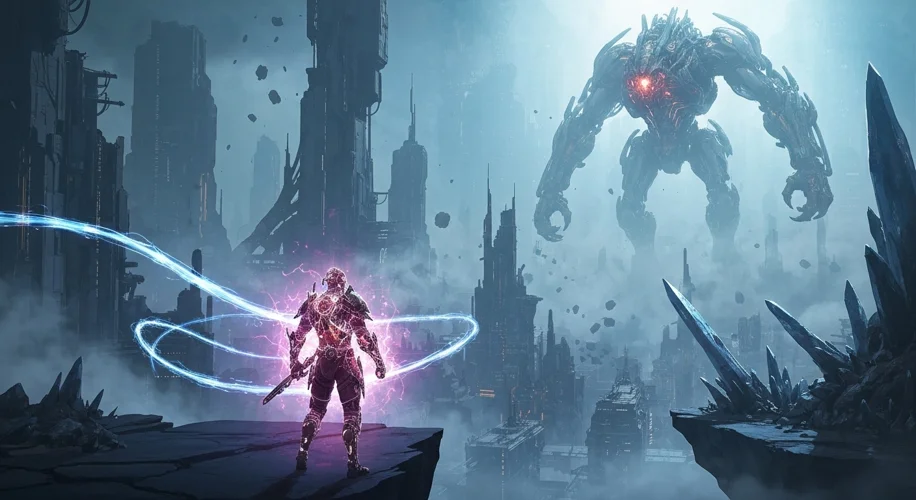
Today, September 9th, 2025, will forever be etched in the annals of gaming history not for the anticipated release of “Hollow Knight: Silksong,” but for the seismic, unexpected arrival of Atari’s “Quantum Echo.” In a move that blindsided critics and fans alike, the venerable Atari, a name synonymous with the dawn of the video game era, dropped a challenging, intricate Metroidvania-style game on the very same day the gaming world held its breath for Team Cherry’s acclaimed sequel.
For decades, Atari had been a name whispered with nostalgia, a titan of the past whose innovations paved the way for the industry we know today. From the iconic “Pong” to the revolutionary Atari 2600, their legacy was secure. Yet, in recent years, the company had largely retreated from the cutting edge, focusing on retro compilations and niche hardware. This made their sudden re-emergence with a title as ambitious and genre-defining as “Quantum Echo” all the more astonishing.
The game itself presented a stark departure from Atari’s recent output. “Quantum Echo” plunged players into the hauntingly beautiful, yet perilous, world of Xylos, a planet fractured by a cosmic cataclysm. Players assume the role of Kaelen, a lone wanderer imbued with the ability to manipulate temporal echoes – fragments of past events that can be replayed to solve puzzles, overcome obstacles, and uncover the planet’s tragic history. The gameplay loop was pure Metroidvania: explore a sprawling, interconnected map, acquire new abilities that unlock previously inaccessible areas, and engage in demanding combat against a menagerie of biomechanical horrors and colossal bosses.
The difficulty was immediately apparent. “Quantum Echo” did not hold your hand. Its combat required precise timing and pattern recognition, demanding that players learn from each death. The platforming segments were equally unforgiving, often requiring millisecond-perfect jumps and dashes. This was not a casual experience; it was a test of endurance, skill, and sheer determination, reminiscent of the challenging gameplay that defined many of Atari’s classic arcade titles.
The narrative, delivered through environmental storytelling and cryptic lore entries, painted a bleak picture of a civilization brought low by its own hubris. Kaelen’s journey was not just a quest for survival, but a descent into the very fabric of time, piecing together the fragmented memories of a lost people. The art style was a masterful blend of decaying futurism and organic, alien landscapes, creating a world that felt both ancient and utterly alien.
While “Hollow Knight: Silksong” was the anticipated darling, “Quantum Echo” quickly carved out its own devoted following. The shared release date created a fascinating dichotomy in the gaming discourse. Discussions weren’t just about which game was better, but about the very nature of surprise and legacy. Could a company long considered a relic of the past produce something so fresh, so challenging, and so engaging?
The impact of “Quantum Echo” on the gaming landscape, though perhaps overshadowed by the immense anticipation for “Silksong,” was significant. It served as a powerful reminder that innovation can come from unexpected quarters. It demonstrated that a legacy brand could still deliver a game with genuine artistic merit and technical prowess. For many, it rekindled a belief in Atari’s potential, suggesting that the spirit of innovation that defined its early years was not extinguished, but merely dormant.
In the grand tapestry of gaming history, the simultaneous release of “Hollow Knight: Silksong” and Atari’s “Quantum Echo” will be remembered as a moment of delightful, improbable collision. It was a day when the established order was challenged not by a new contender with a similar vision, but by a legendary name, returning to the forefront with a formidable, and deeply rewarding, declaration of intent. “Quantum Echo” may not have stolen the spotlight entirely, but it certainly proved that even in the crowded modern gaming scene, a true echo of quality can still resonate powerfully.