
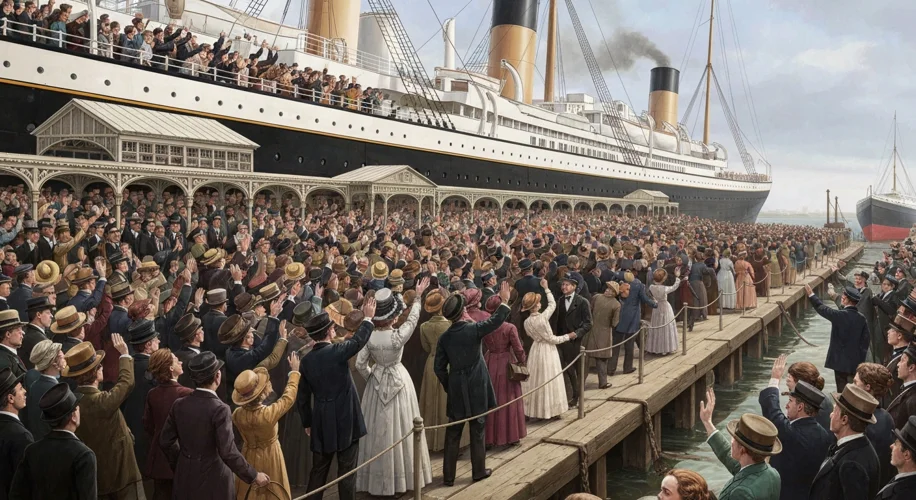
The year is 1912. The air crackles with anticipation, a blend of technological marvel and human ambition. On the Southampton docks, a behemoth of steel and opulence prepares for its maiden voyage. The RMS Titanic, hailed as the ‘unsinkable’ ship, was more than just a vessel; it was a testament to the Edwardian era’s boundless optimism and its stark social divisions. Imagine the scene: wealthy industrialists and their families, adorned in their finest, clambering aboard, their tickets a golden key to a world of luxury. Below decks, in the cramped and utilitarian quarters, hundreds of hopeful souls, many seeking a new life in America, also boarded, their dreams as vast as the ocean that lay before them.
This was a world where class dictated not just comfort, but survival. The Titanic was a microcosm of that society. First-class passengers enjoyed plush suites, gourmet dining, and personalized service. Second-class offered comfortable, well-appointed cabins, while third-class, or steerage, was a world away, with basic amenities and shared spaces. Yet, all were united by the promise of the Atlantic crossing, a journey that would, for many, be their last.
The voyage began on April 10, 1912. The ship, a marvel of engineering with watertight compartments and a double bottom, seemed impervious to the whims of the sea. Captain Edward Smith, a seasoned mariner, commanded the vessel, a man respected for his experience. The journey across the Atlantic was initially uneventful, filled with the routine of shipboard life: elegant dinners, lively dances, and the ever-present murmur of conversation about the future. The wireless telegraph operators, Jack Phillips and Harold Bride, diligently sent and received messages, a testament to the marvel of modern communication, unaware of the grim premonitions that would soon arrive.
But the North Atlantic in April is a treacherous mistress. Unseen, unheard, and utterly indifferent, a colossal iceberg, a grim leviathan of ice, drifted south from the Arctic. On the night of April 14th, warnings of icebergs were received, but perhaps due to the prevailing optimism or a subtle underestimation of the danger, the Titanic maintained a high speed. The ship’s lookouts, Frederick Fleet and Reginald Lee, strained their eyes in the moonless, frigid darkness. Then, the cry that would echo through history: “Iceberg, right ahead!”
The frantic maneuvers to avoid the collision proved tragically insufficient. The ship, with its immense momentum, scraped along the submerged spur of the iceberg. The impact, though not as catastrophic as some might imagine, was devastating. The steel hull, designed to withstand immense pressure, was pierced in several places below the waterline. The watertight compartments, meant to keep the ship afloat even with some damage, were compromised. Water poured in, flooding compartment after compartment. The unthinkable was happening: the ‘unsinkable’ ship was sinking.
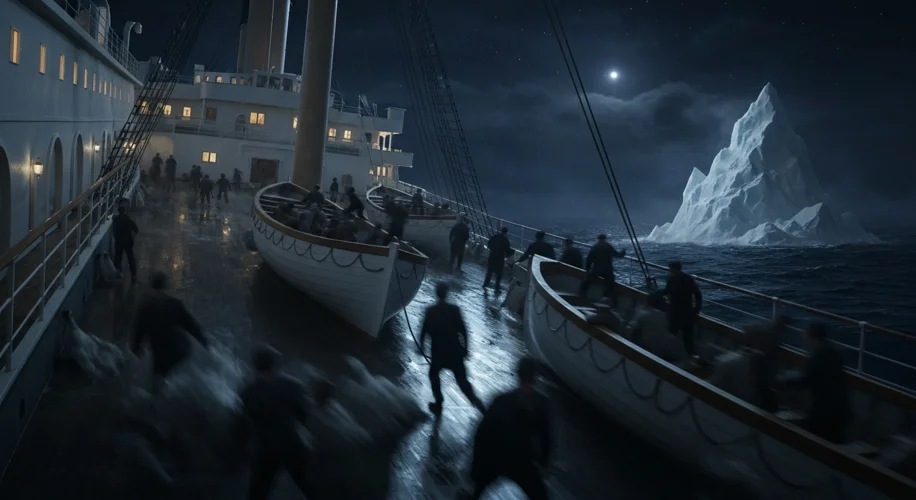
Panic, though not immediate, began to set in as the gravity of the situation became clear. The lifeboats, notoriously insufficient in number for the 2,224 souls on board, were launched. Here, the stark reality of the class divide played out with chilling finality. Lifeboat protocols, prioritizing women and children, were applied, but the chaos and the sheer number of people meant that many boats left partially empty. First-class passengers, with easier access to the boat deck, had a greater chance of survival. Those in steerage faced a desperate race against time and locked gates, their hope dwindling with every agonizing minute.
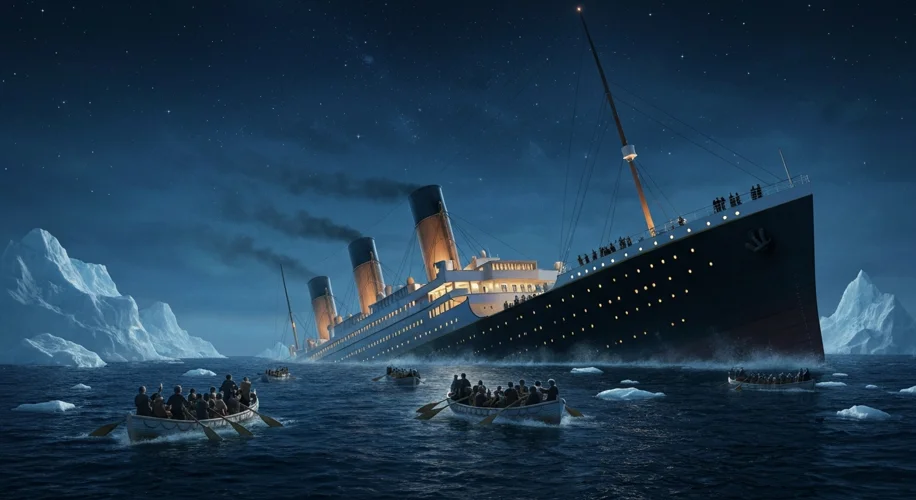
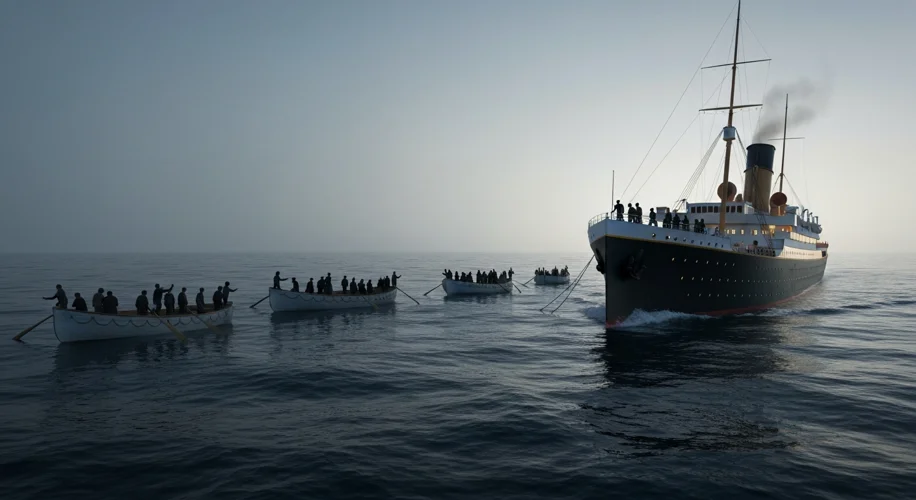
The frigid waters of the North Atlantic became a watery grave for over 1,500 people. The ‘unsinkable’ ship, a symbol of human ingenuity and pride, broke in two and sank to the ocean floor in less than three hours. The survivors, huddled in lifeboats, endured a harrowing wait for rescue, the cries of the freezing victims in the water a haunting symphony of despair.
The rescue ship, RMS Carpathia, arrived hours later, plucking 706 survivors from the icy embrace of the ocean. The world was stunned. News of the disaster sent shockwaves across the globe, challenging the era’s unwavering faith in progress and technology. The sinking of the Titanic became a potent symbol of human hubris, a stark reminder that even the most advanced creations are subject to the unyielding power of nature.
The aftermath of the Titanic disaster was profound. Investigations were launched, revealing critical failures in safety regulations, insufficient lifeboats, and an inadequate response to ice warnings. The International Convention for the Safety of Life at Sea (SOLAS) was established in 1914, forever changing maritime safety protocols. The disaster also highlighted the deep-seated class inequalities of the time, a painful truth laid bare in the tragic loss of life among different passenger classes.
The Titanic’s story, however, is not just one of tragedy. It is a story of courage, of sacrifice, and of the indomitable human spirit. It is a story that continues to capture our imagination, a timeless reminder of our vulnerability, our aspirations, and the delicate balance between human ambition and the awesome power of the natural world. The echoes of that fateful night in 1912 still resonate, a somber testament to the lessons learned from the unsinkable ship that ultimately sank.