
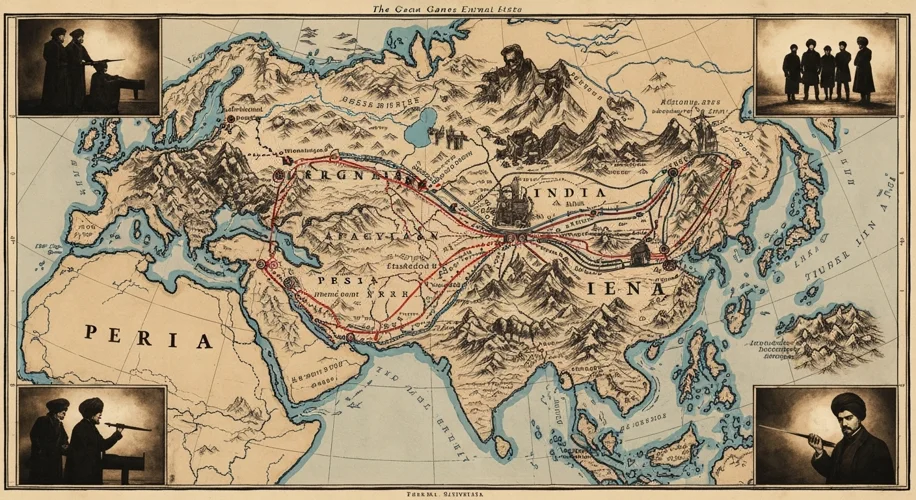
The year is 1830. The sun beats down on the dusty plains of Central Asia, a vast, rugged expanse that lay between the burgeoning might of the British Empire and the ever-expanding reach of the Russian Empire.
This was the chessboard for a clandestine conflict, a silent war waged not with grand pronouncements but with whispered secrets, daring explorations, and calculated political maneuvers. It was known as the Great Game, a decades-long rivalry between Britain and Russia for control and influence over this strategically vital region.
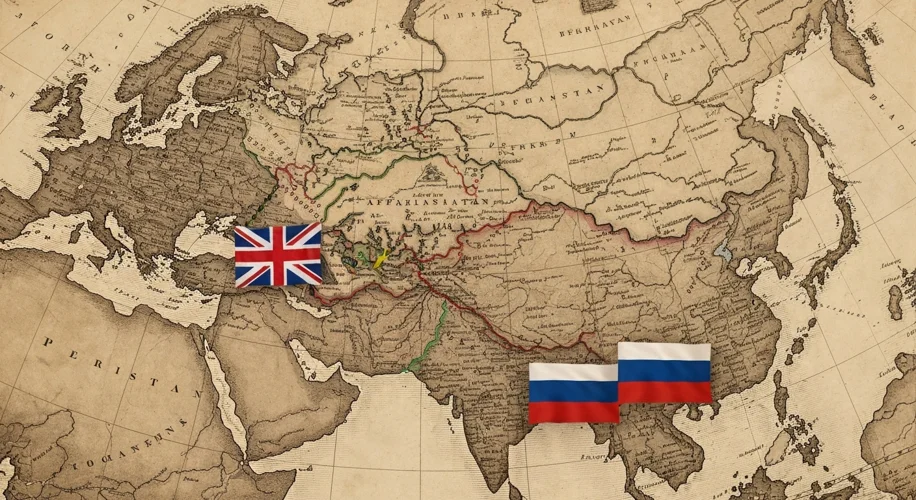
At its heart, the Great Game was about fear and ambition. The British, masters of India, viewed Russia’s southward push with intense suspicion. They worried that if Russia gained too much power in Central Asia, it would eventually threaten the jewel in their imperial crown: India itself. For the Russians, however, it was a natural expansion, a quest for warmer ports and a buffer against perceived British encirclement. Both empires saw the other as an existential threat, a dark shadow creeping across their borders.
Into this high-stakes drama stepped a cast of remarkable characters. There was Alexander Burnes, a dashing British intelligence officer who, disguised as a merchant, traversed treacherous mountain passes to gather information. On the other side, figures like Nikolai Przhevalsky, a Russian explorer, pushed deep into the uncharted territories, mapping terrain and establishing Russian presence, often with a keen eye on potential military routes. These men were not just explorers; they were spies, diplomats, and adventurers, all playing their part in a game where a misplaced step could ignite an international incident.
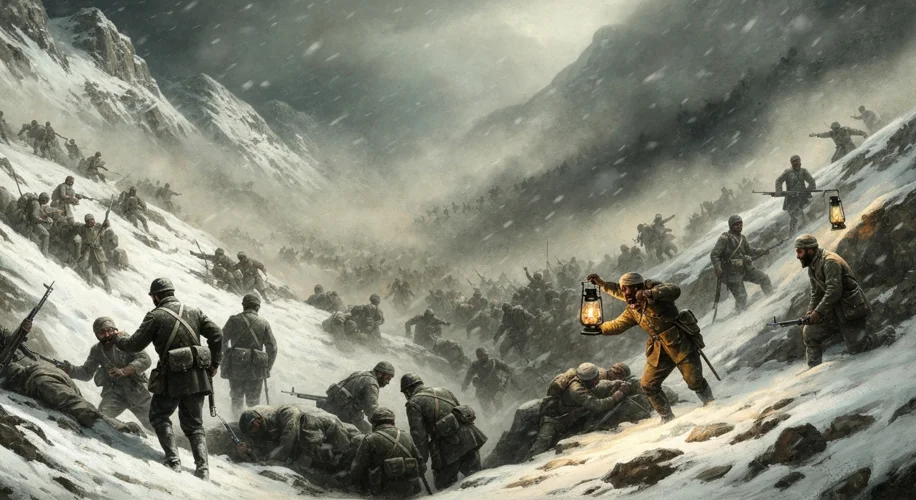
Afghanistan, in particular, became the central arena. A rugged, mountainous land with a fiercely independent people, Afghanistan was seen by both powers as the crucial buffer state. Britain’s attempts to control Afghanistan were disastrous, most notably the First Anglo-Afghan War (1839-1842), which ended in a catastrophic British defeat. The “Army of the Indus” was annihilated during its retreat from Kabul, a stark reminder of the perils of underestimating the local resistance.
Russia, meanwhile, employed a subtler approach. They gradually absorbed territories like Turkestan, often through diplomatic pressure or by supporting local rulers who were amenable to Russian influence. Their incursions were more measured, less direct confrontations and more of a slow, inexorable advance. The ‘game’ involved mapping expeditions, espionage networks, the ‘buying’ of local loyalty, and the occasional military skirmish, all designed to outmaneuver the rival power without triggering open war.
The consequences of the Great Game were profound and long-lasting. The borders of modern-day Afghanistan, Pakistan, Iran, and the Central Asian republics were largely shaped by the compromises and conflicts of this rivalry. The strategic importance of Afghanistan as a buffer state was cemented, a role that would continue to echo through the 20th and 21st centuries. The suspicion and mistrust sown between Britain and Russia in this era contributed to the broader geopolitical tensions that would eventually erupt into World War I.
The Great Game serves as a fascinating case study in imperial ambition, strategic calculation, and the often-unseen human element of international relations. It highlights how the pursuit of power and security can lead to decades of proxy conflicts, espionage, and exploration, leaving an indelible mark on the political and geographical landscape of the regions caught in its shadow. The echoes of this grand, often perilous, game can still be felt today, a testament to the enduring impact of this pivotal moment in history.