
It’s September 9th, 2025, and the air in Los Angeles is buzzing with a unique kind of energy. Not the Hollywood kind, but something far more widespread, a current that flows through generations and across continents. We’re here to explore the phenomenon that is the Pokémon Trading Card Game (TCG), and specifically, to dive into its latest immersive experience: the Mega Evolution Discovery. But to truly appreciate this, we must first understand how a simple game of collecting and battling creatures conceived in Japan has woven itself so deeply into the fabric of global culture.
The story of Pokémon, and by extension its trading card game, is one of accidental genius and unprecedented success. It began in the late 1990s, a time when the world was just beginning to grapple with the digital age. Amidst the burgeoning influence of video games, a franchise was born that would capture the imagination of millions: Pokémon. The core concept, originally conceived by Satoshi Tajiri, was to create a world where players could catch, train, and battle fantastical creatures called Pokémon. This concept translated seamlessly into a trading card game, launched in Japan in 1996 and reaching international shores shortly after.
The Pokémon TCG wasn’t just another game; it was a cultural artifact. Its appeal transcended age demographics. Children were drawn to the vibrant artwork, the relatable characters (each Pokémon with its own distinct personality and backstory), and the thrill of collecting rare cards. For teenagers and young adults, it offered a competitive outlet, a chance to hone strategic thinking, and a community. Suddenly, playgrounds, schoolyards, and local game stores became arenas for epic Pokémon duels. The sound of shuffling cards, the excited exclamations of a successful attack, and the hushed negotiations over trades became the soundtrack to an era.
Key to the TCG’s enduring popularity are its mechanics, which are both accessible and deeply strategic. Players build decks of Pokémon cards, each with unique abilities, attacks, and weaknesses. The objective is to use these Pokémon to defeat the opponent’s team. This simple framework allows for immense depth. Mastering type advantages (Water-types are strong against Fire-types, for example), managing energy resources, and predicting opponent strategies are crucial elements that reward skillful play. Furthermore, the constant introduction of new sets and expansions, featuring new Pokémon and mechanics like the much-anticipated Mega Evolution, keeps the game fresh and engaging.
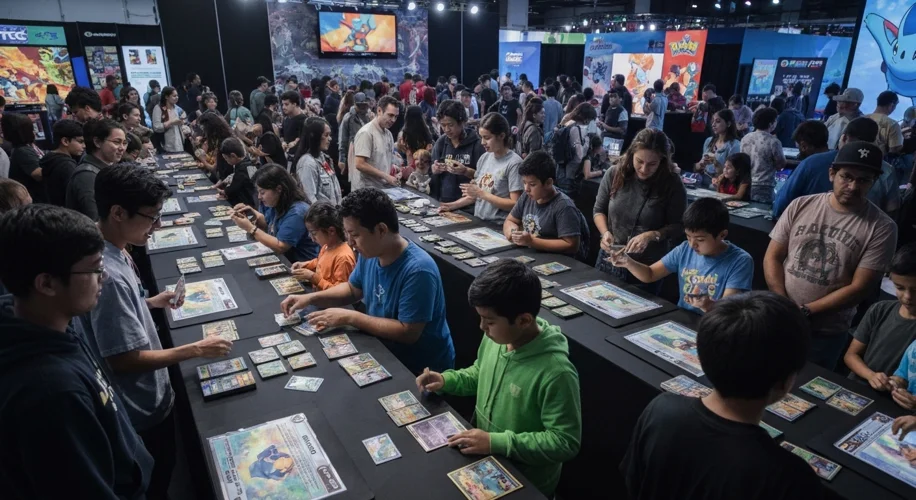
The Mega Evolution Discovery experience in Los Angeles is a testament to this enduring legacy. It’s more than just a product launch; it’s a celebration of community. Here, fans can immerse themselves in the world of Pokémon, participate in exclusive tournaments, meet fellow collectors and players, and witness firsthand the evolution of the game. The Mega Evolution mechanic itself, introduced in the TCG to mirror a powerful transformation in the video games, represents a significant power-up for certain Pokémon, adding another layer of strategic complexity and excitement to battles.
The cultural significance of the Pokémon TCG extends far beyond the game itself. It has fostered communities, encouraged strategic thinking, and even served as an entry point into broader historical interests for many. The act of collecting, trading, and battling these cards has created shared experiences and memories that bind people together. It’s a phenomenon that reflects our innate human desire for collection, competition, and connection.
As we leave the vibrant halls of the Mega Evolution Discovery, one thing is clear: the Pokémon Trading Card Game is more than just a fad. It’s a cultural touchstone, a testament to the power of engaging gameplay, compelling characters, and the enduring appeal of a shared passion. It has evolved, much like the Pokémon it represents, becoming a lasting part of our shared cultural landscape.