
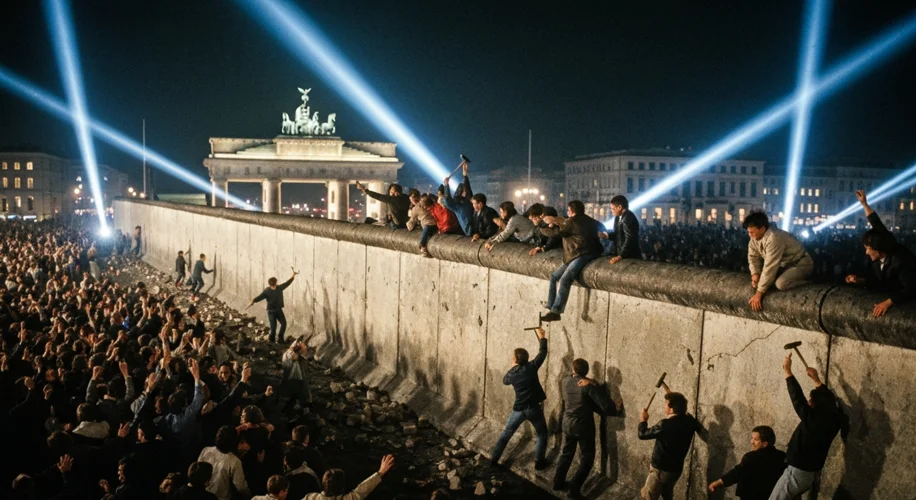
The air in Berlin on November 9th, 1989, was thick with a tension that had been building for decades. For 28 years, the Berlin Wall had stood as a brutal, concrete manifestation of the Cold War’s ideological divide, a scar across a city and a continent. It was a symbol of oppression, a barrier separating families, friends, and a nation. But on this particular autumn evening, the impossible was about to happen.
The seeds of change had been sown throughout Eastern Europe in the preceding months. Inspired by reformist movements and emboldened by the weakening Soviet grip, citizens in countries like Poland, Hungary, and Czechoslovakia were pushing for greater freedoms. East Germany, officially the German Democratic Republic (GDR), was not immune to this wave of dissent. Protests, small at first, began to grow, with citizens demanding the right to travel and express themselves freely.
The GDR leadership, desperate to quell the rising tide of discontent, attempted a carefully managed loosening of travel restrictions. The intention was to allow citizens to apply for permission to travel abroad, a bureaucratic process designed to maintain control. However, the announcement, delivered at a press conference by Günter Schabowski, a party official, was famously muddled. When asked by a journalist when these new regulations would take effect, Schabowski, seemingly unprepared, stammered, “As far as I know, it takes effect immediately, without delay.”
The words, broadcast live, spread like wildfire through East Berlin. For many, it was a signal they had been waiting for. Disbelief warred with a surging hope. Could it be true? Could they really cross the Wall, now?
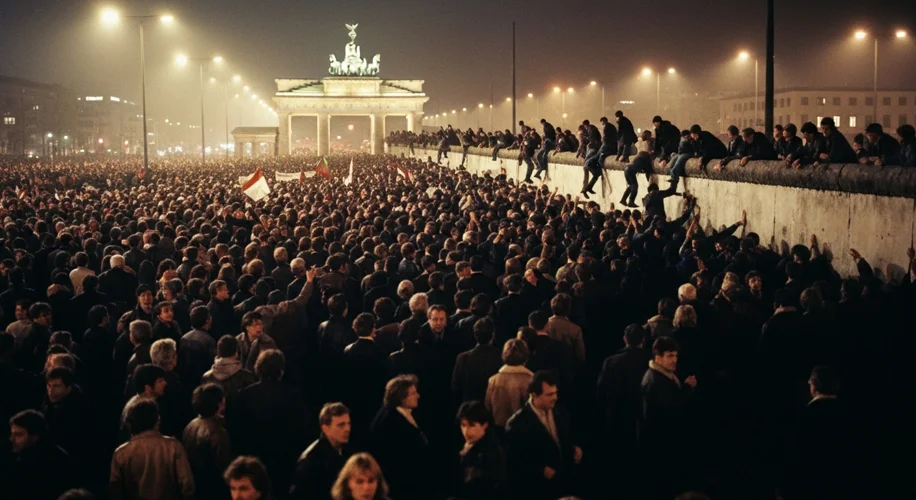
Thousands of East Berliners began to gather at the border crossings, their numbers swelling by the minute. At the Bornholmer Straße checkpoint, border guards, overwhelmed and without clear orders, faced a surging, expectant crowd. The pressure became immense. The guards, many of whom had families on the other side, realized they could not hold back the tide. At approximately 10:45 PM, Harald Jäger, the commander of the Bornholmer Straße crossing, made the momentous decision to open the gates.
What followed was an eruption of pure, unadulterated joy. East Berliners, many weeping, streamed into West Berlin, greeted by their West German counterparts with cheers, hugs, and champagne. Strangers embraced, a palpable sense of shared liberation filling the night air. People climbed onto the Wall, dancing and chipping away at the concrete symbol of their division with hammers and chisels. It was a spontaneous, people-powered dismantling of a decades-old barrier.
The scenes that unfolded that night were broadcast around the world, becoming an indelible image of the end of an era. The fall of the Berlin Wall was not just the reunification of a city, but a powerful symbol of the collapse of Soviet influence in Eastern Europe and the impending end of the Cold War itself.
The consequences were profound and far-reaching. Within a year, Germany was officially reunified, a complex process that brought its own set of challenges and triumphs. The political landscape of Europe was irrevocably altered, paving the way for new alliances and the expansion of democratic ideals. The fall of the Wall also marked a significant moment in the broader narrative of human freedom, demonstrating the power of ordinary people to overcome seemingly insurmountable obstacles.
Today, as we reflect on November 9, 1989, we remember not just the physical dismantling of a wall, but the triumph of the human spirit. It stands as a potent reminder that walls, no matter how formidable, cannot indefinitely contain the desire for freedom and connection. The echoes of that joyous night continue to resonate, a testament to the courage of those who dared to dream of a united future.