
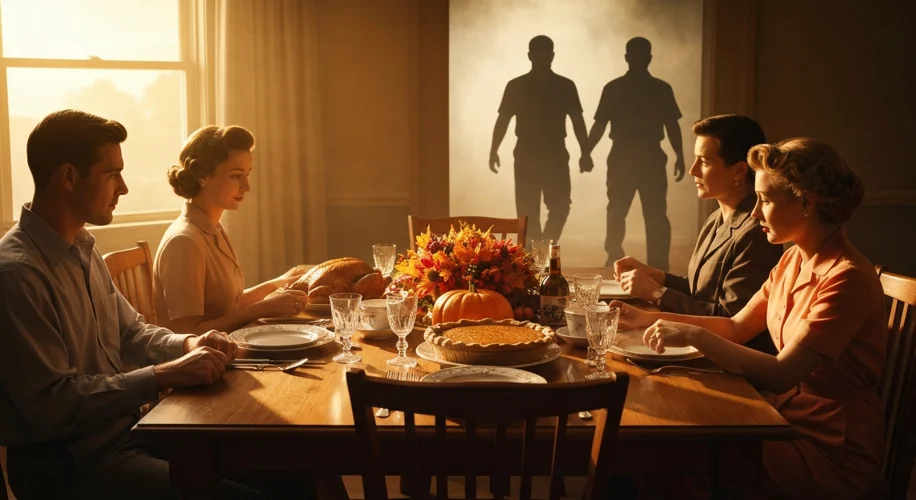
The scent of roasted turkey and pumpkin pie typically signals warmth, family, and homecoming. But for one young man in 1952, the aroma of Thanksgiving dinner became a cruel preface to a bewildering ordeal, a tale of mistaken identity that would send him spiraling from festive anticipation to the chilling reality of deportation.
It was November, 1952. The United States was still finding its footing in the Cold War era, a time of heightened nationalistic fervor and a palpable suspicion of outsiders. Amidst this climate, a young college student, let’s call him Arthur, harbored a secret plan: to surprise his family for Thanksgiving. Arthur was not an American citizen, but he had been living and studying in the country for some time, believing his documentation was in order. He had carefully planned his journey, envisioning the joy on his parents’ faces when he walked through their door, unannounced, just as the dinner bell was about to ring.
His arrival, however, was not met with the embrace he expected. Instead, as he presented himself at his family’s doorstep, a different kind of welcome awaited him. Immigration officials, apparently tipped off about his presence or perhaps acting on a routine check, were already there. A misunderstanding, a case of mistaken identity, or perhaps a glitch in the system, had put Arthur squarely in their sights.
Arthur, confused and increasingly panicked, tried to explain his situation. He was a student, he was here legally, and he was simply visiting his family for the holiday. But his pleas fell on deaf ears. In the tense atmosphere of the early 1950s, with national security a constant concern, the immigration authorities were not in a mood for leniency or extended explanations, especially not on a holiday.
The bureaucratic machinery, once set in motion, proved incredibly difficult to stop. Arthur, despite his protests and the bewildered attempts of his family to vouch for him, was detained. The joy of his homecoming dissolved into a nightmare of interrogations, paperwork, and the cold, sterile environment of an immigration holding facility.

His family, devastated and desperate, scrambled to secure his release. They contacted lawyers, pleaded with officials, and presented whatever documentation they could find. Yet, the system, rigid and unforgiving, seemed determined to follow its course. The Christmas season, which followed Thanksgiving, only amplified the irony of his detention – a time of goodwill and family reunion, yet he was separated from his.
The story took an even more dramatic turn when, after weeks of uncertainty and legal wrangling, the decision was made. Arthur, deemed to be in the country without proper, or perhaps sufficiently up-to-date, documentation, was to be deported. The very country he had come to study in, the country he considered a temporary home, was now sending him away, a victim of its own intricate, and at times, unforgiving, immigration policies.
The consequences of this event were profound. Arthur’s dreams of completing his education and building a future in America were shattered. His family was left with a lingering sense of injustice and the bitter memory of a Thanksgiving that turned into a tragedy. This incident, though perhaps not widely known, serves as a stark reminder of the human cost of bureaucratic processes and the complex realities of immigration, especially in periods of heightened national security concerns.
The Great Thanksgiving Hoax of 1952, as it came to be known among those close to the family, wasn’t a deliberate deception but a tragic unfolding of events. It highlighted how easily individuals could become ensnared in the gears of government, how easily identity could be misconstrued, and how, even in the midst of festive cheer, the wheels of bureaucracy could grind on, leaving behind a trail of dashed hopes and broken families. It’s a story that whispers of the vulnerabilities faced by immigrants and the critical importance of clear, compassionate, and accurate systems of identification and legal standing.