
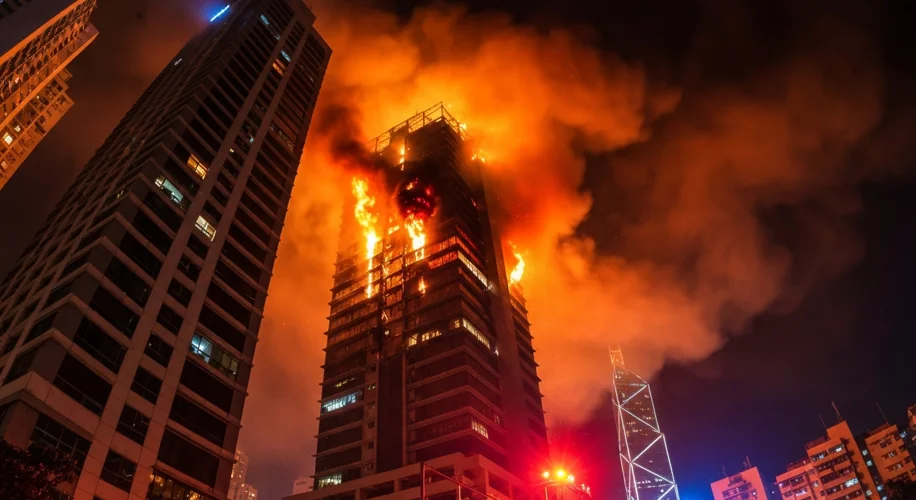
The humid Hong Kong night of November 11, 1993, was shattered by the screams of terror and the acrid stench of burning plastic and flesh. In the heart of Kowloon, a densely populated district teeming with life, a fire of unimaginable ferocity had erupted. It was a tragedy that would etch itself into the city’s memory, a stark reminder of the razor’s edge upon which urban survival often teeters.
The fire, which began on the 12th floor of the World Trade Centre in Causeway Bay, quickly became a monstrous inferno. The building, a modern skyscraper in a city renowned for its futuristic skyline, was ironically a tinderbox waiting to ignite. The blaze spread with terrifying speed, fueled by the building’s interior design and the unfortunate timing of the incident during a busy evening. Panic ensued as smoke choked stairwells and flames licked at windows, trapping hundreds within the burning structure.
The immediate cause of the fire was attributed to an electrical fault, a seemingly mundane origin for such a catastrophic event. However, the true culprits lay deeper, woven into the fabric of Hong Kong’s rapid development and the often-overlooked vulnerabilities of its burgeoning urban landscape. The building itself, while modern in appearance, was a complex maze of shops, offices, and entertainment venues, each with its own set of safety regulations, or lack thereof. The interconnectedness of these spaces, a testament to Hong Kong’s vibrant commercial spirit, also proved to be its Achilles’ heel.

The rescue efforts that night were nothing short of heroic. Firefighters, battling not only the inferno but also the claustrophobic confines of a burning skyscraper, displayed immense courage and professionalism. Helicopters hovered precariously, winching survivors to safety from rooftops, while below, emergency services worked tirelessly to clear pathways and assist those who managed to escape.
Yet, amidst the bravery and the desperation, a grim reality began to emerge. The fire exposed a chilling pattern of ignored warnings and systemic oversights. Investigations following the disaster revealed that the building had a history of fire safety concerns, with several violations noted in the years leading up to the tragedy. These concerns, however, had been inadequately addressed, lost in the bureaucratic labyrinth of regulations and permits.
The human cost was devastating. The fire claimed the lives of nine people, including a firefighter, and left dozens injured. The victims were not just statistics; they were individuals with lives, families, and futures, extinguished in a fiery tragedy that could have been prevented. The images of charred remains and the stories of those who lost loved ones sent ripples of grief and anger throughout Hong Kong.
The aftermath of the World Trade Centre fire was a period of intense introspection for Hong Kong. The disaster served as a brutal wake-up call, prompting a comprehensive review of building safety standards and fire prevention measures. Stricter regulations were implemented, inspections were intensified, and public awareness campaigns were launched to educate residents and businesses about fire safety.
The fire in 1993 was not merely an isolated incident; it was a symptom of a larger challenge faced by rapidly urbanizing metropolises worldwide. It highlighted the precarious balance between economic growth and public safety, and the critical importance of heeding warning signs, no matter how inconvenient or costly they may seem. The echoes of that night still serve as a somber reminder that progress must never come at the expense of lives, and that vigilance in the face of potential disaster is not just a precaution, but a moral imperative.
The scars of the World Trade Centre fire, though faded, remain etched in the collective memory of Hong Kong. It stands as a testament to the city’s resilience, its ability to learn from tragedy and emerge stronger, but also as a perpetual warning that the embers of negligence can ignite the most devastating infernos.