
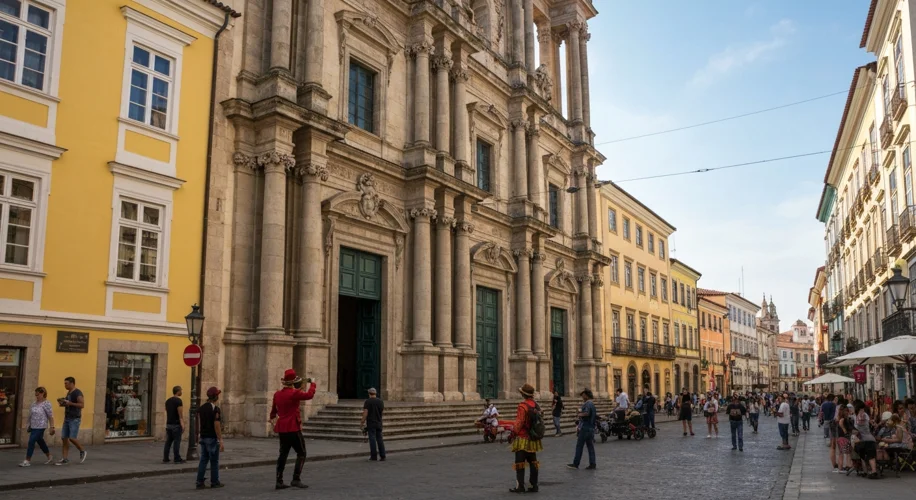
Quebec, a province steeped in a rich tapestry of history and culture, finds itself in a perpetual dialogue about its identity. At the heart of this discussion, a debate as old as the province itself, is the complex relationship between religion, state, and the very definition of what it means to be Quebecois. This ongoing conversation has recently been amplified by the controversial Bill 21, an act that has reshaped the public sphere by prohibiting certain public servants from wearing religious symbols.
To understand Bill 21, one must cast their gaze back to the mid-20th century, a period often referred to as the Quiet Revolution. Prior to this era, Quebec was a deeply Catholic province, where the Church held significant sway over education, social services, and even political discourse. The iconic image of nuns and priests in every school and hospital was a powerful symbol of this deeply ingrained religious influence. The Quebec of the 1950s was a place where faith was not merely a personal conviction, but a pervasive, public force.
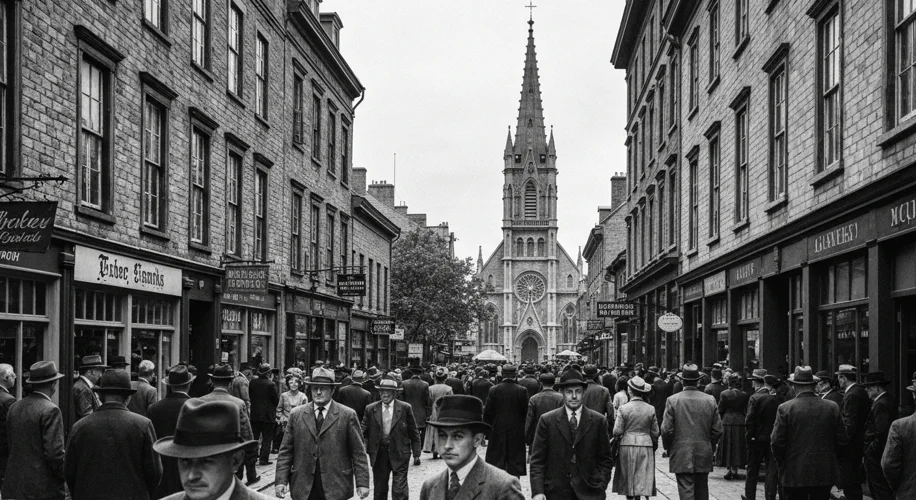
The Quiet Revolution, beginning in the early 1960s, marked a seismic shift. Fueled by a desire for modernization, secularization, and greater provincial autonomy, Quebecers began to assert a new vision for their society. The power of the Catholic Church waned, its institutions were nationalized, and the state took a more prominent role in public life. This was a deliberate move to separate the civil and the sacred, to create a distinct public space free from religious dominance. The goal was not necessarily to eliminate religion, but to relegate it to the private sphere.
However, this transition was not without its complexities. As Quebec embraced a more secular identity, it also grappled with questions of multiculturalism and immigration. The province’s unique linguistic and cultural heritage, rooted in its French Catholic past, became intertwined with its evolving understanding of secularism. The debate shifted from simply separating church and state to defining who belonged in the public square and under what terms.
This brings us to Bill 21, enacted in 2019. Officially known as the “Act respecting the laicity of the State,” it aims to affirm Quebec’s secularism by, among other things, prohibiting the wearing of conspicuous religious symbols by certain public sector employees, including teachers, police officers, and judges. The rationale, as presented by the government, is to ensure the neutrality of the state and to protect citizens from proselytism in public services. The vision is a public sphere where religious affiliation is not visibly displayed by those who represent the state.
Key actors in this debate represent a spectrum of perspectives. Proponents of Bill 21, often from the Coalition Avenir Québec (CAQ) party, argue that it is a necessary measure to protect Quebec’s distinct identity and to uphold the principle of state laicity. They see it as a logical continuation of the Quiet Revolution, a way to ensure that public services are delivered without religious bias. They often emphasize the importance of a common public space, free from visible religious markers.
On the other hand, critics, including many from minority religious communities, civil liberties advocates, and opposition parties like the Quebec Liberal Party and Québec Solidaire, decry the bill as discriminatory. They argue that it infringes upon fundamental freedoms of religion and expression, disproportionately affecting Muslim women who wear the hijab, Sikhs who wear turbans, and other religious minorities. They question whether true secularism requires the erasure of religious identity from public life, or if it should instead focus on the freedom of all citizens to practice their faith openly.
The impact of Bill 21 has been profound and divisive. It has led to incidents where individuals have been forced to choose between their religious beliefs and their careers. Teachers have resigned, police officers have been unable to take up their posts, and the sense of alienation among certain communities has deepened. Legal challenges have been mounted, and the debate has spilled into national and international arenas, sparking discussions about human rights and minority protections.

Analyzing Bill 21 requires understanding the deep historical currents at play. Quebec’s historical relationship with the Catholic Church, its distinct linguistic identity, and its evolving approach to multiculturalism have all shaped this debate. The Quiet Revolution sought to liberate Quebec from clerical control, but in doing so, it opened up new avenues for defining public life. Bill 21 can be seen as an attempt to solidify a particular vision of secularism that prioritizes state neutrality through the absence of visible religious symbols, a vision that many believe is at odds with the principles of inclusivity and individual freedom.
The story of Quebec’s secularism is far from over. Bill 21 has undoubtedly marked a significant chapter, but the conversation about identity, religion, and the public square is a continuous one, echoing through the province’s history and shaping its future.