
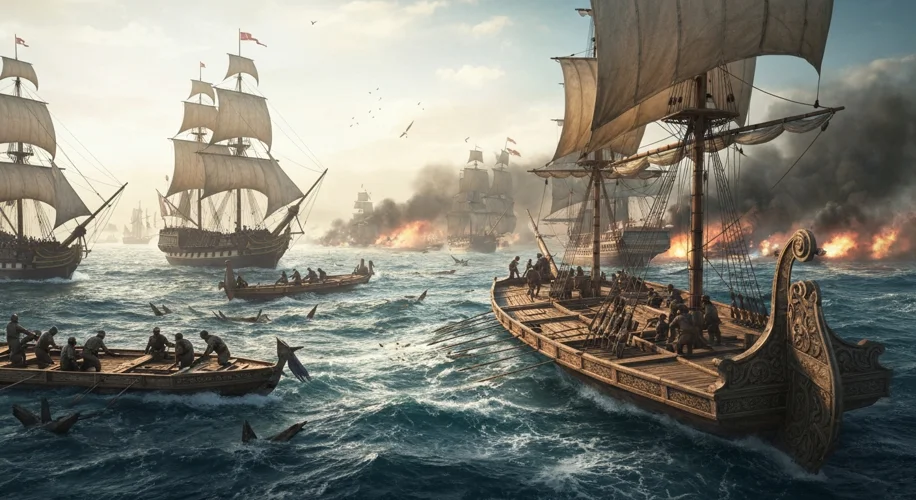
The vast, shimmering expanse of the ocean has always been a double-edged sword for humanity. It connects continents, facilitates trade, and inspires awe, but it has also been a brutal theater of war, a stage where empires rise and fall on the whims of wind, wood, and iron.
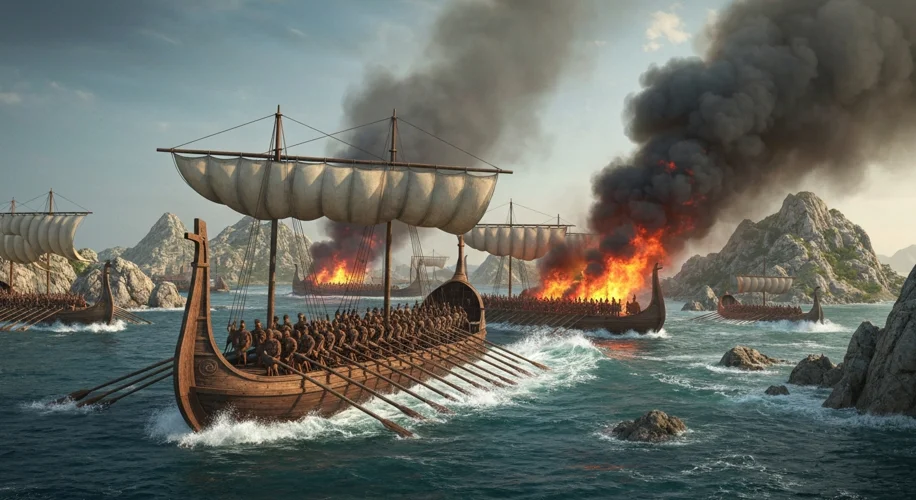
From the earliest civilizations, control of the seas meant control of destiny. Imagine the galleys of ancient Greece, their oars a rhythmic pulse against the waves, ramming enemy vessels with bronze-tipped prows in the bloody ballet of the Battle of Salamis. These were not just clashes of ships; they were battles for the survival of city-states, for the very soul of nascent democracies.
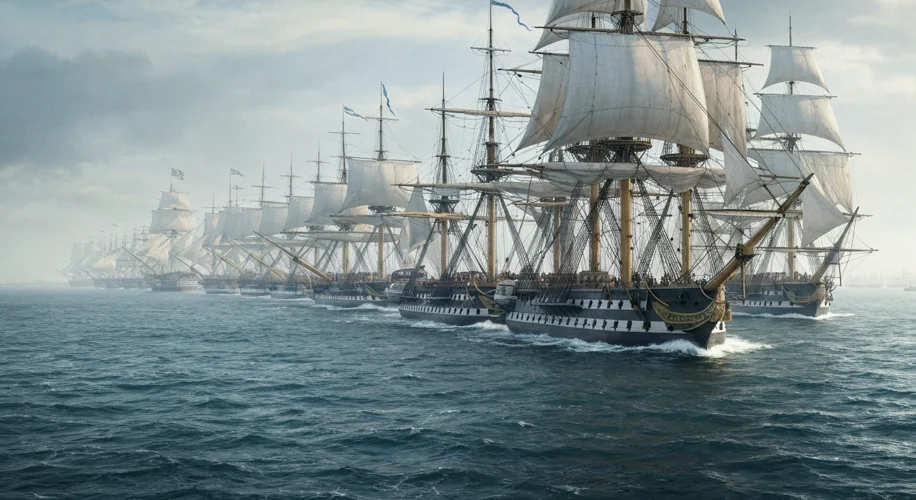
As centuries rolled by, the art of sea warfare evolved. Sails replaced oars, and the formidable ships of the line, bristling with cannons, dominated the Age of Sail. Think of the Spanish Armada in 1588, a seemingly invincible force sent to conquer England. Its fate, however, was sealed not just by English fire ships but by the unforgiving fury of the North Sea storms. This naval defeat was a death knell for Spanish dominance and a harbinger of England’s own maritime ascent.
But naval power wasn’t solely about direct combat. The strategic genius of the blockade emerged as a devastating weapon. Imagine the British Royal Navy, a colossus patrolling the globe, using its overwhelming might to starve enemies into submission. During the Napoleonic Wars, Britain’s blockade of France choked the lifeblood of Napoleon’s empire, crippling his economy and isolating his forces.
This same strategy, honed over centuries, would prove critical in later conflicts. During the American Civil War, the Union’s Anaconda Plan aimed to ‘squeeze’ the Confederacy by blockading its ports and controlling the Mississippi River. The impact was profound, cutting off vital supplies and contributing significantly to the Confederacy’s eventual defeat.
The 20th century ushered in an era of unprecedented technological advancement, transforming naval warfare into something unrecognizable to ancient mariners. The submarine, a stealthy predator lurking beneath the waves, introduced a new dimension of terror. During World War I, German U-boats waged a relentless campaign against Allied shipping, threatening to starve Britain into surrender. The desperate race to develop anti-submarine tactics, like convoys and depth charges, became a defining struggle of the war.
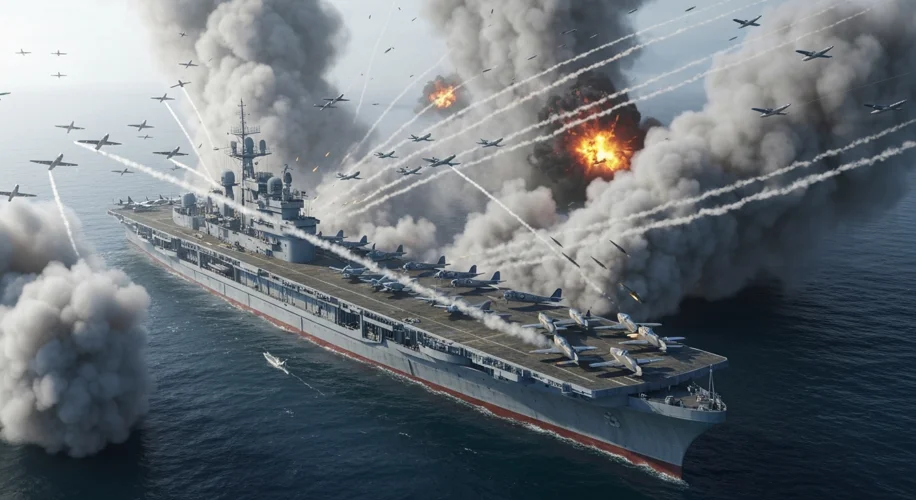
Then came World War II, a global inferno where naval power played a pivotal role on every ocean. The Battle of Midway in 1942 was a turning point, where American carrier aircraft inflicted a crippling blow on the Japanese navy, shattering its offensive capability. Simultaneously, the U-boat menace resurfaced, and the Battle of the Atlantic raged for years – a desperate cat-and-mouse game between hunter and hunted, with survival depending on radar, sonar, and sheer grit.
The impact of these naval struggles extended far beyond the battlefield. Blockades, whether of ports or entire nations, became instruments of economic warfare, shaping political outcomes and civilian lives. The Cold War saw the rise of massive naval forces, capable of projecting power across continents and deterring conflict through the terrifying specter of nuclear-armed submarines.
Today, naval warfare continues to evolve with the advent of drones, advanced missile systems, and cyber capabilities. Yet, the fundamental principles remain. Control of the seas, whether through direct engagement or strategic isolation, continues to be a cornerstone of global power. The silent, relentless tides of naval strategy have, and will continue to, shape the course of human history.