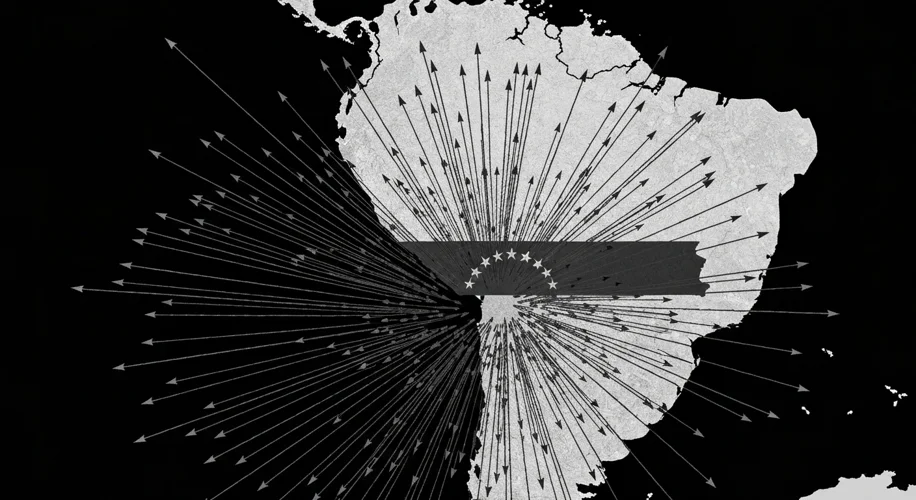
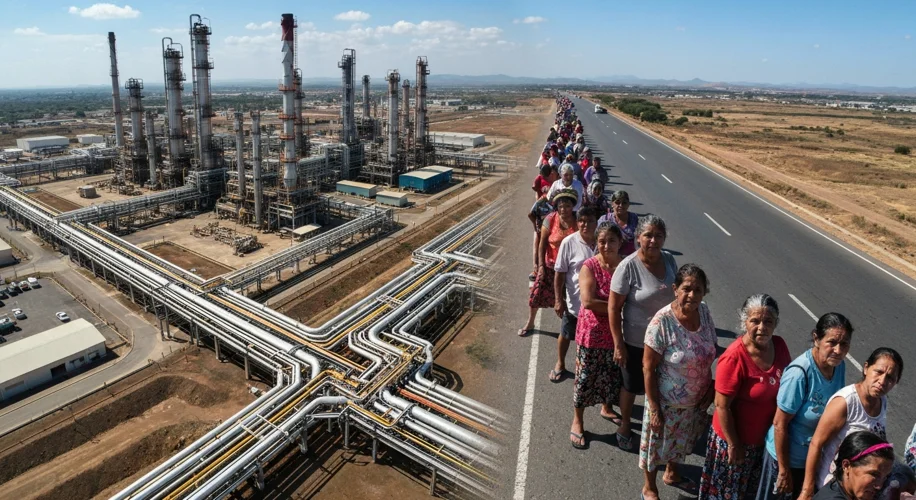
The story of Venezuela is a heart-wrenching saga of what happens when a nation’s immense potential is gradually eroded, not by a single cataclysm, but by a slow, insidious decay. Today, as we grapple with the ongoing crisis, it’s crucial to peel back the layers of recent history and understand the deep-seated roots of its political and economic unraveling, a tale interwoven with international relations and the ghosts of past interventions.
Venezuela, a land blessed with the world’s largest proven oil reserves, was once a beacon of prosperity in Latin America. In the mid-20th century, its oil wealth fueled a period of rapid development and a seemingly unshakeable optimism. Yet, beneath this glittering surface, a complex socio-economic structure was being built, one that would prove tragically vulnerable.
The seeds of the current crisis can be traced back to the late 20th century, marked by periods of economic boom fueled by oil prices and subsequent busts when they inevitably fell. Political instability became a recurring theme, with a succession of governments struggling to manage the nation’s dependence on a single commodity. This volatile environment created fertile ground for radical political movements promising a return to the people’s prosperity.
Enter Hugo Chávez. His rise to power in 1999, following a failed coup attempt a decade prior, signaled a seismic shift. Chávez, a charismatic and polarizing figure, espoused a socialist ideology he dubbed the “Bolivarian Revolution,” vowing to dismantle the old oligarchy and redistribute oil wealth to the poor. His government implemented ambitious social programs, funded by high oil prices, which initially brought tangible improvements to millions of Venezuelans. For a time, his vision seemed to be a potent antidote to decades of inequality.
However, Chávez’s reign was also characterized by increasing authoritarianism. Critics pointed to a growing concentration of power, the erosion of democratic institutions, and a disregard for fiscal prudence. The state’s control over the economy expanded, while independent media and opposition voices were systematically suppressed. Corruption, a long-standing issue, reportedly flourished under his administration.
The international community watched with a mixture of hope and concern. Some nations, particularly those on the left in Latin America, saw Chávez as a champion of the oppressed, a bulwark against perceived U.S. hegemony. Others, including the United States and many European countries, expressed alarm over his anti-American rhetoric, his alliances with nations like Cuba and Iran, and his increasingly autocratic rule.
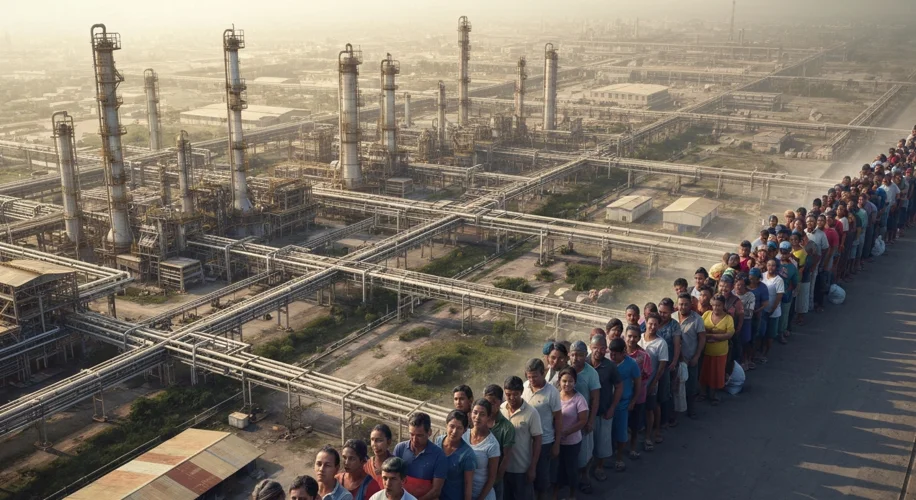
Chávez’s death in 2013 paved the way for his chosen successor, Nicolás Maduro. If Chávez’s rule was a storm, Maduro’s has been a hurricane. Plagued by plummeting oil prices, widespread corruption, and economic mismanagement, Venezuela under Maduro has spiraled into a humanitarian catastrophe. Hyperinflation has rendered the currency virtually worthless. Basic necessities like food, medicine, and electricity have become scarce. The once-proud nation now sees millions of its citizens fleeing, seeking refuge in neighboring countries and beyond.
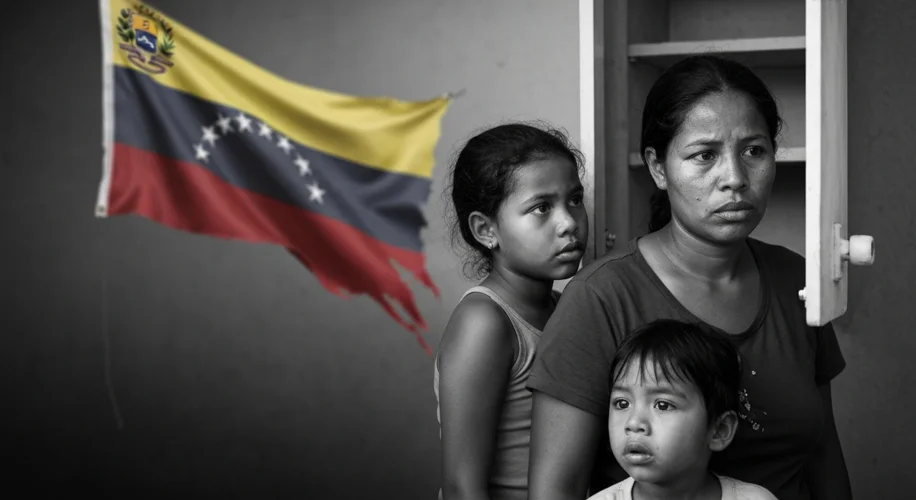
Maduro’s government has responded with further repression. Elections have been widely criticized as fraudulent, and political opponents have been imprisoned or exiled. International bodies, including the United Nations and the International Criminal Court, have investigated alleged human rights abuses. The internal dissent has been met with a heavy hand, further alienating the populace.
The international dimension of the crisis has become increasingly complex. The United States, under both Obama and Trump administrations, imposed sanctions on Venezuela, targeting individuals and entities deemed responsible for undermining democracy and human rights. These sanctions, while intended to pressure Maduro’s government, have also been blamed by some for exacerbating the humanitarian suffering.
Other Latin American nations, once aligned with Chávez, have largely distanced themselves, with many joining calls for democratic reform. The Lima Group, a bloc of countries seeking a peaceful resolution to the crisis, has been a prominent voice on the international stage. However, divisions persist, with some nations maintaining cautious relations with Maduro’s government, often for economic or geopolitical reasons.
Russia and China, on the other hand, have largely supported Maduro, providing economic and diplomatic lifelines. Their backing has been crucial in helping his regime weather international pressure. This geopolitical alignment highlights the broader global implications of Venezuela’s collapse, demonstrating how a national crisis can become a proxy battleground for larger international rivalries.
Examining Venezuela today is to witness a tragic testament to the dangers of unchecked power, economic over-reliance, and the complex, often fraught, nature of international intervention. The story is far from over, and the path to recovery will undoubtedly be long and arduous, marked by the enduring echoes of its past and the uncertain ripples of its present on the global stage.