
The chilly winds of late autumn often carry whispers of history, and in the geopolitical landscape of December 2025, those whispers are growing louder, more urgent. The recent news of a Polish President canceling a meeting with his Hungarian counterpart, a decision stemming from the latter’s visit to Moscow, is not merely a diplomatic spat. It is a stark reminder of the deep fissures that run through modern Europe, fissures carved by centuries of complex, often tumultuous, relations between Poland and Russia, and exacerbated by the ever-present shadow of current events.
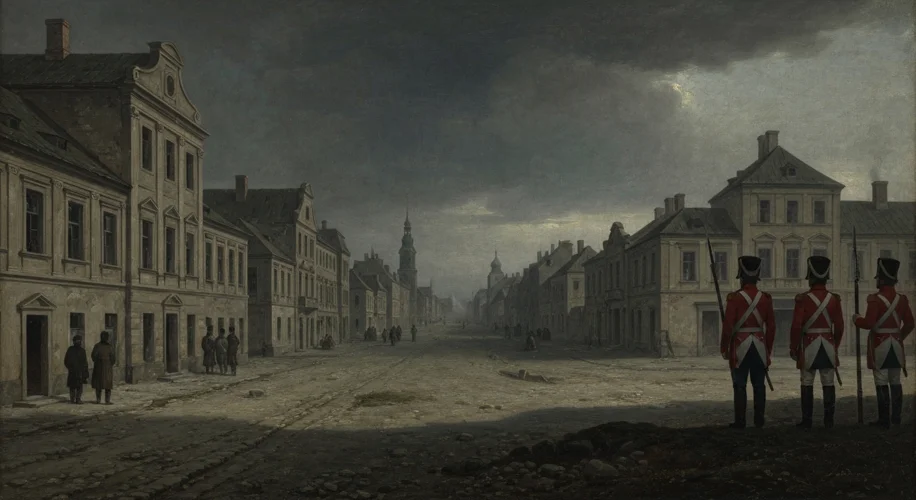
To understand today’s tensions, we must cast our minds back. For centuries, Poland has stood as a bulwark, a cultural and political entity caught between the expansive ambitions of Russia to its east and the shifting powers of Western Europe to its west. The Polish-Lithuanian Commonwealth, once a formidable force, eventually succumbed to its powerful neighbors, including Russia, which participated in its partitions in the late 18th century. This period of subjugation, spanning over a century, left an indelible scar on the Polish national psyche, fostering a deep-seated distrust of Russian intentions.
This historical trauma did not end with the 19th century. The 20th century saw Poland once again bear the brunt of geopolitical storms. The brutal Molotov-Ribbentrop Pact of 1939, a non-aggression treaty between Nazi Germany and the Soviet Union, secretly carved up Eastern Europe, including Poland, into spheres of influence. The subsequent Soviet occupation, followed by decades of communist rule under Moscow’s tight grip, cemented the perception of Russia as an occupying rather than a fraternal power for many Poles.
The key actors in this enduring drama are not abstract nations but people, leaders shaped by their histories and national narratives. For Poland, the memory of centuries of Russian dominance fuels a fierce desire for sovereignty and a deep skepticism of any move that might signal a resurgence of Russian influence. This perspective is not monolithic, but it is a powerful current running through Polish foreign policy. On the other side stands Russia, often viewing its neighbors through a lens of historical entitlement and security concerns, seeing any move towards the West as a direct threat.
The incident involving the Polish President’s canceled meeting is a microcosm of these larger dynamics. Hungary, under its own complex leadership, has often pursued a more pragmatic, sometimes conciliatory, approach to Russia, prioritizing economic ties and a different vision of European unity. This divergence from the more hawkish stance taken by Poland and other Eastern European nations highlights the fragmented nature of the European response to Russia’s actions, particularly following the full-scale invasion of Ukraine in 2022.
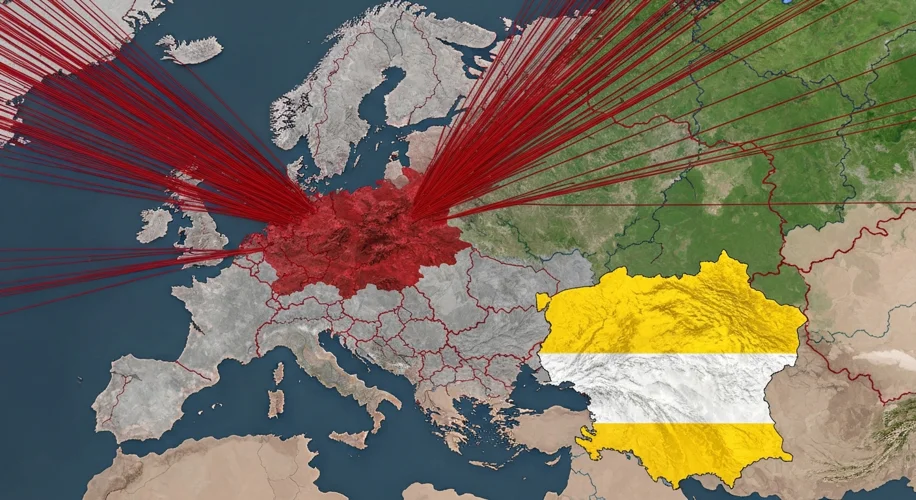
The geopolitical alignments within Europe are stark. Poland, along with the Baltic states and other Central and Eastern European nations, forms a strong bloc advocating for robust support for Ukraine and a firm stance against Russian aggression. They see the current conflict not just as a regional issue but as an existential threat to European security. Conversely, countries like Hungary have, at times, been perceived as more hesitant, seeking to maintain channels of communication and economic engagement with Moscow, a stance that often puts them at odds with their EU and NATO allies.
This latest diplomatic snub underscores the broader consequences for European politics. It exposes the fragility of a united front when faced with diverse national interests and historical legacies. The ability of a single nation’s engagement with Moscow to ripple through diplomatic relations across the continent demonstrates the persistent power of the Russia-Europe dynamic. It raises questions about the effectiveness of collective security when fundamental disagreements on approach persist.
The impact is not merely symbolic. It affects the pace of aid to Ukraine, the cohesiveness of sanctions regimes, and the long-term strategic vision for European security architecture. The fractured approach emboldens adversaries and weakens the collective bargaining power of European nations.
Ultimately, the story of Poland and Russia is a tale of two narratives clashing, a historical echo reverberating in the present. It is a story where the ghosts of past partitions and occupations continue to shape present-day decisions. The Polish President’s action, while seemingly a small event, is a powerful signal – a declaration that for Poland, the shadow of historical subjugation necessitates vigilance, a clear boundary drawn in the ever-shifting sands of European politics. It serves as a potent reminder that the past is never truly past, but an active participant in the present, shaping the future one canceled meeting at a time.
This is not just about Russia’s current actions, but about the deep historical roots of mistrust and the enduring struggle for sovereignty that has defined this region for centuries. As Europe navigates these complex waters, understanding these historical currents is crucial to understanding the divisions that persist and the challenges that lie ahead.