
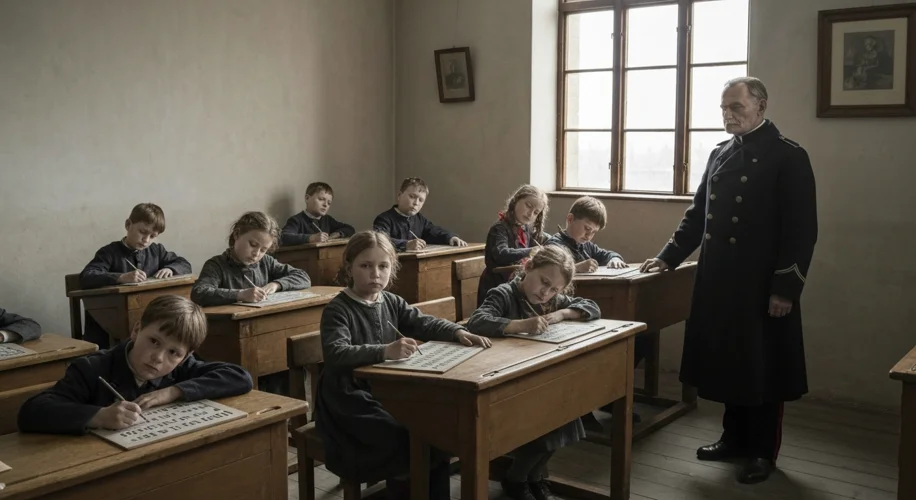
The air in Warsaw in the late 19th century crackled with an unspoken tension. Cobblestone streets, once echoing with the lyrical cadence of Polish, now bore the weight of unfamiliar Russian commands. Children in schoolyards, their laughter stifled, fumbled with Cyrillic letters, the vibrant tapestry of their mother tongue slowly being bleached by the imposed hue of a foreign empire. This was the chilling reality of Russification, a policy that sought not just to conquer territory, but to conquer souls.
For centuries, the vast Russian Empire, and later the Soviet Union, harbored a complex relationship with its myriad ethnic and national groups. While sometimes embracing a multicultural facade, the underlying current often pushed for a singular, monolithic identity centered around Russian language, culture, and administration. This drive, termed ‘Russification,’ was not a gentle persuasion but a deliberate, often forceful, imposition. Its primary aim was to homogenize the empire, to make its diverse peoples feel, think, and act Russian, thereby strengthening the central authority and quelling any whisper of separatism or dissent.
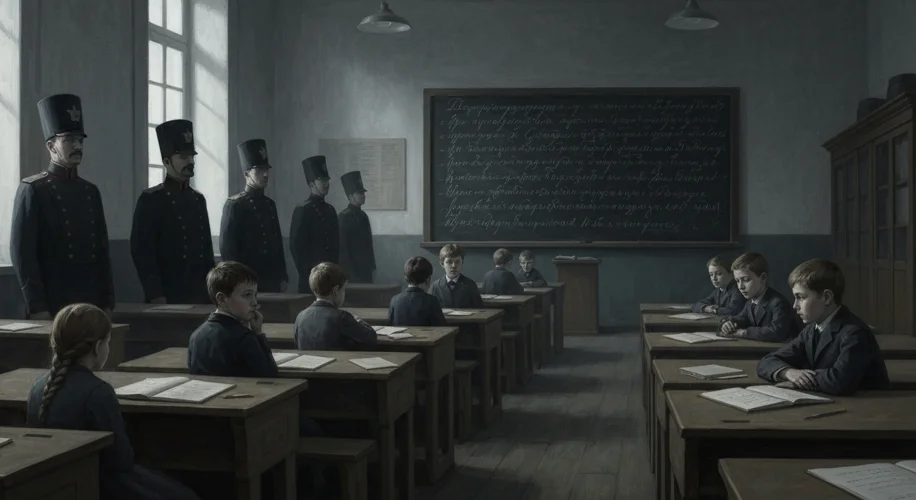
The policy manifested in myriad ways, each designed to erode local identity. Education was a prime battleground. In Poland, after the failed January Uprising of 1863, the Tsarist regime intensified its efforts. Polish was banned in schools, replaced by Russian. Universities were shut down or reorganized, their curricula overhauled to reflect Russian historical narratives and values. Even the names of places were often transliterated or changed to Russian equivalents, a constant, nagging reminder of who was in charge. This was more than just linguistic dominance; it was an attempt to re-engineer the very consciousness of a people.
Consider the plight of the Baltic provinces – Estonia, Latvia, and Lithuania. Following periods of relative autonomy, the late 19th century saw a surge in Russification under Tsar Alexander III. Local institutions were dismantled, Russian became the language of administration and justice, and even the Lutheran Church, a cornerstone of Baltic identity, faced pressure. The goal was clear: to create a buffer of loyal, Russian-speaking subjects against the perceived threat of Western European influence.
But Russification wasn’t confined to the western fringes of the empire. In Ukraine, policies aimed at suppressing the Ukrainian language and culture were implemented, often under the guise of fighting Polish or Austro-Hungarian influence. Ukrainian publications were banned, and the use of the language in public life was heavily restricted. The very idea of a distinct Ukrainian nation was often challenged, seen as a dangerous aberration from the unified Russian spirit.
The consequences of these policies were profound and long-lasting. While they undoubtedly fostered a sense of shared Russian identity among some, for many others, Russification bred resentment, resistance, and a deepened commitment to their own cultural heritage. It forged a sense of shared grievance that would fuel nationalist movements in the 20th century. The suppression of languages and cultures did not extinguish them; instead, it often drove them underground, preserving them in homes and secret societies, waiting for the opportune moment to re-emerge.
Even after the collapse of the Russian Empire and the formation of the Soviet Union, the spirit of Russification often persisted, albeit in new forms. The Soviet era saw the promotion of Russian as the lingua franca of the vast, multi-ethnic state. While the USSR officially espoused internationalism, in practice, Russian language and culture often held a privileged position. Deportations, forced resettlements, and the suppression of nationalist movements further blurred ethnic lines, but the deep-seated desire for self-determination remained.
The legacy of Russification is a complex and often painful one. It serves as a stark historical lesson on the dangers of cultural imperialism and the enduring power of identity. It highlights how the imposition of one culture onto another rarely leads to genuine assimilation, but rather to alienation, resistance, and the simmering embers of future conflict. The echoes of these policies continue to resonate in post-Soviet states, shaping national identities and geopolitical dynamics to this day. The story of Russification is a powerful reminder that the soul of a nation lies not in forced conformity, but in the vibrant, unyielding diversity of its people.