
In the bustling metropolises and quiet villages of today, the seamless flow of information often feels like magic. We tap on screens, and worlds unfold – news from across the globe, messages to loved ones, entire libraries of knowledge at our fingertips. Yet, beneath the waves, an unsung hero tirelessly orchestrates this global symphony of data: the humble undersea cable.
Before the advent of wireless communication, the world was a far more fractured place. News traveled at the speed of a ship, and transcontinental communication was a painstaking process involving relays of telegraph operators. The dream of near-instantaneous global connection was born with the telegraph, but its limitations were soon apparent. Land-based telegraph lines were vulnerable to weather, sabotage, and the sheer difficulty of spanning vast continents. The ocean, a seemingly insurmountable barrier, held the key to unlocking a truly connected planet.
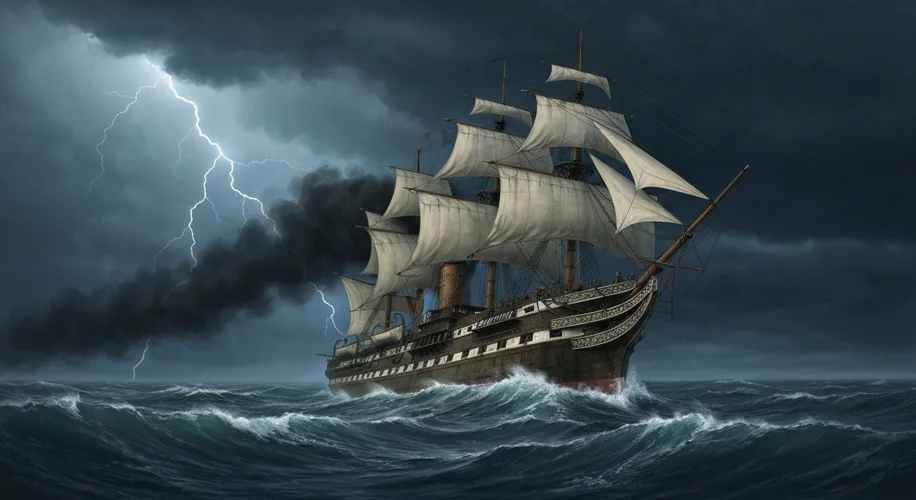
The tale of the undersea cable begins not with a whisper, but with a monumental, and initially, disastrous, undertaking. In the mid-19th century, visionaries like Cyrus Field dared to imagine a transatlantic telegraph cable, a lifeline of copper and gutta-percha stretching across the vast Atlantic. The first attempts were fraught with peril. Cables snapped, ships faltered, and fortunes were lost.

Field’s perseverance, however, became legendary. After years of setbacks, on August 5, 1858, a message finally crackled across the first successful transatlantic cable. “Europe and America are united by the electric telegraph. Glory to God in the highest on earth: peace to men of good will towards men.” The celebration was kısa süreli. Within weeks, the cable failed, a victim of its delicate construction and the immense pressure of the deep sea. Yet, the spark had been ignited. Subsequent attempts, learning from the failures, led to stronger cables, more robust ships, and a growing understanding of the ocean floor. By 1866, a reliable transatlantic cable was a reality, forever shrinking the distance between continents.
The impact was profound. News that once took weeks to travel could now arrive in minutes. Financial markets, once sluggish and localized, became global and instantaneous. Governments could communicate with their distant colonies more effectively, altering the very fabric of empires. The world, once a collection of isolated islands, began to feel like a single, interconnected neighborhood.
But the story of undersea cables is not just one of technological triumph; it is also a tale of constant evolution and hidden vulnerabilities. As the 20th century dawned, the demand for faster and more sophisticated communication grew. The telegraph gave way to the telephone, and then to the data-rich networks of the modern internet. Each leap forward demanded thicker, more complex cables, capable of carrying exponentially more information.
Today, a vast, intricate web of fiber-optic cables lies on the ocean floor, a testament to human ingenuity. These cables, thinner than a garden hose but carrying unimaginable amounts of data, form the backbone of our digital lives. They connect us to loved ones, power our economies, and facilitate global scientific collaboration. Think of every video call, every online purchase, every streaming movie – all of it, at some point, has likely traveled through these silent, submerged arteries.
However, this vital infrastructure is not without its risks. Ships’ anchors, seismic activity, and even the curious nibbling of sharks have been known to disrupt service. More recently, the geopolitical implications have become increasingly apparent. Nations recognize the strategic importance of these cables, leading to concerns about sabotage and surveillance. The very arteries that connect us also represent potential choke points, demanding constant vigilance and innovation in their protection.
The story of the undersea cable is far from over. As technology advances, we are seeing the development of even more sophisticated systems, including unmanned laying and repair vehicles. The unseen currents beneath the waves will continue to carry the world’s conversations, its commerce, and its dreams, weaving a tapestry of connection that binds humanity together, one data packet at a time.
