
The Catholic Church, a venerable institution steeped in tradition and millennia of theological discourse, has long grappled with questions of ministry, leadership, and the roles assigned to both men and women. Among the most persistent and historically rich debates centers on the diaconate – the order of deacons, traditionally seen as servants and assistants to bishops and priests. For centuries, this discussion has touched upon a fascinating and often overlooked aspect of early Christian history: the existence and function of female deacons, or deaconesses.
To understand this complex issue, we must first step back into the vibrant, sometimes tumultuous, early centuries of Christianity. The Roman Empire, in which Christianity was born and first flourished, was a world with distinct social stratifications and gender roles. Yet, within this context, early Christian communities often displayed a surprising degree of inclusivity. The nascent Church was a melting pot of cultures, languages, and social backgrounds, and the gospel message of equality in Christ offered a radical alternative to the prevailing norms.
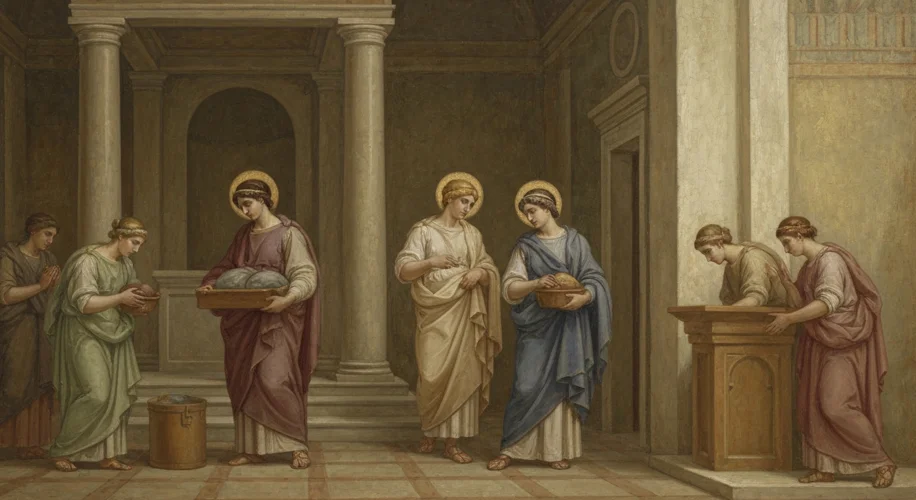
The New Testament itself provides tantalizing glimpses of women holding significant roles within the early church. Phoebe, for instance, is described by the Apostle Paul in Romans 16:1-2 as a diakonos of the church in Cenchreae, a term often translated as ‘deacon.’ Paul commends her to the Roman community, emphasizing her role as a benefactor and helper. While the precise nature of her ministry is debated, the use of the male term diakonos for a woman suggests a recognized office of service.
Beyond Phoebe, other women are mentioned as active participants and leaders. Priscilla, working alongside her husband Aquila, is depicted as a teacher and fellow worker in the gospel (Acts 18:26). Junia is referred to as an ‘outstanding apostle’ by Paul (Romans 16:7), a designation that has sparked considerable scholarly debate regarding her status and gender. These biblical references, though sparse, lay the groundwork for understanding why the role of women in early church leadership, including a form of diaconal ministry, became a historical reality.
As Christianity spread, particularly in the Eastern Mediterranean and parts of the Roman Empire, evidence for established orders of deaconesses becomes more concrete. From the 3rd century CE onwards, various historical documents, inscriptions, and conciliar canons attest to their existence. These women were not merely helpers; they were ordained, often through a liturgical rite, to specific ministries.
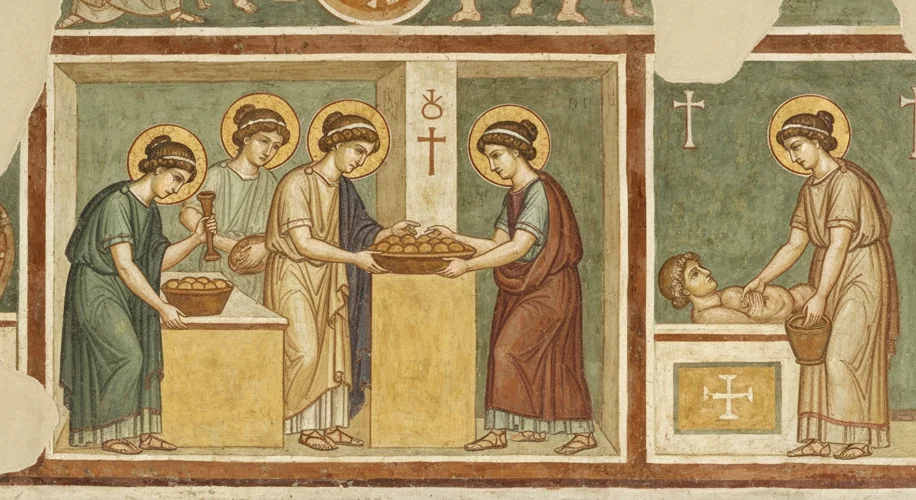
What did these deaconesses do? Their roles were diverse and often complementary to those of male clergy, adapted to the social customs of the time. In an era where strict segregation between men and women was common, deaconesses played a crucial role in ministering to women. They assisted at the baptism of adult women, offering privacy and facilitating the modesty required in the sacred rite. They visited sick women in their homes, offered comfort and spiritual guidance, and were instrumental in charitable outreach to the poor and marginalized, particularly women and children.
Some evidence suggests deaconesses were involved in catechizing women, preparing them for baptism and church membership. They might also have been tasked with ensuring order and decorum among women in church gatherings. In some instances, they were even present during liturgical services, assisting the bishop or priest, though their participation in more solemn rites was generally limited. The council of Chalcedon in 451 CE, for example, recognized the order of deaconesses, outlining specific age and conduct requirements for ordination.
However, the story of the female diaconate is not one of linear progression. The role and recognition of deaconesses varied significantly across different regions and over time. In the Western Church, the formal ordination of women to the diaconate was less common, with the emphasis often placed on more informal roles of service. Factors such as evolving social norms, theological interpretations, and the increasing clericalization of the Church contributed to the gradual decline and eventual disappearance of the formal order of deaconesses in many parts of Christendom by the High Middle Ages.
Despite their disappearance from formal church structures, the memory and theological implications of the female diaconate have persisted. In recent decades, particularly within the Catholic Church, there has been renewed interest and extensive research into this historical phenomenon. Theological discussions and historical commissions have revisited the evidence, prompting questions about the Church’s understanding of ordained ministry, tradition, and the potential for restoring or recognizing roles for women that align with their historical precedents.
The modern debate is complex, involving not only historical interpretation but also contemporary theological reflection on the nature of ministry and the charisms of women within the Church. Proponents of female deacons argue that their historical existence demonstrates a legitimate tradition of ordained ministry for women, which could be revived to address contemporary needs for service, charity, and pastoral care. Opponents often emphasize the distinctiveness of the male priesthood and the historical trajectory of the Church, arguing that the diaconate as it exists today is inextricably linked to the male priesthood.
Regardless of where one stands on the contemporary debate, the historical evidence of women serving as deacons in the early Church offers a compelling narrative. It reveals a Church that, in its formative years, found ways to integrate women into recognized ministries of service and leadership, responding to the needs of its members within the cultural context of the time. The story of these women, often unsung but undeniably vital, reminds us that the Church’s history is not static but a living, evolving testament to faith and service across the ages.
This historical journey underscores that the question of women in the diaconate is not a modern invention but a re-examination of an ancient, deeply rooted tradition within Christianity. It invites us to look beyond simplistic assumptions and engage with the nuanced, rich tapestry of the Church’s past.