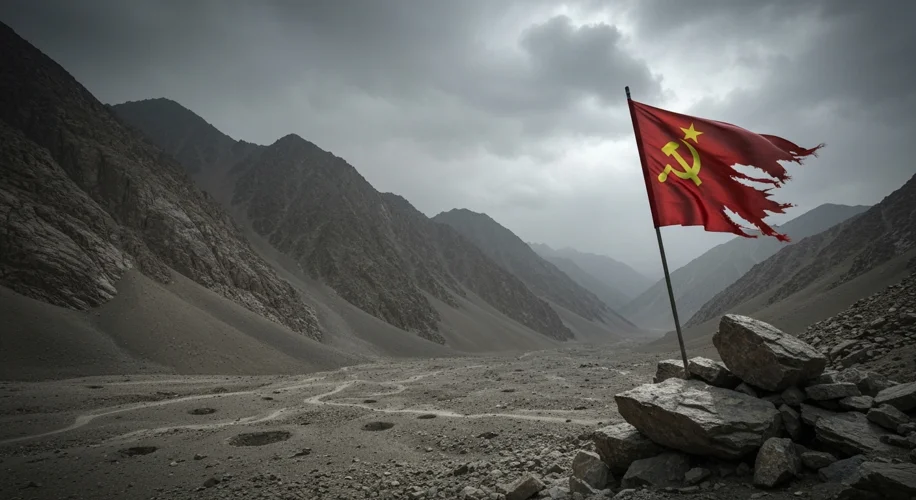
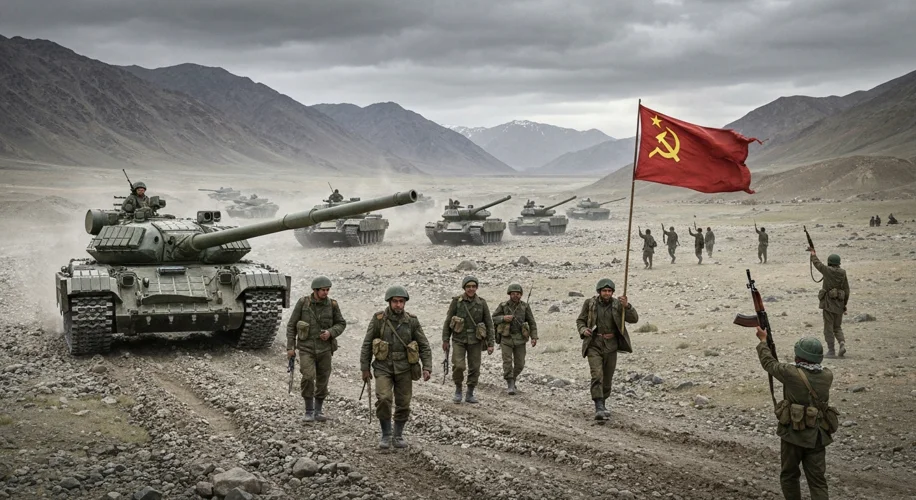
The icy winds of December 24, 1979, carried more than just the chill of winter into Afghanistan. They carried the thunder of Soviet tanks, the roar of their engines a harbinger of a conflict that would scar a nation, cripple an empire, and leave a legacy of bitterness that echoes to this day. The Soviet-Afghan War, a brutal ten-year struggle, was a clash of ideologies, a proxy battleground, and ultimately, a stark illustration of how even the mightiest of powers can be brought to their knees by determined resistance.
Afghanistan, a rugged, mountainous land at the crossroads of empires, had long been a place where foreign ambitions went to die. From the British Empire’s disastrous attempts in the 19th century to the modern Soviet Union’s seemingly unassailable military might, each had underestimated the fierce independence of the Afghan people and the unforgiving terrain that served as their ally. This time, the stage was set for a conflict born out of a communist coup and Cold War anxieties.
In April 1978, the People’s Democratic Party of Afghanistan (PDPA), a Marxist-Leninist faction, seized power in Kabul. Their secular, reformist agenda, however, clashed violently with Afghanistan’s deeply religious and tribal society. Hardline communists, the Khalq faction, began a brutal purge of perceived enemies, including religious leaders and intellectuals. This repression fueled a widespread insurgency, coalescing into various Mujahideen groups, united by their opposition to the PDPA and, increasingly, to Soviet influence.
Moscow, initially hesitant, watched with growing alarm. They feared Afghanistan could become a hotbed for anti-Soviet Islamic extremism, potentially destabilizing their own Central Asian republics. When the PDPA leader, Hafizullah Amin, allegedly orchestrated the assassination of his predecessor, Babrak Karmal, and his hardline policies further alienated the population, Soviet leader Leonid Brezhnev made a fateful decision. Citing the need to stabilize the region and protect its socialist gains, the Soviet Union launched a full-scale invasion.
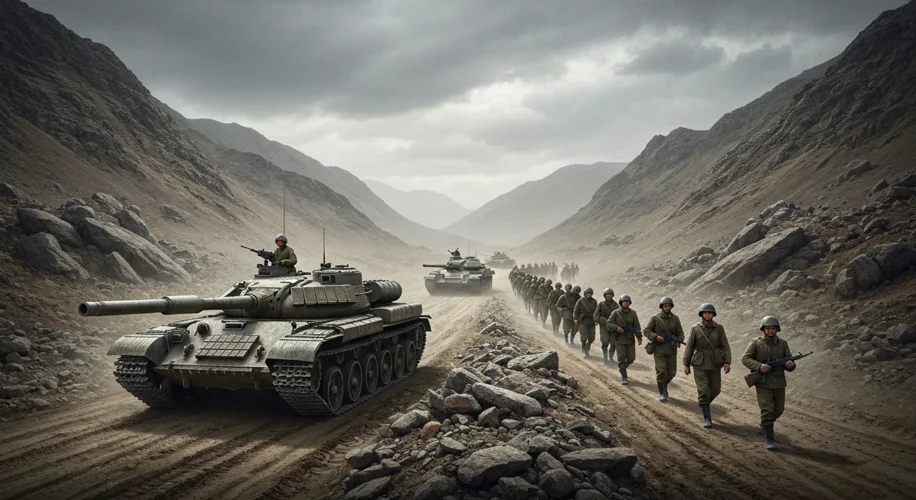
The initial Soviet advance was swift. Thousands of paratroopers landed in Kabul, securing key points and installing a new, more pliable leader, Babrak Karmal. The world watched, shocked, as the supposedly invincible Red Army seemed poised to swiftly crush the rebellion. The United States, under President Carter, saw this as a blatant act of Soviet expansionism, a violation of international law, and a direct threat to the delicate balance of the Cold War. The US, along with Saudi Arabia and Pakistan, began a covert program to arm and train the Mujahideen, transforming them into a formidable fighting force.
This was no ordinary insurgency. The Mujahideen, a disparate collection of tribal warriors, religious zealots, and freedom fighters, were masters of guerrilla warfare. They knew the treacherous mountain passes, the hidden valleys, and the art of ambushing a technologically superior enemy. Armed with Stinger missiles supplied by the CIA, they could now target Soviet helicopters and aircraft, neutralizing a key advantage of the Red Army. The war devolved into a brutal stalemate, a ‘Soviet Vietnam’ playing out in the unforgiving Afghan landscape. Cities became battlegrounds, villages were razed, and the civilian population bore the brunt of the conflict, creating millions of refugees who streamed into Pakistan and Iran.
Key figures emerged from the chaos. Ahmad Shah Massoud, the ‘Lion of Panjshir,’ became a legendary commander, skillfully defending his valley against repeated Soviet assaults. Gulbuddin Hekmatyar, a more hardline and controversial leader, also rose to prominence, fueled by external support. On the Soviet side, commanders grappled with a war that was politically unpopular at home and proving to be a quagmire. The human cost was immense, with estimates of Afghan civilian deaths ranging from 800,000 to over a million, and nearly 15,000 Soviet soldiers killed.
The war lasted for nine agonizing years. The Soviet economy, already strained, buckled under the immense financial and human cost. The conflict fueled anti-war sentiment within the Soviet Union, and the returning soldiers, often disillusioned and traumatized, became known as ‘Afgantsy,’ a symbol of the war’s futility. By 1988, under the leadership of Mikhail Gorbachev, who had initiated policies of ‘glasnost’ (openness) and ‘perestroika’ (restructuring), the decision was made to withdraw.
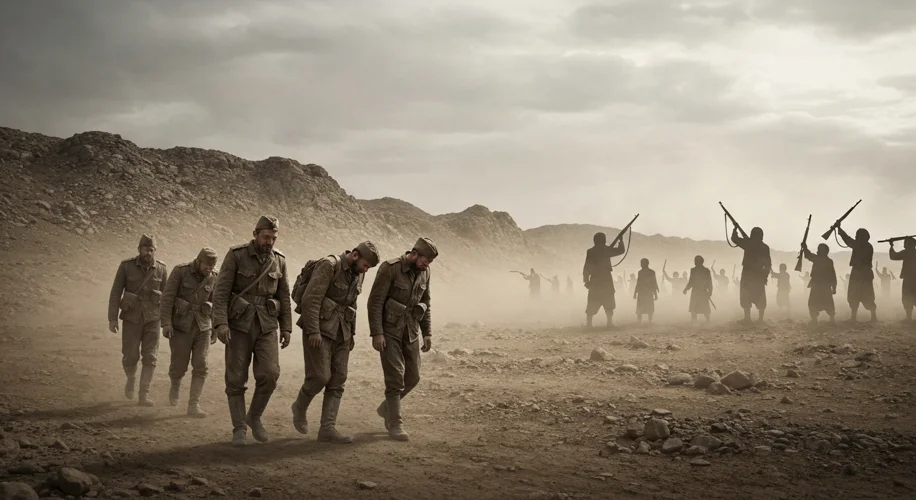
The final Soviet soldier, Lieutenant General Boris Gromov, stepped across the Friendship Bridge into Uzbekistan on February 15, 1989, marking the end of a conflict that had begun with so much bravado and ended in such profound defeat. The Soviet Union, weakened and disillusioned, would collapse just two years later.
The consequences of the Soviet-Afghan War were far-reaching. For Afghanistan, it ushered in a new era of civil war, as the victorious Mujahideen factions turned on each other. The country, devastated by years of conflict, struggled to rebuild and find stability. The rise of extremist groups, some of whom had been empowered and armed during the war, laid the groundwork for future conflicts and the rise of groups like Al-Qaeda.
For the Soviet Union, the war was a critical factor in its undoing. It exposed the weaknesses of the Soviet military and political system, drained resources, and eroded public trust. The defeat became a potent symbol of Soviet decline.
Beyond the immediate geopolitical shifts, the war served as a stark warning about the limits of superpower intervention. It demonstrated the power of determined resistance, the unforgiving nature of asymmetric warfare, and the profound, often unforeseen, consequences of meddling in the complex tapestry of a foreign nation. The echoes of those Soviet tanks rumbling through the Afghan valleys in 1979 continue to reverberate, a somber reminder of a war that became a graveyard for an empire and a crucible for a nation.