
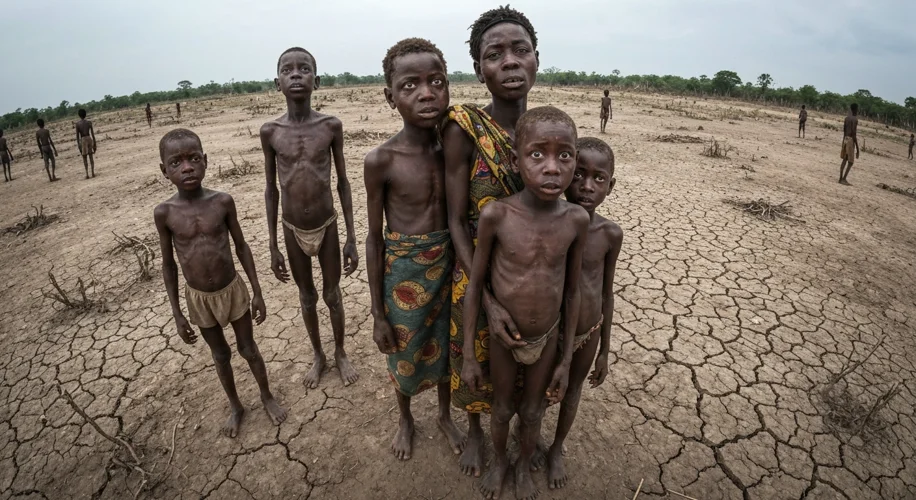
The year is 1967. Nigeria, a young nation barely seven years into its independence, stood on the precipice of a cataclysm. The air thrummed with an electric tension, a prelude to a conflict that would etch itself into the very soul of the country: the Nigerian Civil War, more commonly known as the Biafran War.
For decades, the seeds of discord had been sown. Nigeria, a vibrant tapestry of over 250 ethnic groups, was a post-colonial creation, its borders arbitrarily drawn by British administrators who paid little heed to the complex ethnic and religious divides. Tensions simmered between the dominant ethnic groups – the Hausa-Fulani in the North, the Yoruba in the West, and the Igbo in the East. Resource control, political power, and deeply ingrained ethnic mistrust created a volatile cocktail.
The immediate catalyst for war was the escalating wave of violence against the Igbo people, particularly in the North, following a series of military coups in 1966. These pogroms, characterized by brutal massacres, sent shockwaves through the Eastern Region. Hundreds of thousands of Igbo fled their homes, seeking refuge in their ancestral lands. It was in this atmosphere of fear and betrayal that the Eastern Region, under the leadership of Lt. Col. Chukwuemeka Odumegwu Ojukwu, declared its secession from Nigeria on May 30, 1967, proclaiming the independent Republic of Biafra.
The Nigerian federal government, led by Major General Yakubu Gowon, viewed this secession as an existential threat to national unity. The war that ensued was swift, brutal, and devastating. The federal forces, bolstered by international support and superior weaponry from Britain and the Soviet Union, launched a three-pronged offensive to crush the secessionist movement. Biafra, though fiercely determined and initially possessing a well-trained military, found itself increasingly isolated.
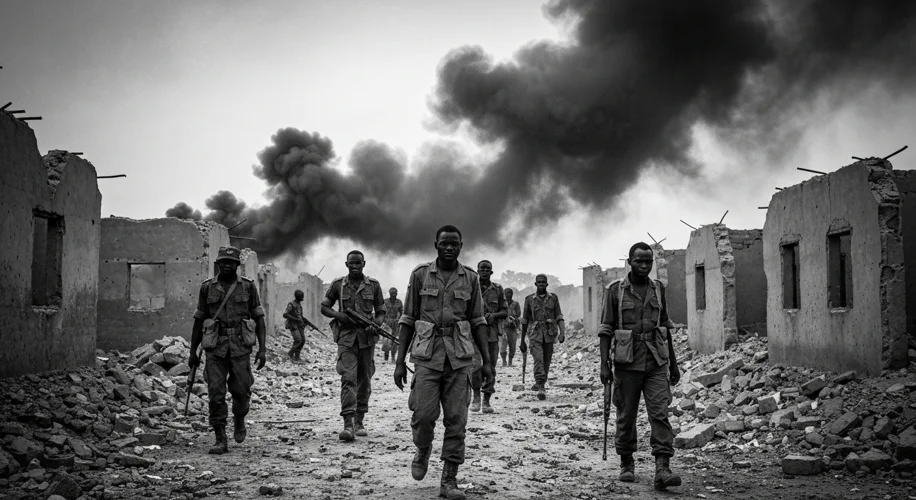
The conflict quickly devolved into a humanitarian crisis of unimaginable proportions. The federal blockade of Biafra choked off vital supplies of food and medicine. The world watched in horror as images of starving children, their bodies emaciated and eyes hollow, flickered across television screens. The phrase ‘Biafran famine’ became synonymous with mass starvation, a stark testament to the war’s devastating human cost. International aid organizations, though struggling against logistical nightmares and political complexities, desperately tried to alleviate the suffering, but the scale of the crisis often felt overwhelming.
Key actors played pivotal roles in this tragic drama. Lt. Col. Ojukwu, the charismatic leader of Biafra, embodied the region’s desire for self-determination, but his unwavering stance ultimately led to prolonged conflict. Major General Gowon, on the Nigerian side, was determined to preserve the territorial integrity of his nation, employing a strategy of attrition that proved devastatingly effective. Internationally, Britain’s support for the federal government, driven by strategic and economic interests, drew criticism, while the Soviet Union’s involvement also aimed to bolster Nigeria’s position against Western influence. France’s recognition of Biafra, though symbolic, highlighted the complex geopolitical undercurrents.
The war raged for 30 months, a relentless cycle of fighting, starvation, and displacement. By early 1970, the Biafran forces were on the verge of collapse. On January 15, 1970, Biafra surrendered, and the dream of an independent nation dissolved. The surrender document, signed by Ojukwu’s representative, marked the end of a brutal chapter in Nigerian history.
The consequences of the Nigerian Civil War were profound and far-reaching. An estimated one to three million people, mostly Igbo civilians, perished from starvation, disease, and direct conflict. The war decimated Biafra’s infrastructure and economy, leaving the region deeply scarred. While Nigeria was preserved as a unified nation, the underlying ethnic tensions and grievances remained, casting a long shadow over its future political landscape. The war also had significant implications for international relations, highlighting the complex role of foreign powers in African conflicts and raising critical questions about humanitarian intervention.
Decades later, the echoes of the Biafran War still resonate. It remains a crucial, albeit painful, memory in Nigeria’s national consciousness, a reminder of the fragility of unity and the devastating cost of ethnic conflict. The war serves as a potent case study in post-colonial nation-building, the complexities of resource control, and the enduring struggle for self-determination. It is a somber chapter that underscores the imperative for dialogue, understanding, and reconciliation in a diverse and often divided world.