
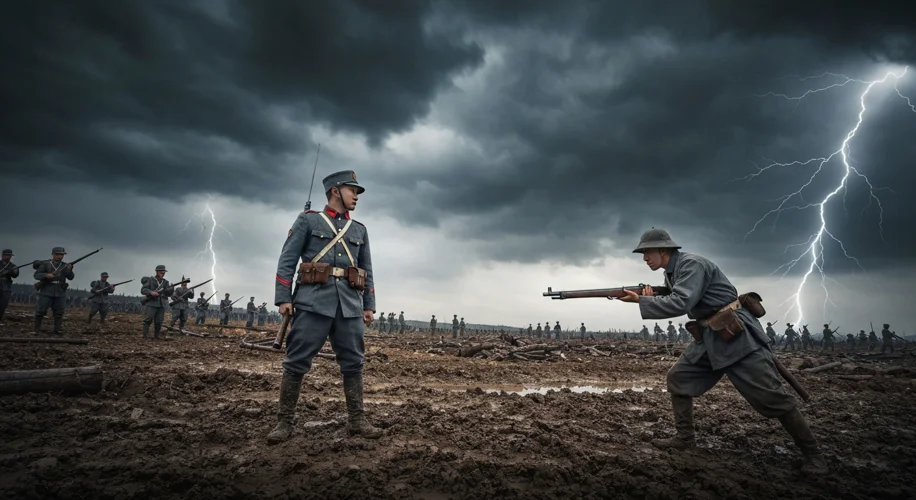
The year is 1894. The air in East Asia is thick with tension, a brewing storm that would soon erupt into a conflict that would dramatically redraw the map of power and signal the end of one empire’s dominance while heralding the dawn of another. This was the First Sino-Japanese War, a brutal clash primarily fought over the strategically vital Korean peninsula.
For centuries, China, under the Qing Dynasty, had viewed itself as the “Middle Kingdom,” the center of civilization. Its vast empire, though internally fractured and technologically lagging, held a certain prestige, demanding tribute from neighboring states. Korea, a peninsula jutting out towards Japan, was deeply enmeshed in this tributary system, a jewel in China’s imperial crown. Japan, however, had undergone a radical transformation in the late 19th century. The Meiji Restoration, beginning in 1868, had seen Japan rapidly embrace Western technology, industry, and military organization. It was a nation hungry for recognition, for its rightful place among the world powers, and it saw Korea as a crucial stepping stone.
The immediate spark for the war was a peasant rebellion in Korea known as the Donghak Rebellion. The Korean government, teetering on the brink, appealed to its suzerain, China, for assistance. Beijing, perhaps overconfident in its established order, dispatched troops. But Japan, seeing its own interests threatened and seizing upon a pretext, also sent its modernized forces to Korea. What began as an intervention to quell a rebellion quickly escalated into a direct confrontation between the two empires.
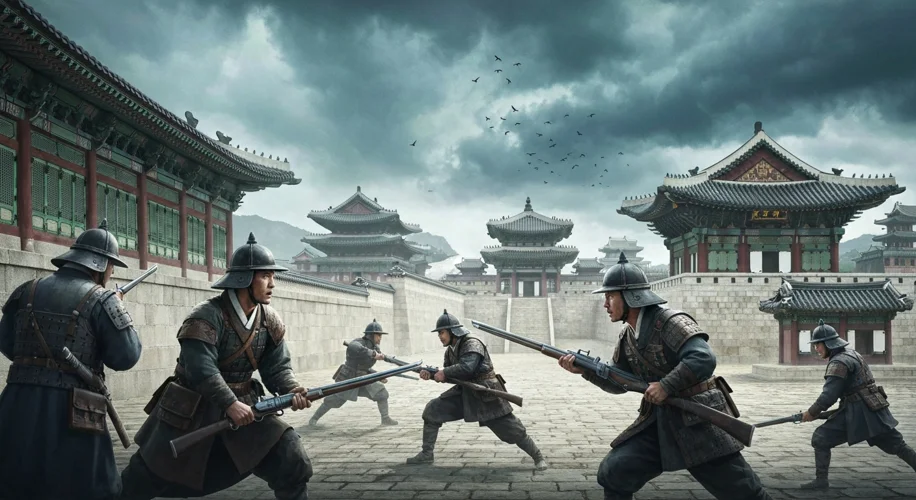
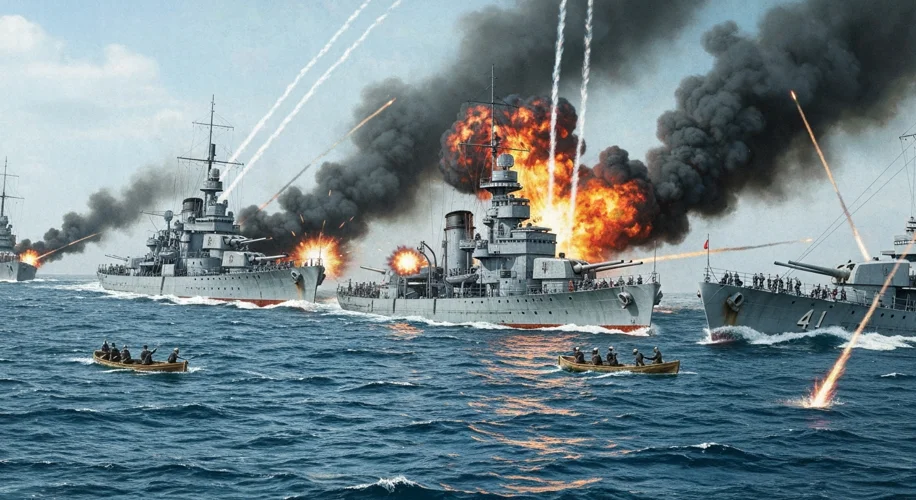
The conflict that followed was a stark illustration of the changing tides of military might. The Qing forces, despite their numerical superiority and long history, were ill-equipped and poorly led compared to the disciplined, well-trained, and modernly armed Japanese Imperial Army and Navy. The war was remarkably swift and decisive. The Battle of Pyongyang in September 1894 saw the Qing forces routed, their soldiers ill-prepared for the ferocity of the Japanese assault. The Japanese navy then achieved a stunning victory at the Battle of the Yalu River, a naval engagement where their modern ships outmaneuvered and decimated the Qing fleet, effectively giving Japan control of the seas.
The Japanese advance continued relentlessly. By early 1895, Japanese troops had landed on the Liaodong Peninsula and were pushing towards China’s vital naval base at Weihaiwei. The fall of Weihaiwei in February 1895, with its captured warships and arsenals, was a humiliating blow to the Qing. The war was, by all accounts, a catastrophic failure for China.
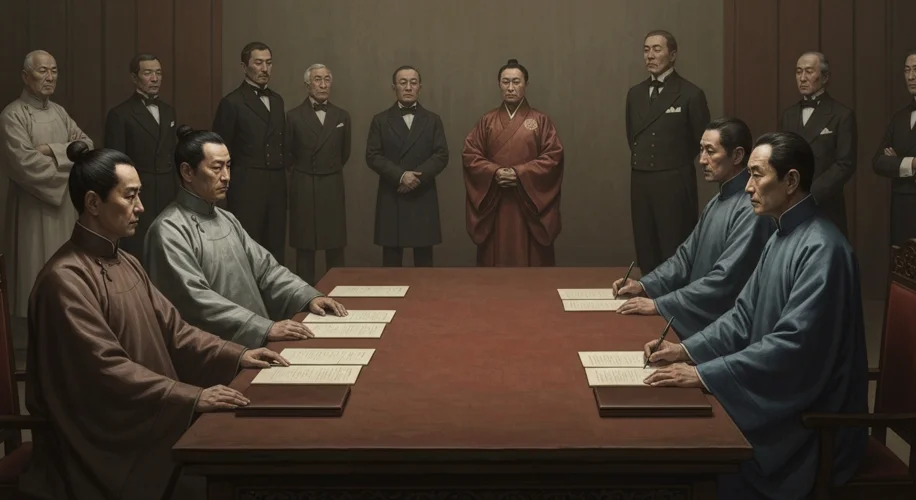
The Treaty of Shimonoseki, signed in April 1895, sealed China’s fate. Under its terms, the Qing Empire was forced to cede Taiwan, the Pescadores Islands, and the Liaodong Peninsula to Japan. More significantly, China was compelled to recognize the “full and complete independence and autonomy” of Korea, effectively severing its traditional ties and opening the door for increasing Japanese influence and eventual annexation. Japan also received a massive indemnity, further crippling the Qing economy. The war exposed the profound weakness of the Qing Dynasty and its inability to modernize in the face of a determined, reform-minded neighbor.
The consequences of the First Sino-Japanese War were far-reaching. For Japan, it was a triumphant validation of its modernization efforts and a powerful statement of its emergence as a major East Asian power. It fueled nationalist ambitions and set the stage for its imperial expansion in the decades to come, culminating in the Pacific War of World War II. For China, the defeat was a profound shock, a national humiliation that further eroded the legitimacy of the Qing Dynasty. It intensified calls for reform and revolution, ultimately contributing to the dynasty’s collapse in 1911. The war also alerted Western powers to Japan’s growing might, leading to a complex recalculation of their own interests in the region. The struggle over Korea, ignited in 1894, would cast a long shadow, contributing to future conflicts and shaping the geopolitical landscape of East Asia for the next century.
This conflict was more than just a clash of armies; it was a seismic shift, a powerful testament to the impact of modernization and the dangerous allure of imperial ambition. It demonstrated that an old order, however entrenched, could be swiftly overthrown by a determined, innovative challenger, a lesson that echoed through the turbulent 20th century.