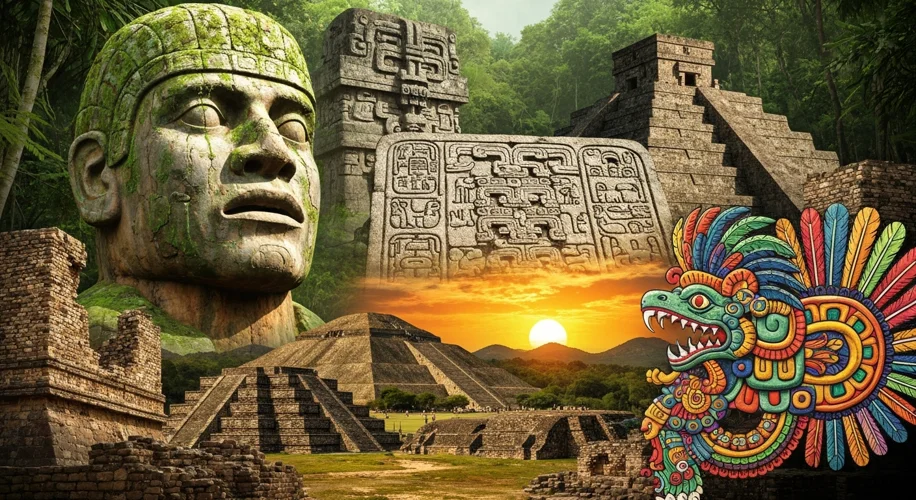
Imagine a land where towering pyramids pierced the sky, where intricate calendars tracked the celestial dance, and where feathered serpents and jaguar gods held sway over the lives of millions. This was Mesoamerica, a vibrant cradle of civilization that flourished for millennia before the arrival of Europeans. While often lumped together, the great cultures that arose from this fertile ground – the Olmec, Maya, Teotihuacan, and Aztec – were distinct tapestries, woven with unique threads of societal structure, religious fervor, artistic brilliance, and ingenious innovation.
Let us journey back, not to a single point in time, but across the vast sweep of Mesoamerican history, beginning with the enigmatic Olmec, often hailed as the “mother culture” of the region. Emerging around 1500 BCE in the humid lowlands of what is now Veracruz and Tabasco, Mexico, their influence spread like wildfire. What truly sets the Olmec apart are their colossal stone heads – monumental portraits of rulers carved from basalt, some weighing over 40 tons! These silent sentinels hint at a complex hierarchical society, capable of organizing immense labor and possessing advanced stoneworking techniques. Their cosmology, rich with jaguar imagery and serpentine deities, laid the groundwork for many later Mesoamerican belief systems. Think of the Olmec not as a simple precursor, but as the foundational rhythm to the symphony of Mesoamerican culture.
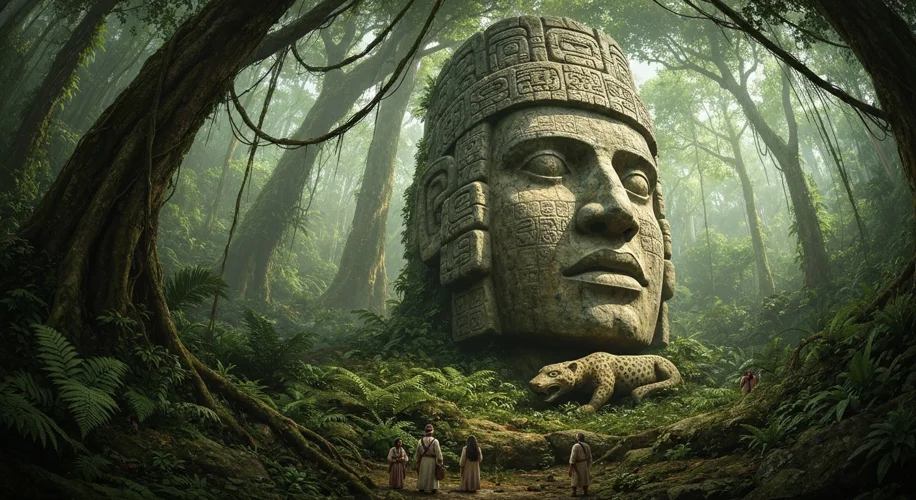
Then came the Maya, a civilization that reached its zenith in the Classic Period (c. 250-900 CE) in the Yucatán Peninsula, Guatemala, Belize, and parts of Honduras and El Salvador. If the Olmec were the rhythm, the Maya were the soaring melody. They are renowned for their breathtaking city-states like Tikal, Palenque, and Copán, architectural marvels adorned with intricate carvings and astronomical observatories. Their intellectual prowess was astounding: they developed the most sophisticated hieroglyphic writing system in the pre-Columbian Americas, a complex and accurate calendar system that rivaled any in the world, and a profound understanding of mathematics, including the concept of zero. Their religious practices were elaborate, involving bloodletting rituals, shamanistic journeys, and the veneration of gods associated with the cosmos, agriculture, and warfare. The Maya, however, were not a unified empire, but rather a collection of powerful, often warring city-states, each with its own ruling dynasty.
Meanwhile, nestled in the Valley of Mexico, a different kind of power was rising. The city of Teotihuacan, which flourished from roughly 100 BCE to 550 CE, was not just a city but a metropolis, possibly the largest in the world at its peak. Unlike the Maya city-states, Teotihuacan appears to have been a centralized, cosmopolitan hub, its influence felt across Mesoamerica through trade and perhaps even military might. Its iconic structures, the Pyramid of the Sun and the Pyramid of the Moon, dominate the vast Avenue of the Dead. Teotihuacan’s art and architecture, characterized by its distinctive talud-tablero style (sloping base with a vertical panel), and its murals, often depicted a more austere, yet powerful, pantheon of deities compared to the Maya. The identity of its rulers remains largely mysterious, adding to its enigmatic allure.

Finally, we arrive at the Aztec, who rose to prominence in the 14th century CE, establishing their magnificent capital, Tenochtitlan, on an island in Lake Texcoco. The Aztecs, or Mexica as they called themselves, were masterful organizers and formidable warriors. They forged an empire through conquest, establishing a tributary system that brought vast wealth and resources to their dazzling capital, a city of canals, causeways, and monumental temples, including the Templo Mayor. Aztec religion was deeply intertwined with cosmic cycles and the belief that human sacrifice was necessary to sustain the sun and the universe. Their artistic expressions, often seen in their intricate stone sculptures and codices, were vibrant and imbued with a profound sense of divine purpose and martial valor.
While each civilization possessed unique characteristics, common threads bound them together. A shared cosmological understanding, for instance, with deities often having overlapping domains – the serpent, the jaguar, and the feathered serpent (Quetzalcoatl/Kukulkan) appearing in various forms across cultures. The Mesoamerican ballgame, played with a solid rubber ball, was a ritualistic and often deadly sport that held deep religious and political significance throughout the region. Their agricultural practices, centered on maize, beans, and squash, formed the bedrock of their societies. Their technological advancements, though lacking the wheel for transport and large draft animals, were remarkable in their own right, from the intricate irrigation systems of Teotihuacan to the sophisticated calendar systems of the Maya.
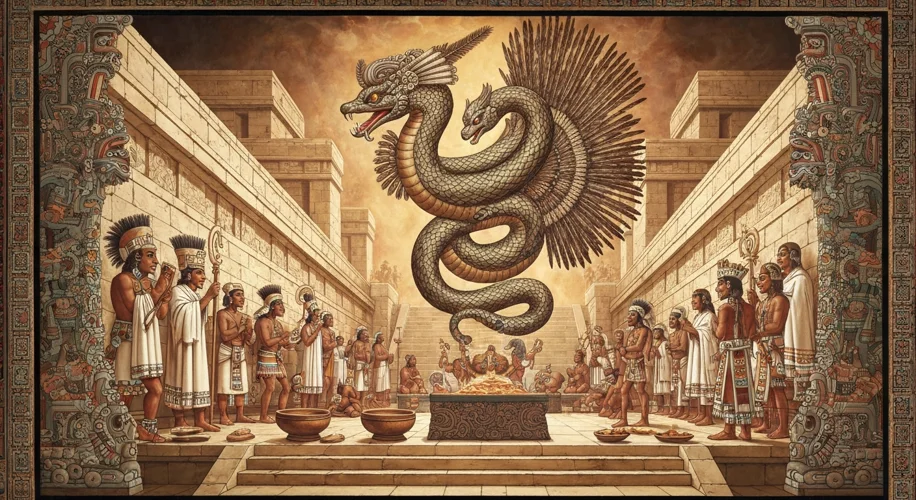
The legacies of these civilizations are not merely echoes in the dust. They are imprinted on the landscapes, in the surviving ruins, and in the enduring cultural practices of Indigenous peoples today. By comparing the Olmec’s monumental vision, the Maya’s intellectual brilliance, Teotihuacan’s urban grandeur, and the Aztec’s imperial might, we gain a richer appreciation for the complexity, diversity, and profound ingenuity of ancient Mesoamerica – a world that, though long past, continues to captivate and inspire.