Before the Spanish conquistadors arrived, before Columbus even set sail, a civilization of unparalleled sophistication flourished in the lush rainforests and rugged highlands of Mesoamerica. They were the Maya, a people whose legacy echoes through the colossal stone cities, intricate hieroglyphs, and profound astronomical knowledge they left behind. For centuries, their world thrived, a testament to human ingenuity and a stark reminder of civilizations lost to time.
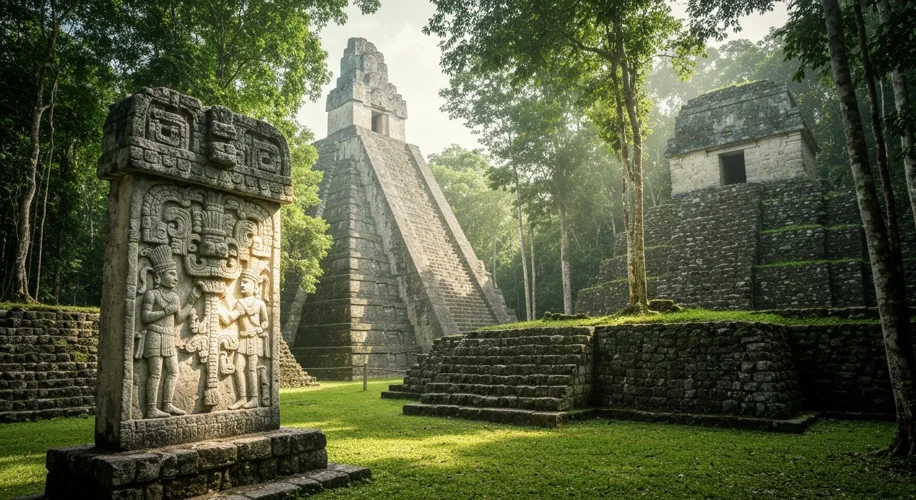
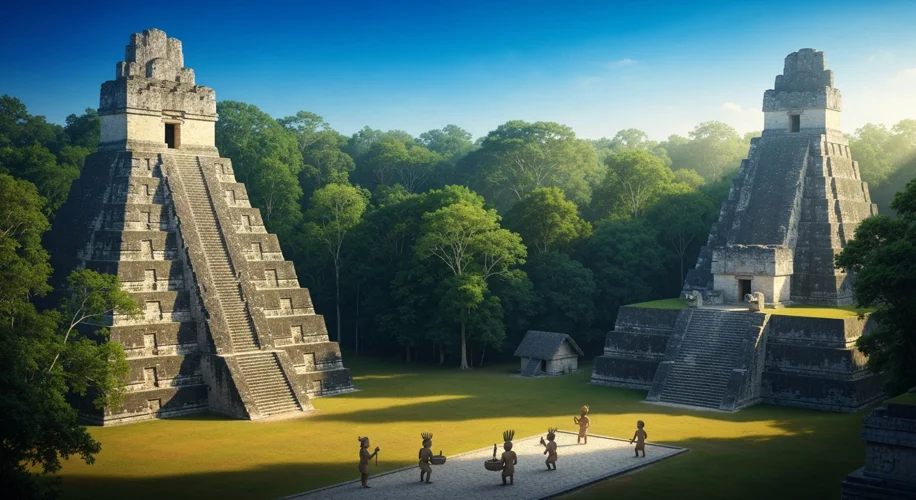
The Maya civilization, spanning roughly from 2000 BCE to 1500 CE, wasn’t a single, monolithic empire, but rather a complex network of independent city-states, each with its own rulers, customs, and ambitions. Imagine a world where cities like Tikal, Palenque, Copán, and Chichen Itza pulsed with life, their grand pyramids piercing the jungle canopy, their plazas alive with ceremonies and trade. These were not mere settlements; they were centers of political power, religious devotion, and scientific inquiry.
At the heart of Maya society was a deeply spiritual worldview. They saw the cosmos as a living entity, interconnected and governed by celestial cycles. Their gods were powerful beings who influenced every aspect of life, from the ripening of maize to the destinies of kings. This cosmic reverence fueled their monumental architectural endeavors. The towering temples and observatories weren’t just buildings; they were earthly manifestations of their celestial beliefs, aligned with the movements of the sun, moon, Venus, and the stars.
The Maya were a civilization of profound intellectual achievements. While many ancient cultures developed writing systems, the Maya created the most sophisticated hieroglyphic script in the pre-Columbian Americas. These intricate carvings, found on stelae, pottery, and codices, recorded history, mythology, genealogies of rulers, and astronomical observations. Their mastery of mathematics was equally astounding, utilizing a base-20 system and, remarkably, the concept of zero independently of Old World civilizations.
Their understanding of time was cyclical and incredibly precise. They developed multiple calendar systems, most famously the Long Count, which allowed them to record vast stretches of time with astonishing accuracy. This enabled them to predict celestial events, like eclipses, with a precision that rivaled modern science. Their astronomical observations were not abstract curiosities; they were vital for agriculture, religious ceremonies, and the legitimacy of their divine rulers.
But this glorious civilization did not endure forever. Around the 9th century CE, a dramatic decline, often referred to as the Classic Maya Collapse, began to sweep across the southern lowlands. Cities were abandoned, populations dwindled, and the grand centers of Maya culture fell silent, gradually reclaimed by the encroaching jungle. The exact causes of this collapse remain a subject of intense debate among scholars. Was it a single catastrophic event, or a confluence of factors? Evidence points to a complex interplay of environmental degradation, prolonged drought, overpopulation, warfare between city-states, and the breakdown of trade routes. Imagine a world where crops failed, water sources dried up, and the gods seemed to have turned their backs on their devoted followers. The psychological and social impact of such widespread hardship would have been devastating.
Yet, the Maya were not eradicated. While the great cities of the southern lowlands were abandoned, Maya civilization continued to thrive in other regions, particularly in the Yucatán Peninsula, with centers like Chichen Itza and Mayapan rising to prominence. The Spanish conquest in the 16th century brought further upheaval, but Maya culture persisted, adapting and enduring in the face of immense challenges. Their languages are still spoken today, their traditions continue, and their descendants carry the legacy of this remarkable civilization forward.
The Maya offer a powerful lens through which to examine human resilience, intellectual achievement, and the delicate balance between civilization and environment. Their story is a cautionary tale of ecological limits and a vibrant testament to the enduring spirit of human innovation. They remind us that history is not a static entity but a dynamic, ever-unfolding narrative, with echoes of the past resonating powerfully in our present.