The year is 1428. The arid Valley of Mexico, a land of shimmering lakes and volcanic peaks, pulsed with life. Dominating this landscape were the Tepanecs, a formidable power that held sway over countless smaller city-states. Yet, in the heart of Lake Texcoco, a tenacious group of exiles, the Mexica, were about to unleash a storm that would reshape Mesoamerica.
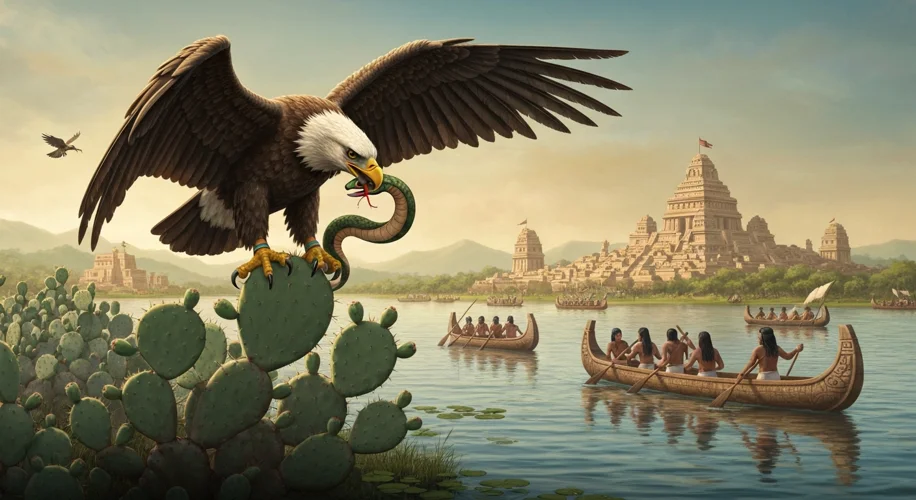
These Mexica, often called Aztecs, were newcomers to the valley, having migrated from their mythical homeland of Aztlan, a journey shrouded in legend and divine pronouncement. They were a people driven by prophecy, guided by their patron deity Huitzilopochtli, the god of sun and war, who had commanded them to seek a sign: an eagle perched on a prickly pear cactus, devouring a serpent. They found it, or so they believed, on a desolate island in Lake Texcoco. This was the divine mandate, the seed from which a mighty empire would grow.
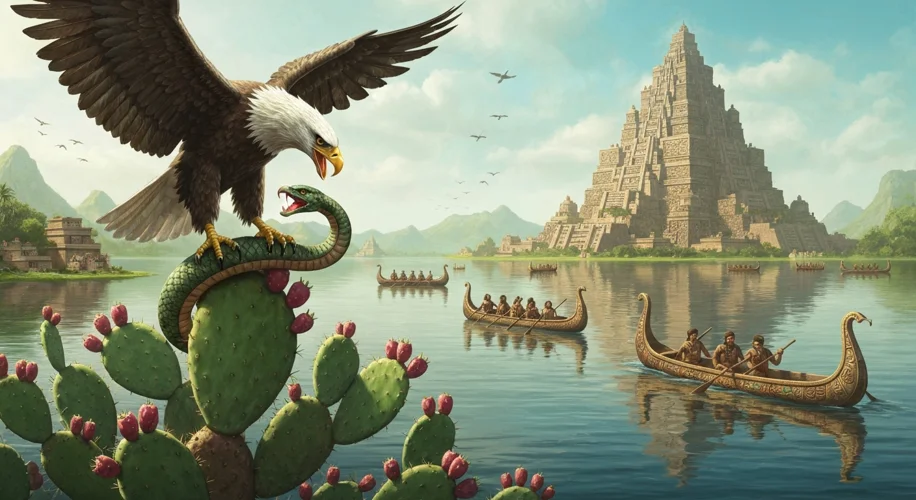
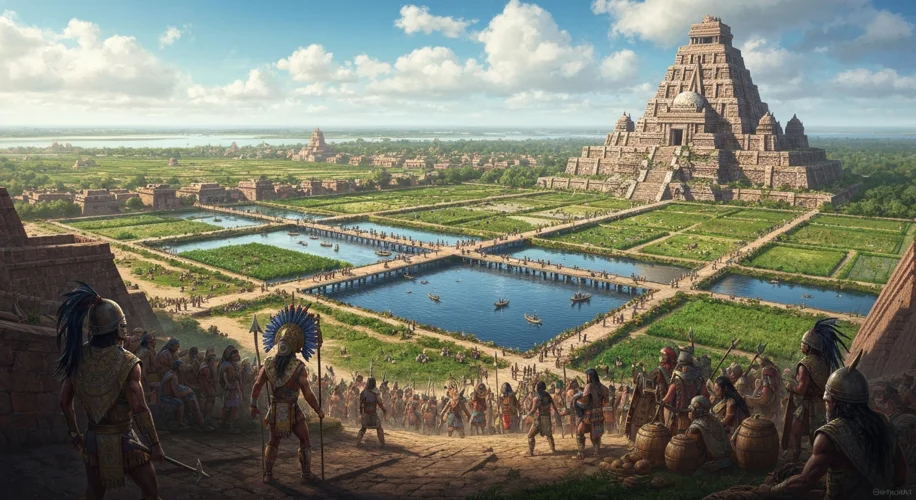
Life on their fledgling island settlement, however, was far from easy. The land was marshy, resources scarce. But the Mexica were resourceful. They ingeniously developed chinampas, floating gardens that transformed the lake into a breadbasket, yielding bountiful harvests of maize, beans, and squash. They were also fierce warriors, their society structured around a military ethos where prowess on the battlefield was the surest path to prestige and power. Through a combination of military might and strategic alliances, they gradually carved out a place for themselves.
The true turning point came when the Mexica, along with their allies the Tlacopan and Texcoco, revolted against the oppressive Tepanecs. This audacious uprising, ignited in 1428, was a resounding success. The Tepanec empire crumbled, and in its ashes, the Triple Alliance was forged, with the Mexica quickly asserting their dominance. Their capital, Tenochtitlan, built on the very island where their prophecy was fulfilled, began its meteoric rise. It was a city like no other: a marvel of urban planning, crisscrossed by canals, adorned with grand temples, and bustling with markets that teemed with exotic goods from across their expanding domain.
Tenochtitlan was more than just a city; it was the beating heart of an empire. Its population swelled to hundreds of thousands, making it one of the largest cities in the world at the time. From its sacred precinct, the Templo Mayor, a towering dual pyramid dedicated to Huitzilopochtli and Tlaloc, the god of rain, the empire’s influence radiated outwards. The Mexica, now calling themselves Aztecs, established a vast tribute system. Conquered city-states were not annexed outright but were required to pay regular tribute in the form of goods – cotton, maize, jade, gold, and even sacrificial victims. This intricate network of dependency fueled Tenochtitlan’s opulence and the Aztecs’ military might.
Aztec society was highly stratified. At the apex sat the tlatoani, the emperor, a semi-divine ruler who presided over a complex bureaucracy. Below him were nobles, priests, warriors, merchants (pochteca), artisans, and a vast populace of commoners (macehualtin). The pochteca were not just traders; they were also spies, gathering intelligence on potential enemies and the resources of distant lands. The Aztec worldview was deeply intertwined with their religious practices, which included elaborate ceremonies and, notoriously, human sacrifice. These sacrifices, often of captured warriors, were believed to appease the gods and ensure the cosmos continued its cycles, particularly the daily rising of the sun.
However, this magnificent empire, built on conquest and tribute, harbored deep resentments. Many of the subjugated peoples chafed under Aztec rule, their spirits crushed by the demands for tribute and the grim necessity of providing sacrificial victims. This simmering discontent would prove to be the empire’s Achilles’ heel.
Then, in 1519, a new force arrived on the shores of Mesoamerica. Led by Hernán Cortés, a charismatic and ruthless Spanish conquistador, a small band of Europeans, armed with superior weaponry and an insatiable appetite for gold and glory, landed in what is now Mexico. Cortés, hearing tales of a wealthy empire and its decadent capital, saw an opportunity. He skillfully exploited the existing political landscape, forging alliances with disgruntled indigenous groups like the Tlaxcalans, who harbored a deep hatred for their Aztec overlords.
The clash was inevitable. The Spanish, with their steel swords, armor, arquebuses, and terrifying cavalry, possessed a technological and tactical advantage. But it was not just superior firepower that doomed the Aztecs. Diseases, like smallpox, to which the indigenous populations had no immunity, ravaged Tenochtitlan, decimating its people and weakening its defenses. The arrival of the Spanish coincided with internal strife and a deeply ingrained belief system that perhaps initially contributed to a misinterpretation of the newcomers.
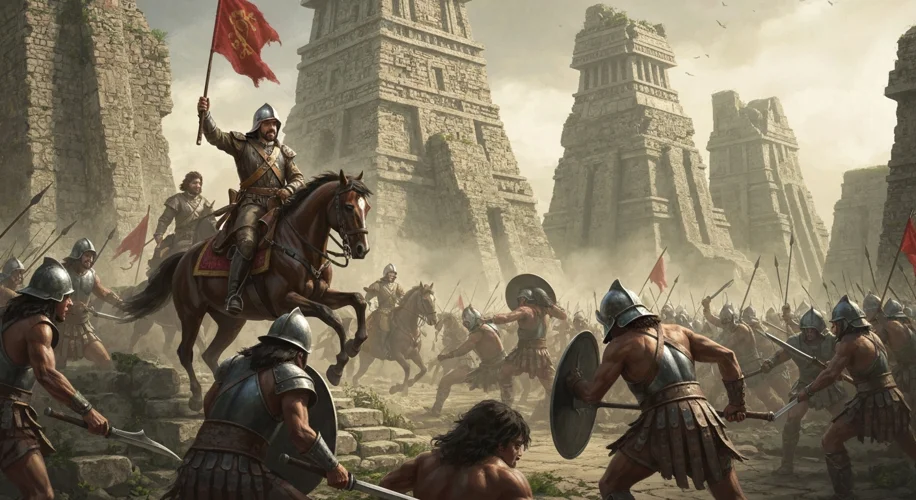
The siege of Tenochtitlan in 1521 was brutal. For months, the Spanish and their indigenous allies fought tooth and nail against the desperate Aztec defenders, who fought with the ferocity of a cornered jaguar. The city, once a jewel of the New World, was reduced to rubble and ruin. The fall of Tenochtitlan marked the end of the Aztec Empire and the beginning of Spanish colonial rule in Mexico.
The legacy of the Aztec Empire is a complex tapestry. They were brilliant engineers, architects, astronomers, and administrators. Their capital, Tenochtitlan, was a testament to human ingenuity and ambition. Yet, their empire was also built on a foundation of conquest and a ritualistic system of human sacrifice that continues to fascinate and disturb. Their story serves as a potent reminder of the rise and fall of civilizations, the complex interplay of power, culture, and destiny, and how even the mightiest empires can be brought down by internal fracture and external forces.