

Imagine a world locked in ice, a harsh and unforgiving landscape where survival was a daily battle. For millennia, this was the reality for early humans. Then, something extraordinary happened. The Great Ice Age, a brutal epoch known as the Younger Dryas, began to recede. The air warmed, the glaciers melted, and a new era dawned – an era of abundance and opportunity, known to scientists as the Holocene Climatic Optimum.
This period, roughly spanning from 9,000 to 5,000 BCE, wasn’t just a gentle thaw. It was a dramatic transformation of the Earth’s climate. Temperatures rose significantly across the globe, leading to longer, more predictable growing seasons, abundant rainfall, and the expansion of fertile lands. For early human hunter-gatherer societies, this wasn’t merely a pleasant change; it was a revolutionary shift that would fundamentally alter the course of human history and pave the way for the birth of civilization.
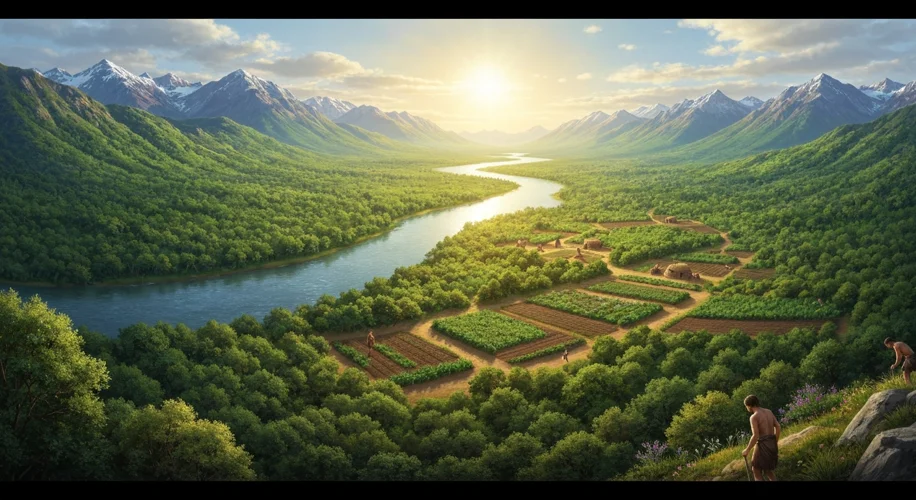
Before the Optimum, humanity lived a nomadic existence. Survival depended on following migrating herds and foraging for edible plants, a precarious lifestyle dictated by the whims of a volatile climate. The Younger Dryas, in particular, had been a period of extreme cold and aridity, pushing human populations to their limits and potentially even causing localized extinches. This harsh environment favored small, mobile groups capable of adapting quickly to scarce resources.
However, as the Holocene Climatic Optimum set in, the planet became a more hospitable cradle. The warming trend meant that plants thrived, and the animals humans depended on for food and resources also flourished and became more concentrated. This abundance likely had a profound impact on human behavior and social structures. Instead of constantly on the move, communities could begin to settle in more permanent locations, drawn to areas with reliable water sources and fertile soil.
This newfound stability was the fertile ground upon which agriculture could blossom. While the precise origins of agriculture are complex and debated, the favorable conditions of the Holocene Climatic Optimum undoubtedly accelerated its development. With more predictable weather patterns and an abundance of wild grains and edible plants, early humans could experiment with cultivation. They began to domesticate plants and animals, transforming their relationship with the environment from one of simple extraction to one of active management.
The consequences of this agricultural revolution were monumental. A stable food supply led to population growth, which in turn led to the formation of larger, more complex communities. Surplus food allowed for specialization of labor; not everyone needed to be a farmer or hunter. Artisans, toolmakers, builders, and leaders could emerge, fostering innovation and the development of new technologies and social structures.
This shift towards settled agriculture and population growth is directly linked to the rise of the world’s first civilizations. In regions like the Fertile Crescent (Mesopotamia), the Nile Valley (Egypt), and the Indus Valley, the favorable climate of the Holocene Optimum provided the perfect conditions for early agricultural settlements to flourish. These settlements, fortified by a stable food base, began to grow into villages, then towns, and eventually the great cities of antiquity.
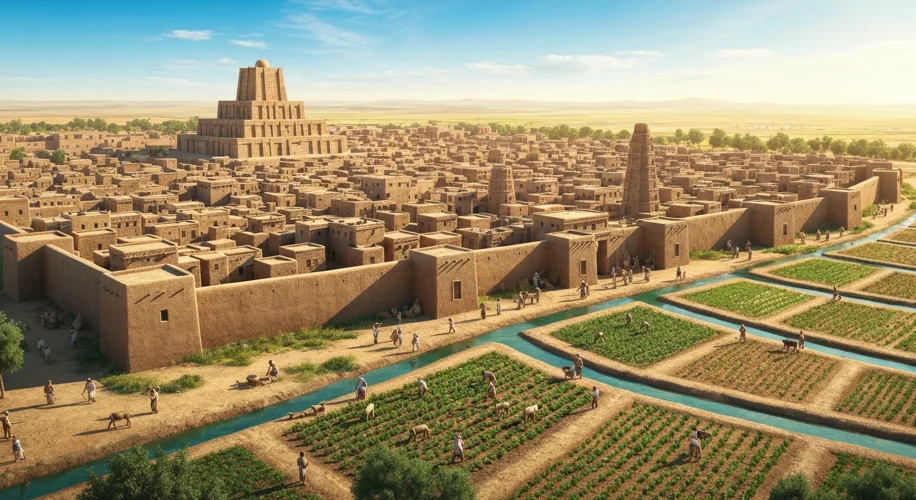
The development of complex societies brought with it new challenges and opportunities. The need to manage irrigation systems, store surplus grain, organize labor for large construction projects, and defend burgeoning settlements led to the development of sophisticated social hierarchies, governance, and laws. Writing systems, accounting, mathematics, and astronomy all began to emerge as tools to manage these complex societies.
Consider the Fertile Crescent, a region blessed with fertile soil and access to rivers like the Tigris and Euphrates. During the Holocene Climatic Optimum, this area became a hub of innovation. Villages like Jericho and Çatalhöyük, some of the earliest known permanent settlements, show evidence of advanced construction and community organization. Later, in Sumer, the world’s first cities like Uruk and Ur arose, complete with monumental architecture, complex religious systems, and early forms of government. These developments were intrinsically linked to the ability to produce and manage agricultural surpluses, a feat made possible by the stable, warm climate.

The Holocene Climatic Optimum, therefore, wasn’t just a period of pleasant weather; it was a critical turning point in human history. It provided the environmental stability and abundance that allowed early humans to transition from nomadic hunter-gatherers to settled farmers, laying the foundation for population growth, technological advancement, and the complex social structures that define civilization. The echoes of this ancient warming period resonate even today, reminding us of the profound interconnectedness between climate, environment, and the trajectory of human development.
It’s a compelling narrative: a world emerging from an ice age, gifted with warmth and fertility, and in turn, gifting humanity with the conditions necessary to build the very foundations of our modern world. The story of the Holocene Climatic Optimum is, in many ways, the story of how we became us.