

The air hung thick with unspoken threats, a palpable tension that had gripped the globe for decades. Two superpowers, the United States and the Soviet Union, stood locked in a perpetual stare-down, their nuclear arsenals a silent promise of mutual annihilation. This was the Cold War, a conflict waged not on traditional battlefields, but in the minds of men, in the whispers of espionage, and in the ever-present specter of atomic fire.
Yet, amidst this chilling standoff, a curious and fragile thaw began to emerge. Between the late 1960s and late 1970s, a period known as Détente, a cautious hand of friendship, or at least of mutual understanding, was extended across the ideological chasm.
A World on the Brink
The roots of Détente were deeply entwined with the existential dread of nuclear war. The Cuban Missile Crisis of 1962 had brought the world to the precipice, a terrifying reminder of how close humanity could come to self-destruction. The sheer destructive power of nuclear weapons, coupled with the escalating costs of the arms race, created a powerful incentive for both sides to seek some form of de-escalation.
Culturally, the world was also shifting. The youthful counter-culture movements of the 1960s, questioning authority and traditional conflict, had a subtle but undeniable influence on public opinion. In the Soviet Union, while dissent was brutally suppressed, there was also a growing awareness among the leadership that the economic strain of maintaining military parity with the West was unsustainable.
The Key Players: Architects of a Fragile Peace
The architects of Détente were as complex and contradictory as the era itself. On the American side, President Richard Nixon, a staunch anti-communist, paradoxically became a key facilitator of improved relations. His pragmatism, however, was heavily influenced by his National Security Advisor, Henry Kissinger, a strategic thinker who saw the potential for a stable, albeit competitive, coexistence.
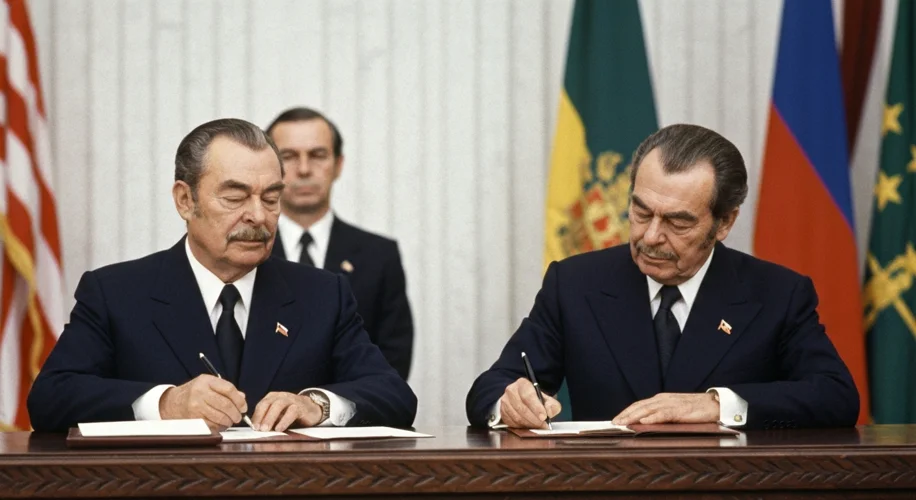
In the Soviet Union, Leonid Brezhnev, General Secretary of the Communist Party, recognized the need to secure Soviet borders and alleviate economic pressure. While ideologically committed to communism, he was also a pragmatist willing to engage with the West when it served Soviet interests.
Other key figures included diplomats, arms control negotiators, and even cultural envoys who, in their own ways, chipped away at the edifice of mistrust.
The Thaw: Agreements and Engagements
Détente manifested in several crucial areas. The most significant were the arms control agreements. The Strategic Arms Limitation Talks (SALT I), signed in 1972, represented a landmark achievement. It placed limits on the production of intercontinental ballistic missiles (ICBMs) and submarine-launched ballistic missiles (SLBMs), acknowledging the shared danger of an unrestrained nuclear buildup.
Beyond arms control, diplomatic engagement increased. Nixon’s historic visit to Moscow in 1972 was a symbolic watershed moment, showcasing a willingness for direct dialogue. Cultural exchanges, though limited, also began to foster a sense of shared humanity. The Helsinki Accords of 1975, signed by 35 nations, including the US and USSR, went further, codifying human rights and fundamental freedoms, a point of contention that would later contribute to the unraveling of Détente.
The Cracks Appear: Seeds of Détente’s Demise
Despite these successes, Détente was a delicate balancing act, constantly threatened by underlying ideological divides and regional conflicts. The Soviet invasion of Afghanistan in 1979 is often cited as the death knell of Détente. This act of aggression, seen by the US as a blatant expansionist move, shattered the fragile trust that had been built.
Furthermore, the human rights provisions of the Helsinki Accords became a persistent irritant. The US, under Presidents Carter and Reagan, increasingly used human rights as a lens through which to criticize Soviet actions, further straining relations.
Legacy of a Precarious Peace
Détente did not end the Cold War, but it fundamentally altered its trajectory. It demonstrated that even sworn adversaries could find common ground when faced with existential threats. The arms control treaties, imperfect as they were, provided a framework for managing the nuclear danger. It showed that dialogue, however tense, was preferable to perpetual confrontation.
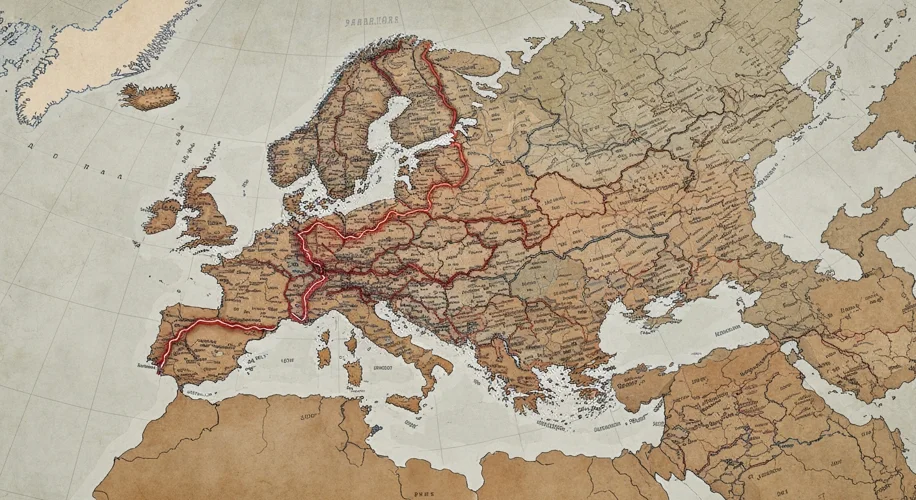
The era of Détente serves as a crucial historical lesson. It underscores the complex interplay of fear, pragmatism, and idealism in international relations. It reminds us that even in the darkest of times, the possibility of dialogue and de-escalation exists, a fragile hope that, with careful cultivation, can bloom into periods of peace, however temporary.
The dance between the bear and the eagle may have ended, but the steps they took together during Détente continue to echo in the halls of diplomacy today.