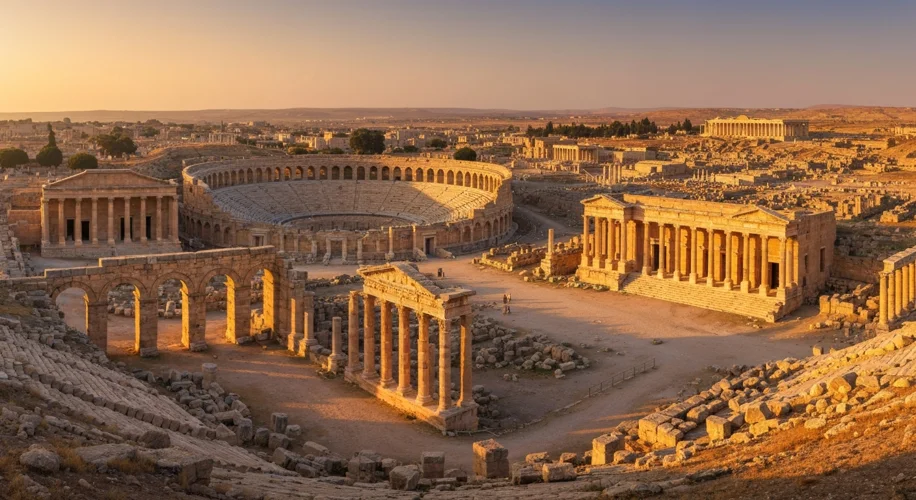
The Mediterranean sun, a relentless eye in the Libyan sky, has for millennia borne witness to the rise and fall of empires. Beneath its golden gaze lies a land etched with the footsteps of civilizations that shaped the ancient world. Libya, a name that now conjures images of modern turmoil, is, in truth, a treasure trove of history, a testament to the enduring power of human endeavor.
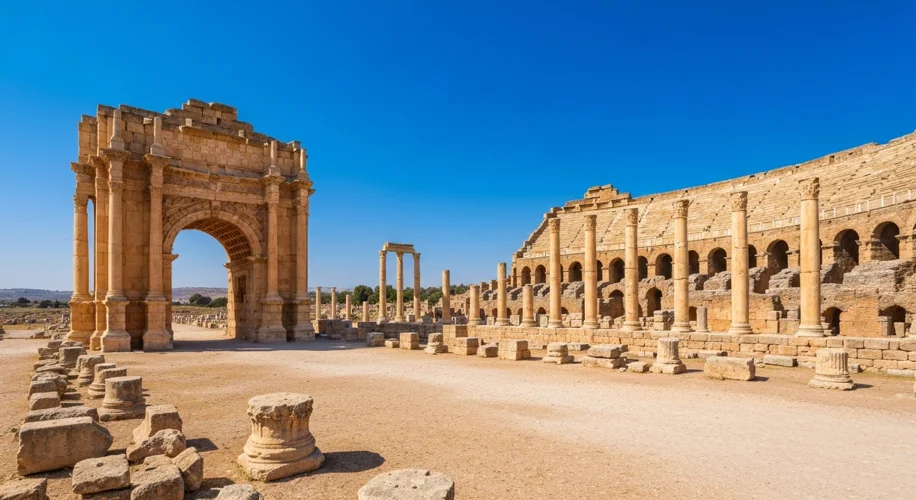
Imagine standing at the edge of Leptis Magna, a city so grand it rivaled Rome itself. Its amphitheater, a colossal stone bowl, once echoed with the roar of crowds, the clash of gladiators, and the cheers for charioteers. The Severan Arch, a triumphant testament to Emperor Septimius Severus’s lineage, still stands, its intricate carvings whispering tales of imperial power and artistic mastery. This was not merely a Roman outpost; it was a thriving metropolis, a vital hub of trade and culture that connected Africa to the wider Mediterranean world.
But the Romans did not build on virgin soil. Before their legions marched across the sands, the Phoenicians, those intrepid mariners of antiquity, had already established their trading posts. They brought with them their alphabet, their trade networks, and their insatiable curiosity for the world beyond the horizon. Their presence laid the groundwork for what was to come, a cultural and economic exchange that would echo through centuries.
Then came the Greeks, with their philosophy, their art, and their democratic ideals. The city of Cyrene, nestled on a plateau overlooking the azure sea, became a jewel of Hellenistic civilization. Its acropolis, with its temples and stoas, still hints at the intellectual ferment that once pulsed through its streets. Think of the famed philosopher Aristippus, a student of Socrates, who taught here, his ideas on pleasure and happiness resonating through the ages.
The Vandals, a Germanic tribe whose name has become synonymous with destruction, also left their mark. Though their reign was brief and turbulent, their passage through North Africa, including Libya, further complicated the region’s already rich tapestry of influences. Their invasion, a stark reminder of the era’s shifting political landscapes, ultimately paved the way for the Byzantine reconquest and the subsequent Arab conquests.
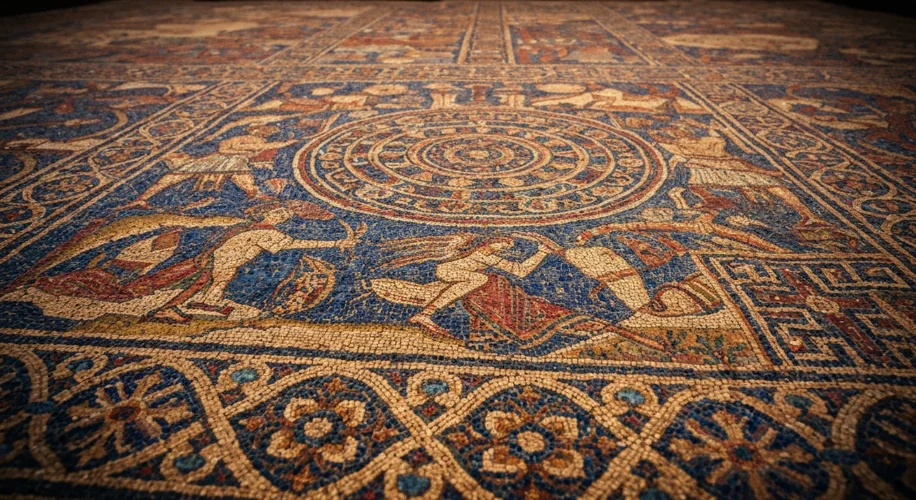
The legacy of these civilizations is not confined to grand architectural ruins. It is found in the intricate mosaics that adorn ancient villas, depicting scenes of daily life, mythology, and breathtaking artistry. It is in the pottery shards scattered across the land, each a fragment of a story, a hint of the people who once lived, loved, and labored here. It is in the very soil, imbued with the echoes of countless generations.
Yet, these invaluable treasures are vulnerable. The very sands that preserve them also threaten to bury them. Political instability and conflict in recent decades have cast a long shadow over Libya’s archaeological heritage. Preservation efforts, once vibrant, have been hampered, leaving these sites susceptible to looting, neglect, and the ravages of time.
The challenge is immense. How do we protect these irreplaceable links to our shared human past? How do we ensure that the stories etched in stone and mosaic are not lost to future generations? The international community, alongside Libyan authorities, faces a critical race against time to safeguard these sites and artifacts.
Libya’s ancient treasures are not just relics of a bygone era; they are a part of our collective human story. They speak of a time when empires clashed and merged, when ideas traveled across seas and deserts, and when art and architecture reached astonishing heights. To lose them would be to erase chapters of our own history, to dim the light of understanding that these ancient stones so vividly provide. The call to preserve these echoes of the past is not merely an archaeological imperative; it is a moral one, a commitment to the enduring legacy of human civilization itself.