In the annals of history, few regimes have wielded art as a weapon of ideological control with such brutal efficiency as Nazi Germany. From 1937 onwards, the term ‘Entartete Kunst’, or ‘Degenerate Art’, became a chilling label affixed to a vast spectrum of artistic expression that dared to deviate from the Nazi Party’s narrow and nationalistic vision.
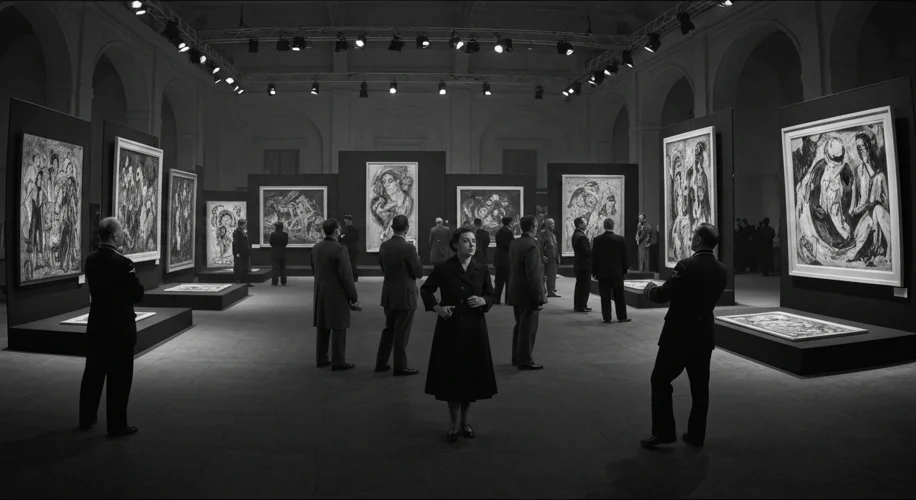
Imagine walking into a gallery, not to be inspired or challenged, but to be horrified and disgusted. This was the deliberate intent behind the Nazi regime’s infamous ‘Degenerate Art’ exhibitions, which opened in Munich in July 1937. The aim was not to display art, but to defame it, to expose it as a symptom of a decadent and diseased society.
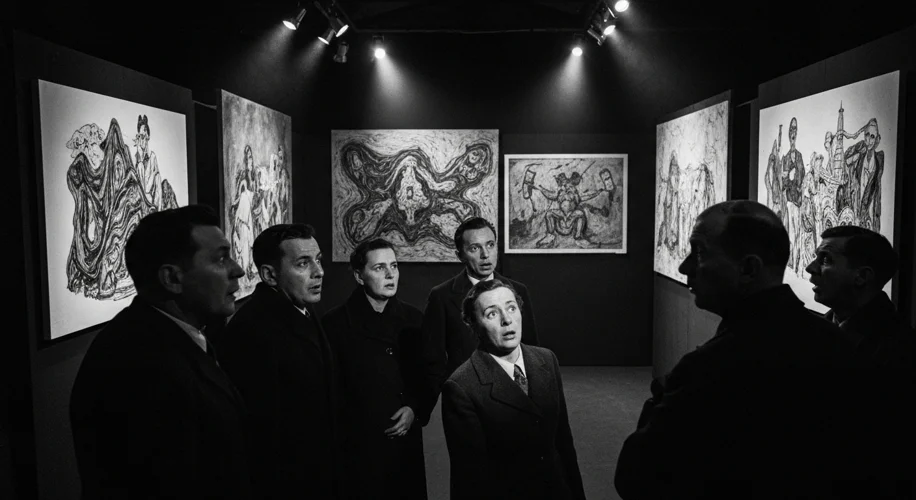
The cultural landscape of Germany before the rise of Nazism was vibrant and diverse. The early 20th century had seen an explosion of artistic innovation. Movements like Expressionism, with its raw emotional intensity, Cubism, which shattered traditional perspectives, Surrealism, delving into the subconscious, and Fauvism, with its bold use of color, were flourishing. Artists like Ernst Ludwig Kirchner, Wassily Kandinsky, Paul Klee, Otto Dix, and Max Beckmann were pushing the boundaries of what art could be. They reflected the anxieties, the joys, the complexities, and the rapid changes of their time, often critiquing social and political issues.
However, to the Nazi Party, these artists and their creations represented everything they despised: individualism, abstraction, and anything that did not conform to their ideals of a ‘pure’ Aryan aesthetic. This aesthetic favored heroic, realistic depictions of idealized German life, military strength, and traditional values. Modern art, with its perceived ugliness, dissonance, and intellectualism, was seen as a Jewish-Bolshevik conspiracy, a corrupting influence on the German spirit.
The campaign against ‘degenerate art’ was not a spontaneous outburst; it was a calculated and systematic purge. It began with propaganda, with art critics and Nazi officials publicly denouncing and ridiculing these modern works. The ‘Degenerate Art’ exhibition was the horrifying culmination of this campaign. It was deliberately chaotic, with artworks hung askew, scribbled with insulting slogans, and displayed alongside caricatures of artists. The goal was to provoke outrage, to incite public condemnation, and to justify the confiscation and destruction of these pieces.
Following the exhibition, a wave of confiscation swept across German museums and galleries. Over 20,000 artworks were seized. Many were subsequently sold abroad to fund the Nazi regime, while others were tragically destroyed. Some were publicly burned in a notorious event in Berlin in 1939. The message was clear: art that did not serve the state was to be eradicated.
The consequences of this cultural vandalism were profound. It not only robbed Germany of a significant part of its artistic heritage but also stifled creativity and intellectual freedom. Many artists were forced into exile, their careers shattered, and some tragically met their end in concentration camps. The suppression of ‘degenerate art’ was part of a broader Nazi policy to control all aspects of public life, from education and media to science and culture. It was an attempt to forge a homogenous national identity, devoid of dissent or challenging perspectives.
In retrospect, the ‘Degenerate Art’ campaign stands as a stark reminder of the dangers of artistic censorship and the perversion of culture for political ends. It highlights how art, in its most profound sense, often challenges the status quo and reflects the human condition in all its messy, complex glory. The works that were once condemned as ‘degenerate’ are now recognized as masterpieces of modern art, their enduring power a testament to the resilience of the human spirit and the irrepressible urge to create, even in the face of oppression.