
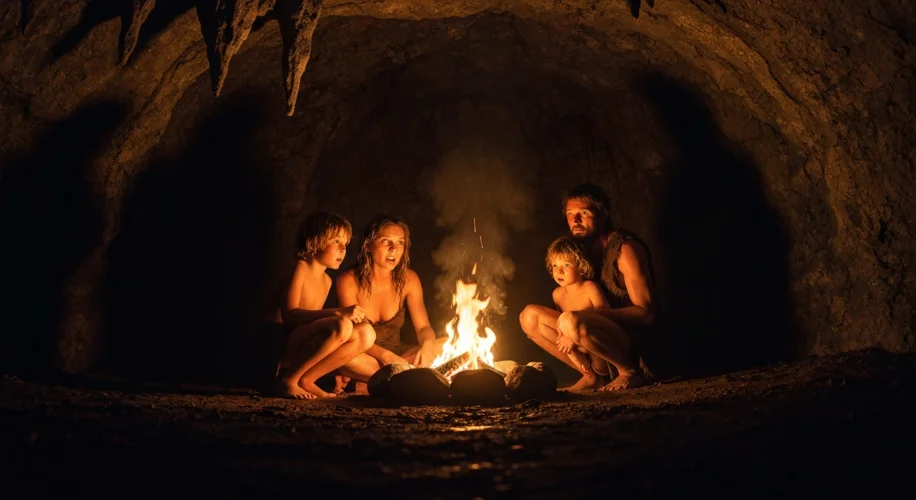
Imagine a world shrouded in perpetual twilight, a time before the comforting glow of a hearth, before the sizzle of meat over an open flame. This was the world of our earliest ancestors, a world where cold nights brought not just discomfort, but genuine peril. Then, something extraordinary happened. A spark, a flicker, a controlled inferno – fire. This wasn’t just an invention; it was a revolution, a pivotal moment that fundamentally reshaped the trajectory of human evolution.
For eons, Homo erectus, our direct ancestor, lived a life dictated by the whims of nature. They scavenged, they hunted, and they huddled together for warmth, their existence a constant negotiation with the elements. The nights were long and dangerous, predators roamed freely, and the food they consumed was often tough and difficult to digest. Their world was a canvas of survival, painted with the muted tones of instinct and adaptation.
The exact moment fire was first mastered is lost to the mists of time, a prehistoric secret whispered only in the fossil record. However, archaeological evidence points to controlled fire use by Homo erectus as far back as 1.5 million years ago, with more widespread and sophisticated use emerging around 400,000 years ago. Think of the sheer tenacity, the observational brilliance required. Perhaps it was a lightning strike igniting a dry forest, a terrifying yet mesmerizing spectacle. Our ancestors, driven by curiosity and a primal need for survival, would have observed this raw power. Some may have even dared to approach, to witness its heat, its ability to transform the landscape. Over countless generations, through trial and error, the secret of coaxing and controlling this wild element was unlocked.
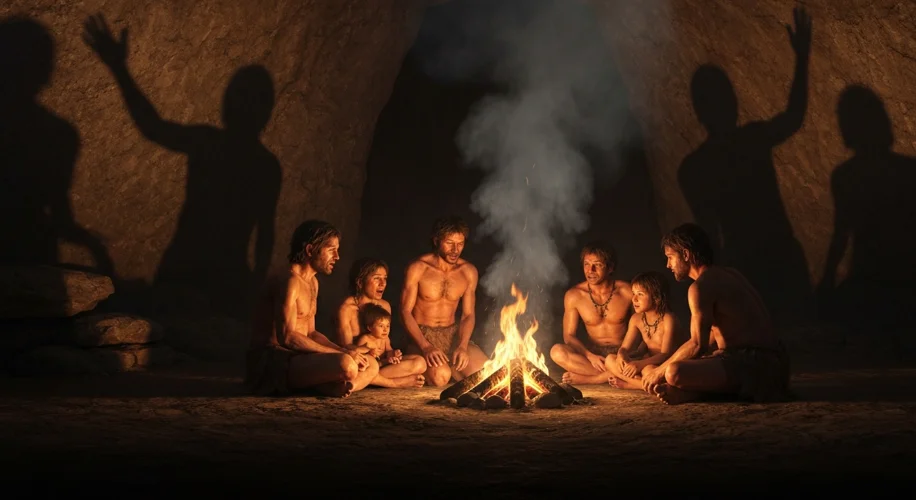
The implications of this discovery were profound and far-reaching. Fire was the ultimate multi-tool of the Paleolithic era. Firstly, it offered protection. The flickering flames and crackling sounds pushed back the darkness, creating a sanctuary against the fearsome predators that stalked the night. Imagine the relief, the newfound sense of security as a family gathered around a roaring fire, the shadows of the unknown held at bay.
But fire’s power extended beyond mere defense. It revolutionized the human diet. Cooking rendered food more digestible, unlocking vital nutrients that had previously been inaccessible. Tough roots became softer, lean game became more palatable, and the act of eating transformed from a laborious chore into a more efficient way of sustenance. This dietary shift is believed to have played a crucial role in the development of larger brains, as more energy became available for these metabolically expensive organs. The story of humanity is, in many ways, a story of what we eat, and fire was the catalyst for a culinary revolution.
Beyond sustenance and safety, fire fostered social cohesion. As humans gathered around the hearth, a sense of community began to blossom. The shared warmth, the communal meals, the storytelling that likely occurred in the flickering firelight – these were the nascent stirrings of social structures and cultural exchange. The night, once a time of isolation and fear, became a period for bonding, for sharing knowledge, and for forging the bonds that would hold societies together.
The mastery of fire also laid the groundwork for technological innovation. It provided heat for warmth and light for extended activity, allowing humans to venture into colder climates and to be active beyond the daylight hours. Furthermore, it enabled the development of new tools. The hardening of wooden spear tips, the early forms of pottery, and eventually, the manipulation of metals – all these advancements trace their lineage back to the initial spark of fire control. It was the first step in a long, evolutionary march towards technological sophistication.
The impact of fire on human evolution cannot be overstated. It was a turning point, a moment when our ancestors transitioned from being merely animals at the mercy of nature to becoming active agents shaping their environment. It influenced our biology, our social structures, our technological capabilities, and ultimately, our very identity as a species. The simple act of controlling fire was a triumph of intellect, adaptability, and the enduring human drive to survive and thrive, a triumph that continues to illuminate our world to this day.
While we may never know the names of the first humans to tame the flame, their legacy is all around us. Every hearth, every campfire, every city illuminated by electric light is a testament to that ancient, revolutionary discovery. It is a reminder that even the most profound leaps in our history often begin with a single, controlled spark.