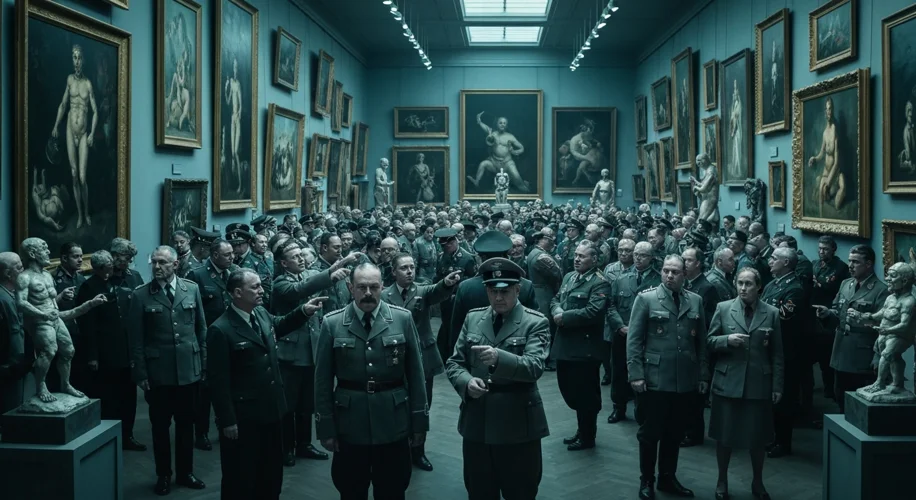
Munich, July 1937. The air thrummed not with the excitement of artistic discovery, but with a chilling, orchestrated fury. Beneath the soaring, neoclassical arches of the Hofgarten arcades, a spectacle designed to shock and disgust was unfolding. This was not an exhibition of beauty or innovation; it was a carefully curated assault on the senses, a public denouncement of art that dared to defy the narrow, prejudiced vision of the Nazi regime. It was the opening of the “Entartete Kunst” – the Degenerate Art Exhibition.
Imagine walking through those halls. The walls, stark and bare, were plastered with works that the National Socialist government had deemed not merely bad, but corrupt. These weren’t masterpieces in the classical sense, the kind that adorned the opulent homes of the wealthy or the hallowed halls of traditional academies. Instead, here were paintings and sculptures that pulsed with emotion, that twisted reality, that questioned the very foundations of what art was supposed to be. Abstract forms, vibrant, jarring colors, distorted figures – these were the weapons of a cultural war being waged by Adolf Hitler and his ideologues.
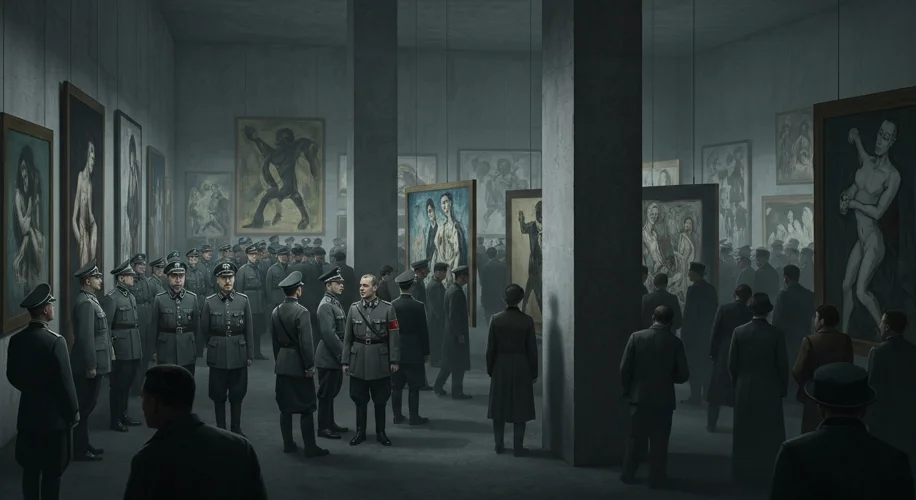
The exhibition was a deliberate act of propaganda, designed to associate modern art with mental illness, political subversion, and the cultural influences the Nazis despised: communism, Jewish intellectualism, and anything deemed ‘foreign’ or ‘decadent’. Artists like Ernst Ludwig Kirchner, Erich Heckel, Emil Nolde, Wassily Kandinsky, Paul Klee, and Otto Dix found their life’s work dragged through the mud, ridiculed and reviled. Their canvases, once vibrant expressions of a changing world, were now twisted into symbols of a supposed cultural decay, a sickness that threatened the purity of the Aryan race.
This was not an isolated incident. For years leading up to 1937, the Nazis had been systematically purging art from German museums. Works were confiscated, confiscated, and often destroyed. In 1937 alone, over 20,000 artworks were seized from public collections. The Degenerate Art Exhibition was the grand finale, a public spectacle meant to solidify the regime’s control over cultural expression and to rally public opinion against modern artistic movements. The sheer volume of confiscated art was staggering, a testament to the vibrancy and diversity of German art in the preceding decades.
The exhibition’s presentation was as aggressive as its intent. Paintings were hung askew, sometimes in contact with the walls, others crammed together. Scrawled, mocking texts were added to the walls, intended to deride the artists and their patrons. Visitors were encouraged to view the art with contempt, to see the ‘madness’ and ‘ugliness’ that the Nazis claimed was infecting German culture. The irony, lost on many at the time, was that this exhibition, intended to be a public humiliation, inadvertently served as a powerful advertisement for the very artists it sought to condemn. People flocked to see what they were being told was so terrible, and in doing so, many were exposed to challenging and powerful art for the first time.
The consequences of the Degenerate Art Exhibition were profound and devastating. For the artists whose work was displayed, it meant professional ruin, exile, or worse. Many fled Germany, taking their talents to other shores, enriching the artistic landscapes of their adopted countries. Others, tragically, were persecuted, their lives cut short by the Nazi regime. The exhibition was more than just a display of scorn; it was a harbinger of the broader persecution and violence that would engulf Europe in the coming years.
The legacy of the Degenerate Art Exhibition is complex. It stands as a stark reminder of the dangers of censorship and the terrifying power of propaganda. It highlights how regimes seeking to control populations often begin by attempting to control culture and artistic expression. Today, the works once deemed ‘degenerate’ are celebrated in museums worldwide, recognized for their artistic merit and their historical significance. They are a testament to the resilience of the human spirit and the enduring power of art to challenge, provoke, and inspire, even in the face of profound darkness.