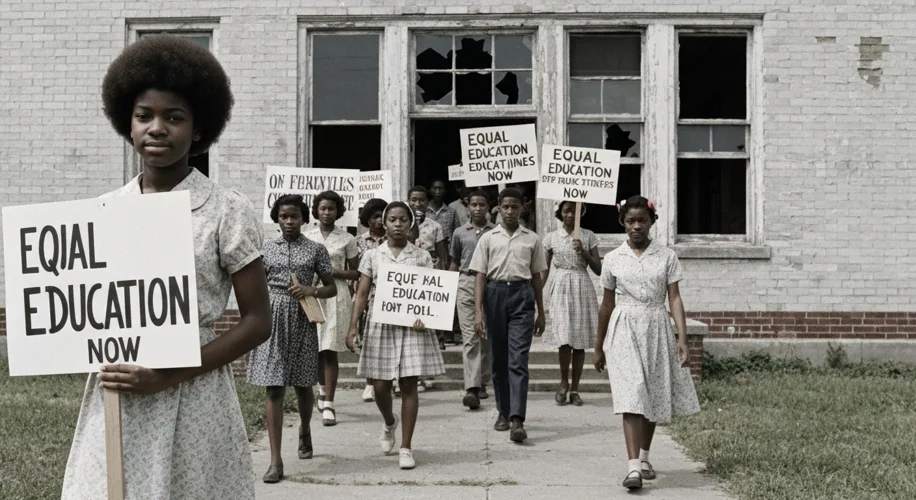
In the quiet, segregated town of Farmville, Virginia, the year is 1951. The air, thick with the humid promise of summer, also carried the unspoken weight of injustice. For the Black students of Robert Russa Moton High School, this was not just a place of learning, but a stark reminder of a deeply fractured society. The building itself was a testament to inequality – cramped, dilapidated, and woefully under-resourced, a stark contrast to the gleaming, modern facility afforded to their white counterparts across town.
Seventeen-year-old Barbara Rose Johns, a bright and spirited student, felt this disparity with a burning intensity. She saw the peeling paint, the drafty classrooms, and the lack of basic supplies not as minor inconveniences, but as a deliberate affront to her dignity and the dignity of her classmates. The indignity was palpable. While white students learned in state-of-the-art laboratories, Moton students made do with makeshift science equipment. While white students enjoyed a well-stocked library, Moton’s collection was meager and outdated.
This simmering resentment, shared by many of her peers, found a voice in Barbara. Inspired by the burgeoning Civil Rights Movement and emboldened by her own sense of justice, she decided that enough was enough. In April of 1951, Barbara Johns, with the quiet support of her principal and the NAACP, spearheaded a student strike. It wasn’t a spontaneous outburst; it was a calculated act of defiance. On April 23rd, instead of filing into their overcrowded classrooms, the students of Moton High School walked out. Barbara, standing tall and resolute, addressed her fellow students, her voice echoing the collective yearning for equality. Their demand was simple, yet revolutionary: a new, equal, and integrated high school.
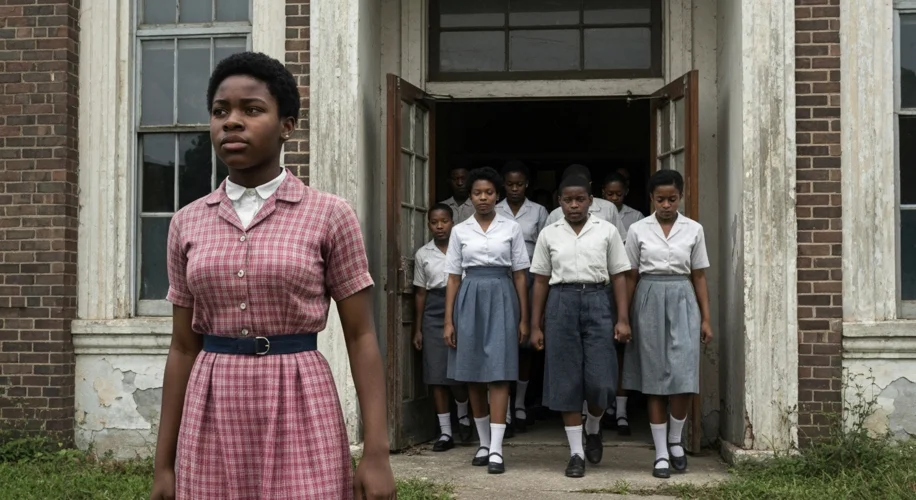
The strike, which lasted for two weeks, sent shockwaves through the segregated South. It was a powerful visual protest, a testament to the courage of young people refusing to accept the status quo. The students, under Barbara’s leadership, organized, picketed, and bravely faced down opposition from school officials and even some members of their own community who feared reprisal. Their actions, however, were not just about their own school; they were a direct challenge to the legal and social fabric of segregation itself.
The NAACP, recognizing the profound potential of the Moton High School strike, saw an opportunity. They saw in Barbara Johns and her fellow students the perfect plaintiffs to challenge the legality of state-mandated segregation in public schools. The NAACP lawyers, including the brilliant Thurgood Marshall, worked closely with the students and their families, transforming their local protest into a national legal battle. This case, originally known as Davis v. County School Board of Prince Edward County, became one of the five landmark cases consolidated into Brown v. Board of Education of Topeka.
The legal journey was arduous, stretching over three long years. The segregationist forces fought back with every legal and social weapon at their disposal, attempting to discredit the students and their families. Yet, the determination of Barbara Johns and the unwavering support of the NAACP ensured that the fight continued. The case argued before the Supreme Court was not just about dilapidated schools; it was about the inherent inequality of separating children based on race. It questioned the very foundation of the “separate but equal” doctrine established by Plessy v. Ferguson.
Finally, on May 17, 1954, the Supreme Court delivered its unanimous decision in Brown v. Board of Education. Chief Justice Earl Warren declared that “separate educational facilities are inherently unequal.” This monumental ruling declared state-sponsored segregation in public schools unconstitutional, a direct victory for the students of Moton High School and a turning point in American history.
The impact of Barbara Rose Johns’s courageous stand cannot be overstated. While the Brown decision was a monumental legal victory, the path to true integration was long and fraught with resistance. However, her actions ignited a spark that would fuel the broader Civil Rights Movement. She demonstrated that a single individual, especially a young one, could indeed make a profound difference in the face of systemic injustice. Her bravery in the face of fear, her commitment to equality, and her willingness to challenge the established order serve as an enduring inspiration.
Barbara Rose Johns, a teenager who dared to dream of a better future, became an unwitting architect of change. Her courageous strike at Moton High School was not just a protest; it was a pivotal moment, a crucial stepping stone on the arduous but necessary path toward racial equality in America. Her story is a powerful reminder that the fight for justice often begins with the bold actions of the young and the determined.