
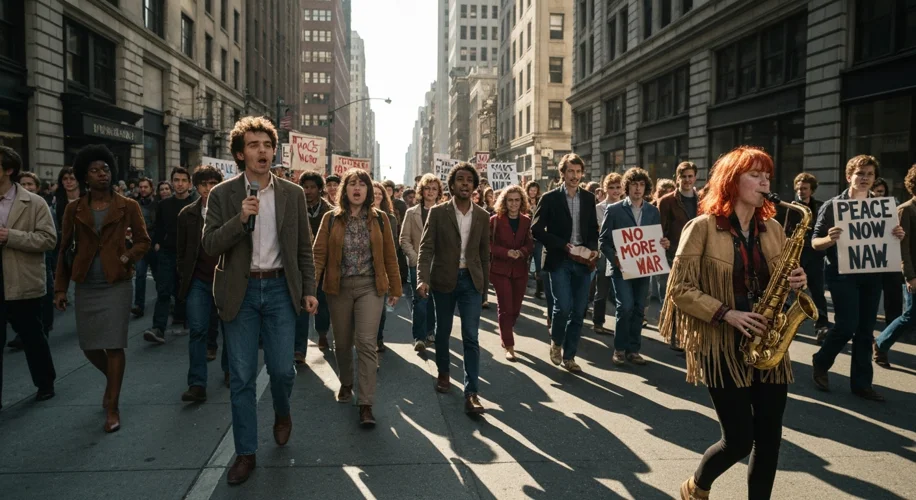
The history of the world is not just written by kings, generals, and diplomats; it is also shaped by the passionate cries and determined actions of its youth. From the hallowed halls of diplomacy to the chaotic streets of protest, young people have consistently found their voices in matters of international relations, challenging the status quo, demanding change, and sometimes, even altering the course of global events.
The Seeds of Dissent: Early Stirrings of Youth Engagement
While the modern concept of youth activism is often associated with the 20th century, the impulse for young people to engage with broader societal and political issues has ancient roots. Consider the philosophical schools of ancient Greece, where young minds debated the nature of justice, governance, and the ideal state, influencing the very foundations of Western political thought. In Roman times, young patricians often entered public life with a zeal for reform or expansion, their ambitions shaping the empire’s trajectory.
However, it was in the crucible of the 20th century, particularly in the post-World War II era, that youth activism truly exploded onto the international stage. The generation that came of age in the shadow of global conflict and the dawn of nuclear anxiety possessed a unique perspective. They had witnessed the devastation of war, the rise of ideologies that threatened human dignity, and the stark realities of a world divided by the Cold War. This led to a profound questioning of established norms and a fervent desire for a more just and peaceful world.
The Roar of the Sixties: Anti-War Movements and Civil Rights
The 1960s stand as a watershed moment for youth activism in international relations. In the United States, the burgeoning Civil Rights Movement, largely driven by young African Americans, not only demanded equality at home but also highlighted the hypocrisy of a nation championing democracy abroad while denying it to its own citizens. Their struggle for justice resonated globally, inspiring movements for decolonization and self-determination across continents.
Simultaneously, the escalating Vietnam War ignited a firestorm of protest. University campuses became centers of dissent, with students organizing sit-ins, marches, and teach-ins. Figures like Abbie Hoffman and Jerry Rubin, leaders of the Yippies, famously used satire and spectacle to challenge governmental policies and societal complacency. Their actions, though often dismissed as radical or naive by the establishment, undeniably contributed to the growing anti-war sentiment that eventually influenced American foreign policy.

Across the Atlantic, European youth were also mobilizing. The student protests of 1968 in France, often referred to as “Mai 68,” were not solely domestic. They were fueled by a broader critique of capitalist consumerism, authoritarianism, and the perceived injustices of the global order. The student leaders demanded fundamental societal change, echoing a desire for a more equitable international system.
The Fall of the Wall and the Rise of Global Consciousness
The end of the Cold War brought a new wave of youth engagement, albeit with different focal points. While the immediate threat of nuclear annihilation receded, new global challenges emerged: environmental degradation, economic inequality, and the rise of globalization. The fall of the Berlin Wall in 1989, a symbolic moment of youth-led defiance and celebration, ushered in an era where interconnectedness became more apparent than ever.
Young activists began to harness new technologies to organize and advocate. The rise of the internet and social media provided unprecedented platforms for communication and mobilization. The anti-globalization movement of the late 1990s and early 2000s saw young people from diverse backgrounds converge to protest the perceived excesses of international trade agreements and multinational corporations. Events like the 1999 Seattle WTO protests, though marred by violence, demonstrated the growing power of youth-led transnational networks.
Contemporary Challenges: Climate, Conflict, and Digital Activism
Today, youth activism is more vibrant and diverse than ever, addressing a complex web of international issues. The climate crisis, in particular, has galvanized a generation facing the existential threat of a warming planet. Figures like Greta Thunberg, with her “Fridays for Future” movement, have brought unparalleled attention to the urgency of climate action, directly challenging world leaders at international forums like the UN Climate Change Conference.

In regions grappling with conflict and political repression, young people continue to be at the forefront of demanding change. From the Arab Spring uprisings, where youth played a crucial role in mobilizing against autocratic regimes, to ongoing movements for democracy and human rights in countries like Belarus and Iran, young activists often bear the brunt of state repression. Their courage in the face of adversity, though sometimes resulting in tragic suppression, underscores their unwavering commitment to a better future.
The Double-Edged Sword: Influence and Suppression
The impact of youth activism on international relations is undeniable, yet it is also fraught with challenges. Youth voices can influence public opinion, shape political discourse, and pressure governments to reconsider policies. They bring fresh perspectives, unburdened by entrenched interests, and possess an idealism that can be infectious.
However, youth movements often face significant hurdles. They can be co-opted, dismissed as immature or ill-informed, or brutally suppressed by authoritarian regimes. The digital tools that empower them also make them vulnerable to surveillance and manipulation. Despite these obstacles, the persistent engagement of young people in shaping international affairs is a testament to their resilience and their profound understanding that the future of the world rests on their shoulders.
History teaches us that significant change rarely comes from the top down. It is often the persistent, passionate, and sometimes inconvenient voices of the young that push societies and nations towards progress, demanding a world that reflects their hopes and aspirations. The ongoing story of youth activism is not just a footnote in history; it is a vital chapter in the ongoing narrative of global change.