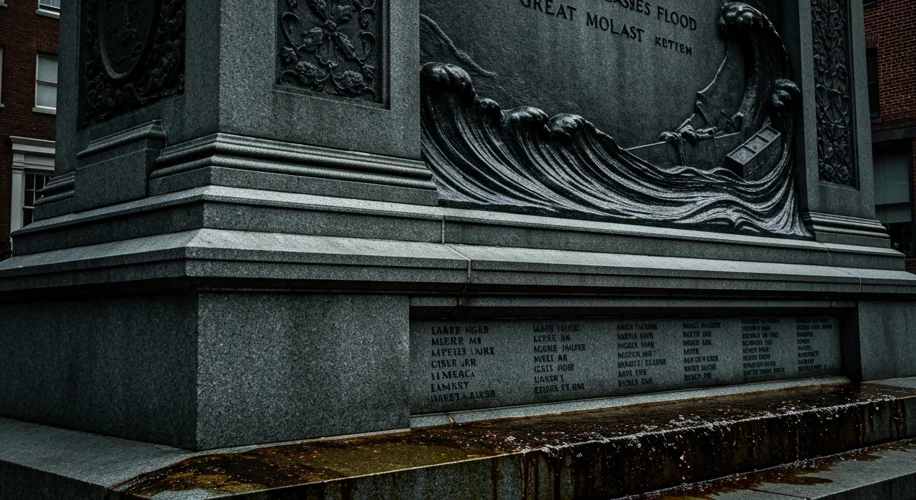
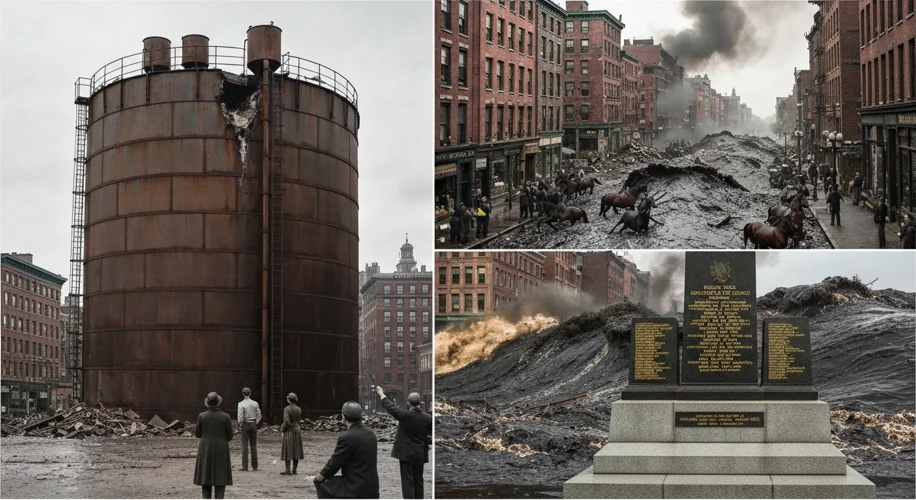
The air in Boston’s North End on January 15, 1919, was crisp, the kind that bites at your cheeks and makes you pull your collar tighter. But this ordinary winter afternoon was about to become anything but. It was a day when the ordinary dissolved into the extraordinary, replaced by a scene of unimaginable horror, all thanks to a colossal tank of molasses.
For years, the Purity Distilling Company had been pumping molasses into a massive, steel tank at their facility on First Street. This wasn’t just any sweetener; it was a crucial ingredient for industrial alcohol, a vital component in munitions production during the Great War, which had only recently ended. The tank itself, a towering behemoth holding over 2.3 million gallons of the viscous liquid, was a local landmark, albeit one viewed with a mixture of pride and unease. Residents had long complained about its groaning, creaking sounds and the rivulets of molasses that often oozed from its seams, leaving sticky puddles on the streets.
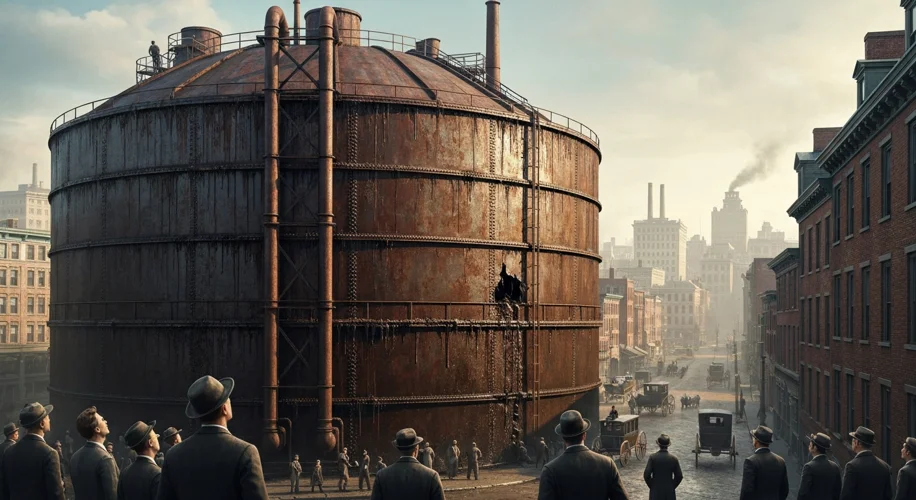
Rumors had circulated for months that the tank was structurally unsound. Some whispered that it had been hastily built, with rivets that leaked like a sieve, only to be painted brown to hide the evidence. Others spoke of the temperature fluctuations – the molasses was warmed to keep it flowing, making the metal expand and contract, stressing its already dubious integrity.
Then, just after 12:30 PM, the whispers turned into a deafening roar. With a sound described by witnesses as a thunderclap or the tearing of a thousand sails, the tank burst. It wasn’t a slow collapse; it was an explosion. A wave of dark, sticky molasses, moving at an estimated 35 miles per hour, surged through the streets. It was a tsunami of goo, eight to fifteen feet high, powerful enough to buckle the elevated railway tracks, rip horses from their harnesses, and smash buildings.
Imagine the scene: the sudden, terrifying roar, followed by the dark, suffocating tide. People, horses, wagons, even parts of buildings were engulfed. Survivors spoke of being knocked off their feet, submerged in the thick, viscous liquid, struggling to breathe, to escape the suffocating embrace of the sweet, yet deadly, wave. The molasses, warm from the recent heating, created a bizarre, macabre tableau, coating everything in its path, trapping victims in a sticky, inescapable tomb.
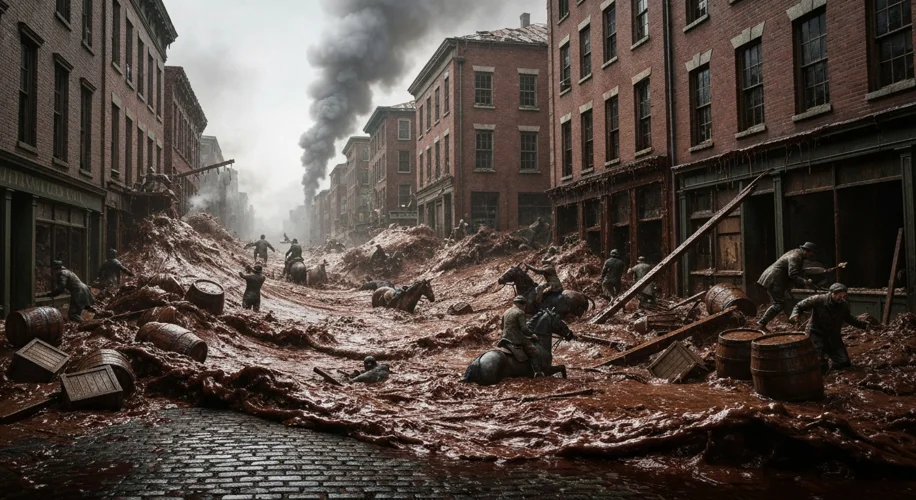
Rescue efforts were immediate but fraught with difficulty. The molasses, once it cooled, became a solid, sticky mass, making it impossible to swim or even walk through. Firefighters, police, and citizens waded through the muck, their boots sinking with every step, trying to pull out the living and the dead. The stench of molasses, normally a comforting scent associated with baking, now hung heavy in the air, a grim reminder of the tragedy. It took days to clear the streets, and weeks to wash the sticky residue from the buildings and the harbor. The molasses even seeped into the harbor, turning the water brown for months.
The toll was devastating. Thirty-one people lost their lives, and nearly 150 were injured. The North End, a vibrant, working-class neighborhood, was scarred by the event, its residents forever marked by the day the sweetness turned sour.
The aftermath saw one of the longest and most complex legal battles in Massachusetts history. Over 100 lawsuits were filed against the Purity Distilling Company and its parent company, United States Industrial Alcohol (USIA). The company initially tried to blame anarchists, claiming they had bombed the tank. However, the evidence of structural failure was overwhelming. The court-appointed auditor ultimately found the tank to be poorly constructed and maintained, leading to USIA paying out over $600,000 (equivalent to millions today) in damages to the victims and their families.
The Great Molasses Flood remains a stark reminder of the dangers of unchecked industrial expansion and the critical importance of safety regulations. It’s a story that, despite its grim outcome, highlights the incredible resilience of the human spirit in the face of overwhelming disaster, and the long, arduous path towards justice. Even today, some claim that on warm summer days, the sweet scent of molasses can still be detected in the North End, a ghostly echo of Boston’s sticky, deadly disaster.