
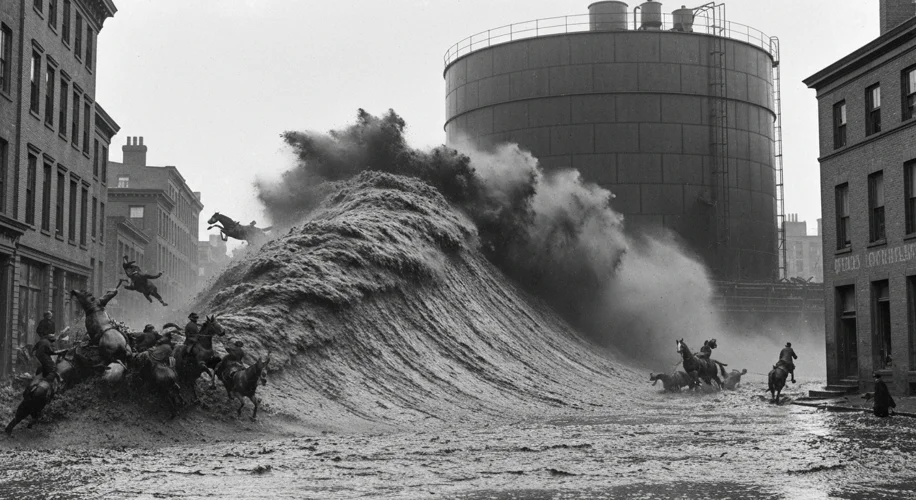
The year is 1919. Boston, a city steeped in history and ambition, was about to experience a disaster so bizarre and terrifying, it would forever stain its memory with a sticky, dark sweetness.
It began on a warm January day, the 15th, to be precise. The air in the North End, a working-class neighborhood bustling with immigrants and industry, was thick with the usual sounds of urban life. But that afternoon, a different kind of sound began to emanate from the Purity Distilling Company’s colossal storage tank.
This tank, a behemoth of riveted steel, stood 50 feet tall and 40 feet in diameter, holding a staggering 2.3 million gallons of molasses. It was a potent symbol of industrial might, destined for fermentation into rum, a key commodity in America’s burgeoning economy. But within its metal confines, a lethal pressure was building.
For months, residents had reported a low, groaning sound from the tank, a constant, unsettling hum that spoke of stressed metal. Some even claimed to see the rivets weeping dark streaks, a premonition of the catastrophe to come. Children, accustomed to the strange sight, would sometimes dip their fingers into the molasses seeping from the tank’s base for a sweet treat.
Then, at approximately 12:30 PM, the unthinkable happened. With a deafening roar, the tank burst open. It wasn’t an explosion of fire and smoke, but something far more viscous and terrifying: a tidal wave of thick, dark molasses, moving at an estimated 35 miles per hour. The wave, reportedly 25 feet high, surged through the streets, a tsunami of treacle.
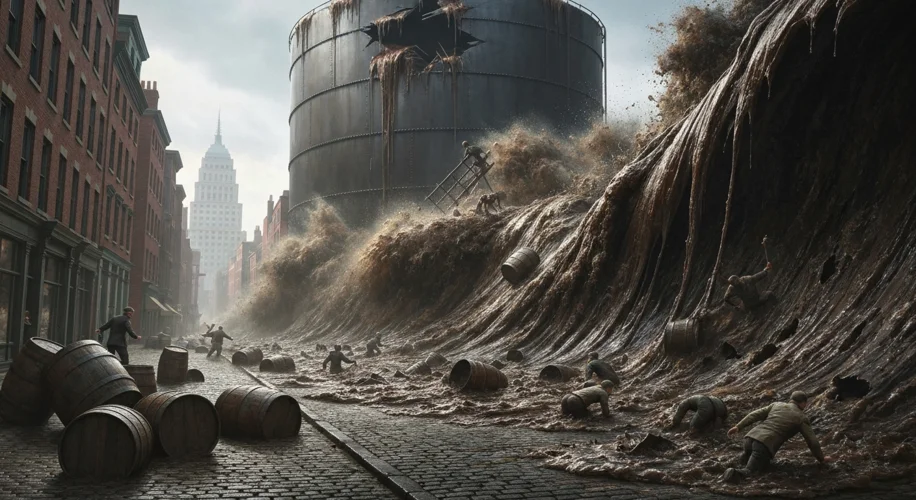
Buildings were ripped from their foundations, their wooden structures splintering and collapsing. Horses were caught in the sticky deluge, their struggles futile as they were submerged. People, going about their day, were engulfed, swept away, and crushed by the sheer force and weight of the molasses. The sweet, cloying scent that once signified industry turned into a suffocating miasma of death.
Those who weren’t immediately swept away found themselves trapped, struggling to move through the viscous goo. Rescuers, braving the treacherous currents, waded through waist-deep molasses, pulling out the injured and the dead. The scene was one of unimaginable horror, a sticky, dark tableau of destruction.
The aftermath was grim. 21 people lost their lives, and an estimated 150 were injured. The cleanup was a monumental task. The molasses had seeped into everything, coating the streets, buildings, and even the harbor. It took weeks, and the help of hundreds of workers, to wash away the sticky residue, using saltwater pumped from the harbor.
The cause of the disaster was later attributed to a combination of factors: poor construction, insufficient testing, and the tank’s failure to withstand the immense pressure of the fermenting molasses, especially during a period of temperature fluctuation. The company responsible, United States Industrial Alcohol, attempted to blame anarchists for sabotage, but the court found the company negligent.
The Great Molasses Flood remains a stark reminder of the perils of unchecked industrial ambition and the importance of safety regulations. It’s a story that, while steeped in tragedy, also speaks to the resilience of a city that, despite the sticky embrace of disaster, managed to rise from the sweet, dark tide and continue its long and storied history.