
Imagine a world where the Bible was a text read without any visual anchor to its earthly settings. No idea where Jerusalem was, no sense of the vastness of the Sea of Galilee, no understanding of the rugged terrain of the Judean hills. For millennia, this was the reality for readers of scripture. The narratives of prophets, apostles, and Jesus himself unfolded in a geographical vacuum.
That all changed, quite suddenly, around 500 years ago, specifically in 1525. It was then, nestled within the pages of a printed Bible, that the first map of biblical lands made its appearance. This seemingly simple addition was nothing short of a revolution, transforming how people understood, studied, and connected with the sacred text.
Before this innovation, biblical geography was the domain of scholars and theologians, pieced together through meticulous textual analysis and ancient traditions. Travelers might bring back stories, but a cohesive, visual representation was largely absent. The printed Bible, itself a product of the printing revolution that began with Gutenberg, was already democratizing access to the Word. The addition of a map was another powerful step in this democratization, making the biblical world more tangible and relatable for the common reader.
The exact circumstances of the very first map to be included in a printed Bible are a subject of ongoing historical inquiry. However, the 1525 Lübeck Bible, printed in German by Christian Egenolff, is widely recognized as a landmark publication for featuring such a map. This map was not a cartographic masterpiece by modern standards. It was likely a stylized representation, perhaps more allegorical than strictly accurate, focusing on the key regions and cities mentioned in the Bible: Jerusalem, Bethlehem, Egypt, and the general routes taken by significant biblical figures. Yet, its impact was profound.
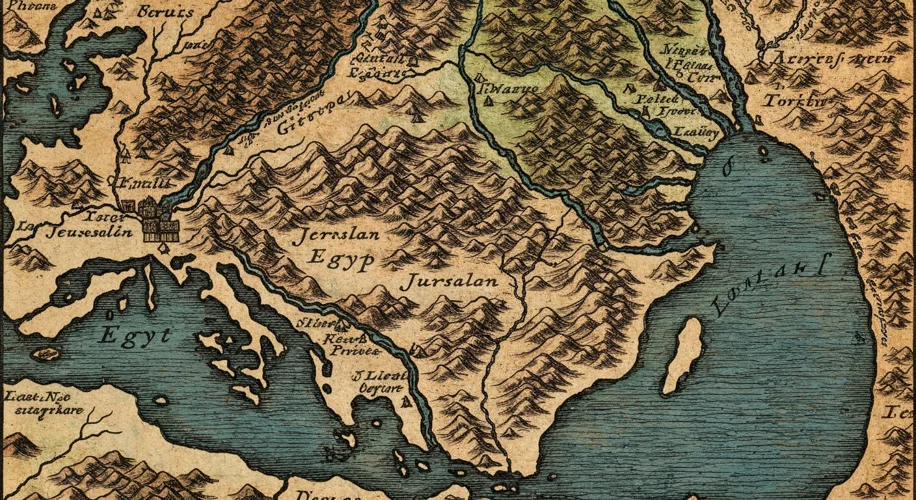
Think about the difference it made. Suddenly, Abraham’s journey from Ur to Canaan wasn’t just a series of place names; it was a trek across a discernible landscape. The Exodus from Egypt became a tangible flight from a known region across a vast desert towards a promised land. Jesus’s ministry in Galilee wasn’t an abstract event; it was rooted in a specific geographical context, with towns like Capernaum and Nazareth situated relative to the Sea of Galilee and the surrounding hills.
This innovation did more than just add a visual element. It fundamentally aided in the interpretation of scripture. Understanding the geography of biblical events offered crucial context. Why was Jesus able to preach to large crowds? Perhaps it was the presence of natural amphitheaters or the proximity of major trade routes. Why did certain battles occur where they did? Strategic locations, mountain passes, and access to water sources suddenly became evident.
The map served as an invaluable tool for preachers and teachers. It provided a common visual reference point, allowing them to explain biblical narratives with greater clarity and impact. For laypeople, it fostered a deeper, more personal connection to the stories they read. They could imagine themselves walking the same dusty roads, sailing the same seas, and standing on the same sacred ground. It brought the Bible to life in a way words alone often struggled to achieve.
The creation of the first Bible map was more than just an illustration; it was an act of historical and theological translation. It bridged the gap between ancient narratives and the contemporary reader, offering a visual language to comprehend the divine unfolding in human history. As we celebrate this quincentennial, we recognize a quiet revolution that continues to shape our understanding of one of the world’s most influential books.