
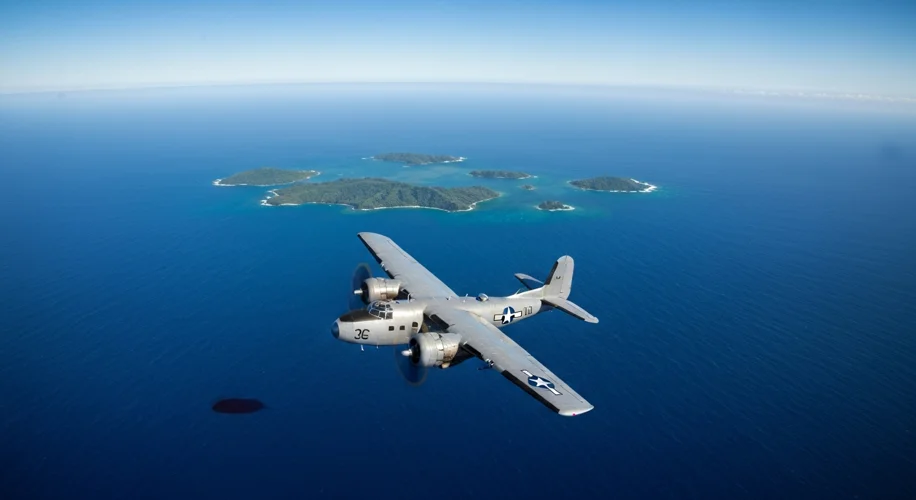
The vast, shimmering expanse of the Pacific Ocean had long been a formidable barrier, a watery frontier that whispered of isolation and untamed wilderness. For centuries, only the brave or the desperate had dared to cross its immense breadth in ships, battling capricious winds and relentless waves. But in the early 20th century, a new era of exploration was dawning, an era defined by the audacious roar of engines and the daring spirit of aviators. On January 10, 1927, a milestone was etched into the annals of aviation history as a single-engine monoplane, the ‘PBY-1’ called the ‘Pride of Los Angeles,’ successfully completed the first transpacific flight to Hawaii.
This was no casual hop; it was a testament to human ingenuity and an unyielding desire to push the boundaries of what was thought possible. The flight was a culmination of years of planning, technological advancement, and immense courage from its crew. Piloted by pioneering aviator Albert Corbin and carrying navigator Charles “Kid” Larned, their mission was fraught with peril from the moment they lifted off from the California coast. The ‘Pride of Los Angeles’ was a marvel of its time, a repurposed naval patrol plane, but the Pacific was a merciless adversary.
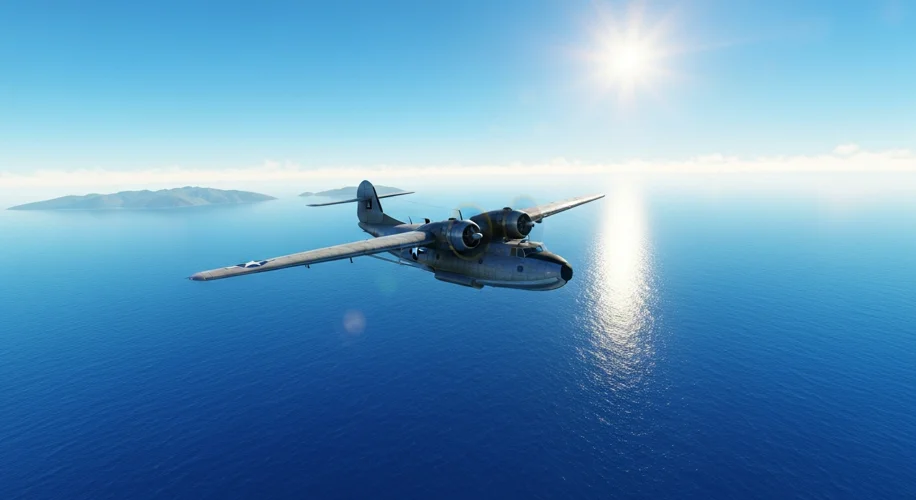
The journey was a harrowing test of endurance. For over 24 hours, Corbin and Larned battled fatigue, navigated by the stars and rudimentary instruments, and faced the constant threat of mechanical failure over thousands of miles of open water. The Pacific was not merely a backdrop; it was an active participant in their journey, throwing turbulent winds and sudden squalls at the small aircraft. Imagine the tension, the immense isolation, with the roar of the engine as their only constant companion, and the boundless ocean stretching endlessly in every direction.
Their destination was Wheeler Field, on the island of Oahu, Hawaii. This remote archipelago, a string of volcanic islands in the heart of the Pacific, represented a crucial stepping stone, a gateway to further exploration and a vital link in a future global network. The successful landing on January 11, 1927, was met with jubilation. It wasn’t just a flight; it was a symbol of an increasingly interconnected world, a world where distance was being conquered by innovation.
The implications of this flight were profound. It demonstrated the growing viability of long-distance aviation, paving the way for future transpacific routes that would shrink the globe, foster trade, and change the very nature of travel and communication. It fueled the public imagination, inspiring a generation with tales of daring aviators and the boundless potential of flight.
The ‘Pride of Los Angeles’ and its intrepid crew had not only flown across an ocean; they had flown into the future, opening up the vast Pacific and shrinking the world in a way that was previously unimaginable. This flight stands as a powerful reminder of the human spirit’s relentless pursuit of the horizon, a testament to the fact that with enough courage and ingenuity, even the most formidable barriers can be overcome.