
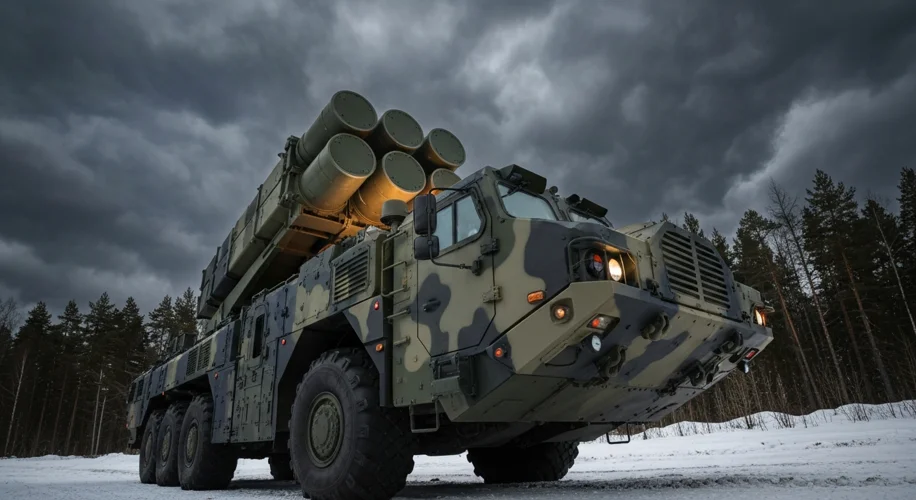
In the complex and often perilous theater of modern warfare, certain weapons systems emerge that not only define an era but also cast long shadows over geopolitical stability. Among these is Russia’s Iskander missile system, a mobile short-range ballistic missile (SRBM) that has become a potent symbol of Moscow’s military modernization and assertive foreign policy. Its development, deployment, and distinctive capabilities have placed it at the forefront of international security concerns, particularly given its maneuverability and the persistent speculation surrounding its potential nuclear payload.
The genesis of the Iskander missile can be traced back to the late Soviet era, a time when the military-industrial complex was grappling with the evolving nature of conflict and the need for more survivable and effective tactical nuclear delivery systems. The dissolution of the Soviet Union in 1991, however, cast a pall over many ambitious military projects. It was not until the late 1990s, under the nascent Russian Federation, that the project was truly revitalized. The primary impetus was the perceived need for a replacement for aging Soviet-era SRBMs like the Scud, which were increasingly vulnerable to modern air defense systems.
The design philosophy behind Iskander was clear: create a missile that was exceptionally difficult to track and intercept. This led to the development of a highly maneuverable re-entry vehicle (MaRV). Unlike traditional ballistic missiles that follow a predictable parabolic trajectory, the Iskander’s warhead can perform evasive maneuvers during its descent, making it a formidable challenge for even the most advanced missile defense systems. This capability is not merely theoretical; during various Russian military exercises, the Iskander has demonstrated its agility, executing complex flight paths that confound simulated defenses.
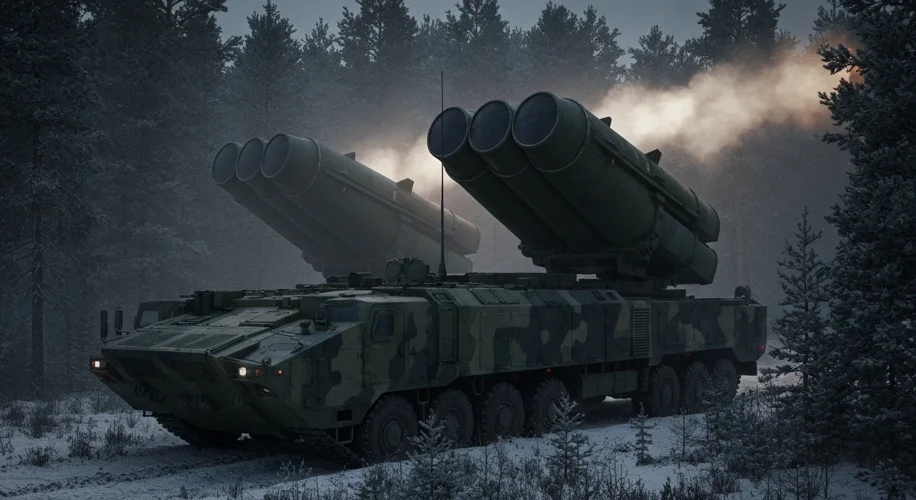
Officially designated as the 9K720 Iskander, the system comprises a transporter-erector-launcher (TEL) vehicle, which is highly mobile and can be rapidly deployed. This mobility is crucial for its survivability, allowing it to move between launch sites and avoid detection and attack. The system typically fires the 9M723 ballistic missile, which has a reported range of approximately 500 kilometers, placing it within the category of SRBMs. However, it is the sophistication of its guidance and the potential for its warhead that draws significant international attention.
One of the most debated aspects of the Iskander is its warhead. While it is known to carry conventional high-explosive or cluster munitions, there is widespread belief, and significant concern, that it can also be fitted with a nuclear warhead. This dual-capable nature significantly elevates its strategic importance. An SRBM with nuclear capabilities, especially one as maneuverable as the Iskander, could be seen as a highly effective tool for tactical nuclear strikes or as a means of coercive diplomacy, potentially blurring the lines between conventional and nuclear conflict.
The deployment of Iskander systems has been a recurring theme in Russian military policy and a source of considerable friction with NATO and neighboring countries. In recent years, Russia has deployed Iskander brigades to various strategic locations, including Kaliningrad, its exclave bordering Poland and Lithuania, and more recently, to Belarus, escalating tensions with the West. These deployments are often framed by Moscow as defensive measures, but they are widely interpreted as signals of intent and a demonstration of capability, particularly in regions where Russia feels its security interests are threatened.
Key actors in this narrative include Russia, which views the Iskander as a cornerstone of its modern tactical missile forces, and Western nations, particularly NATO members, who see it as a destabilizing weapon. Russia’s perspective emphasizes the need for credible deterrence and the perceived inadequacy of existing missile defense systems against emerging threats. Western nations, conversely, highlight the Iskander’s role in Russia’s military doctrine, which includes the potential use of tactical nuclear weapons, and its ability to threaten regional capitals and military installations with little warning.
The consequences of Iskander deployments are far-reaching. They contribute to an arms race, spurring investment in missile defense technologies and increasing regional instability. The presence of such a system near a border can create a climate of fear and uncertainty, potentially lowering the threshold for conflict or influencing diplomatic negotiations through intimidation. The opacity surrounding its exact capabilities and deployment locations further fuels these concerns.
Analyzing the Iskander system requires understanding Russia’s broader military strategy. It fits into a doctrine that emphasizes rapid strikes, battlefield dominance, and the coercive use of military power. Its maneuverability makes it a “counter-ISAR” (Intelligence, Surveillance, Target Acquisition, and Reconnaissance) weapon, designed to defeat enemy surveillance and defense systems. The mobility and potential dual-use nature of Iskander underscore a shift in military thinking, where tactical flexibility and strategic ambiguity are paramount. Ultimately, the Iskander missile is more than just a piece of military hardware; it is a reflection of Russia’s evolving military posture and a significant factor in the ongoing geopolitical calculations of the 21st century. Its development and deployment serve as a stark reminder that the landscape of modern warfare is continuously being reshaped by technological innovation and strategic ambition.