
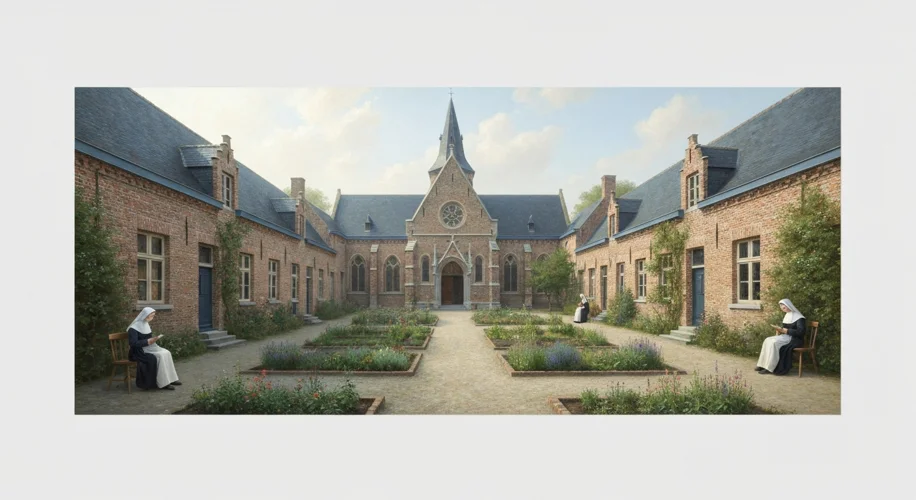
The year is 1300. Imagine a bustling city like Ypres in medieval Flanders, a labyrinth of cobblestone streets, towering cathedrals, and the incessant hum of commerce. Amidst this vibrant, often harsh, urban landscape, a unique community of women thrived – the Beguines. They were not nuns, nor were they laywomen in the typical sense. They were semi-religious, women who sought a life of devotion, service, and community outside the rigid confines of traditional monasticism.
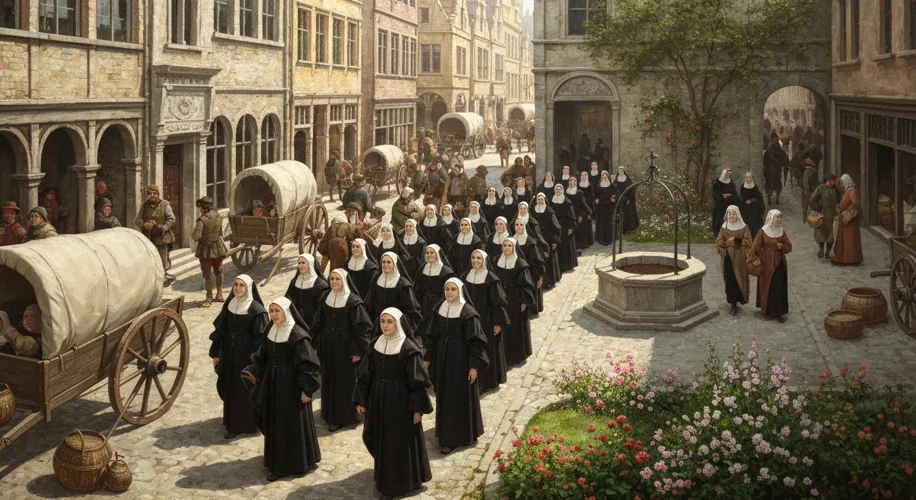
Their story is one of quiet rebellion, spiritual seeking, and a remarkable assertion of female independence in an era when a woman’s life was largely dictated by marriage, family, or the convent. Flanders, a region renowned for its thriving textile industry and burgeoning urban centers, provided fertile ground for such a movement. The 12th and 13th centuries saw a surge in urban populations and a growing desire for spiritual fulfillment that resonated beyond the established Church structures.
The Beguines, a name whose origins are debated but likely stem from the Flemish word ‘beggaeren’ (to pray) or possibly related to the heretical Cathars, emerged as a response to this need. They were women from various social strata – some from wealthy merchant families seeking a life of piety without taking vows of poverty, others from humbler backgrounds looking for security and purpose. What united them was a shared commitment to a life of prayer, chastity, and good works, while retaining their autonomy.
Unlike nuns, Beguines did not take perpetual vows. They could own property, earn a living, and, crucially, leave their communities if they chose. This flexibility allowed them to engage with the world in a way that cloistered nuns could not. In cities like Ypres, Ghent, and Bruges, they established ‘beguinages’ – clusters of small houses, often surrounding a church or chapel and a garden. These were not austere monasteries but rather communal living spaces where women could support each other in their spiritual journey and their daily lives.
Their daily existence was characterized by a blend of the spiritual and the practical. Mornings were often dedicated to prayer and religious instruction, followed by afternoons spent in charitable work. Many Beguines were skilled artisans, weavers, or lace-makers, contributing to the local economy. Others dedicated themselves to caring for the sick and the poor, running hospices, and providing solace to the ailing. They were the unsung caregivers and social workers of their time, their presence a balm in the often-unpredictable conditions of medieval urban life.
However, their very independence and deviation from strict Church norms also made them objects of suspicion. The 14th century, in particular, saw periods of intense scrutiny and persecution. The Beguines’ devotional practices, which sometimes bordered on mysticism, and their close association with certain reformist movements, led to accusations of heresy. Some Beguines were accused of embracing unorthodox beliefs and practices, even engaging in scandalous behavior. The most infamous accusation was that they were