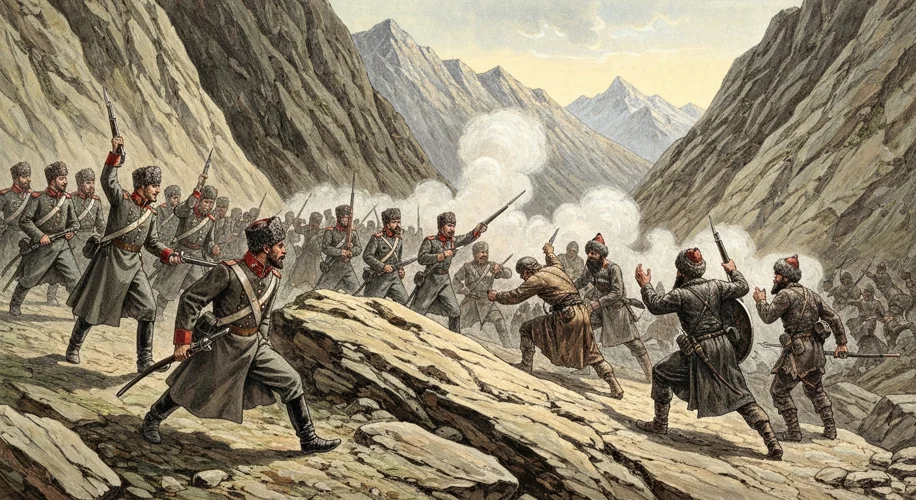
The Caucasus. A land of towering peaks, deep gorges, and ancient peoples. For centuries, this rugged terrain has been a crucible of empires, a strategic nexus where East and West have clashed, bled, and bargained. But perhaps no struggle defined this region more than the prolonged, often brutal, contest between the Russian Empire and Persia, a rivalry known as ‘The Great Game’ in this particular theater.
Imagine a map, circa the early 19th century. To the north, the vast, burgeoning Russian Empire, driven by a desire for security, warm-water ports, and imperial prestige. To the south, the ancient Persian Empire, once a dominant force, now weakened and increasingly reliant on European powers for survival. Between them lay the Caucasus, a mosaic of khanates, principalities, and tribal lands, each with its own fierce loyalties and centuries-old traditions. For Russia, the Caucasus was not merely a territorial prize; it was a strategic imperative. It offered a buffer against Ottoman incursions, a gateway to the riches of Central Asia, and a path to the coveted Black Sea. For Persia, it was a crucial part of its historical dominion, a source of soldiers and tribute, and a bulwark against the encroaching Russian bear.
The stage was set for a drama that would unfold over decades, marked by shifting alliances, betrayals, and the relentless march of imperial ambition. Key figures emerged from the shadows of palaces and battlefields. On the Russian side, generals like Alexei Yermolov, known for his ruthless efficiency and controversial ‘iron fist’ policies, sought to subdue the fiercely independent mountain tribes. On the Persian side, shahs and their viziers, often caught between internal strife and external pressure, attempted to stem the tide of Russian expansion, sometimes with the backing of Britain, which also viewed Russian advances with suspicion.
The conflict wasn’t a single, decisive war, but a series of campaigns, diplomatic maneuvers, and proxy conflicts that ebbed and flowed from the early 1800s well into the 20th century. The Russo-Persian Wars of 1804-1813 and 1826-1828 were pivotal. The Treaty of Gulistan in 1813 saw Persia cede significant territories in the western Caucasus to Russia, including modern-day Azerbaijan and parts of Armenia. The subsequent war and the Treaty of Turkmenchay in 1828 further solidified Russian dominance, granting them control over Armenia and parts of Georgia, and extracting heavy indemnities from Persia. These treaties were not just territorial transfers; they were seismic shifts that redrew the geopolitical map and irrevocably altered the destinies of the peoples caught in the middle.
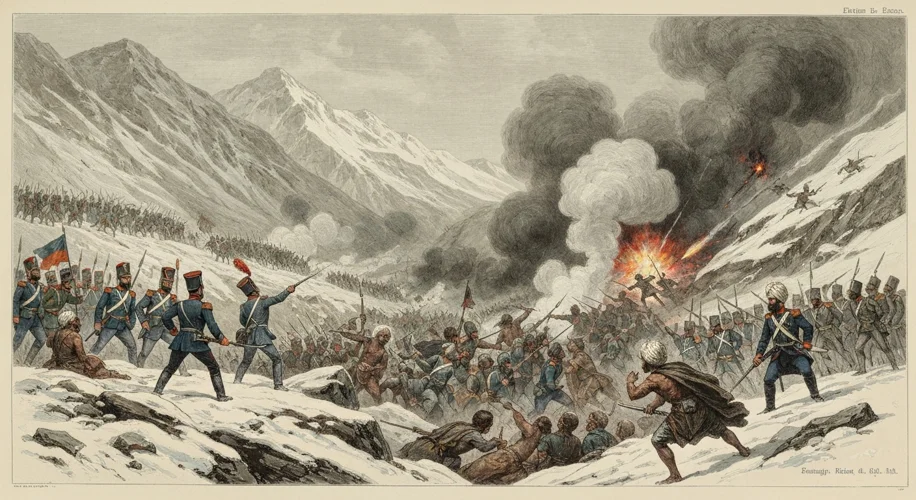
Beyond these major wars, the ‘Great Game’ in the Caucasus involved constant skirmishes, punitive expeditions against resisting tribes, and intricate diplomatic maneuvering between Russia, Persia, and Great Britain. Russia’s strategies often involved encouraging ethnic and religious divisions within Persian territories, playing local leaders against each other, and establishing military outposts deep within the region. Persia, often plagued by internal instability and lacking the centralized military might of Russia, found itself increasingly outmaneuvered. The desire for control over vital trade routes, access to resources, and strategic mountain passes fueled this unending rivalry.
The consequences of this century-long struggle were profound and far-reaching. For the Russian Empire, the Caucasus became a vast, albeit restive, new territory, expanding its influence and providing access to vital resources and strategic depth. It fueled Russian imperial identity and provided a testing ground for military innovations. For Persia, the loss of its Caucasian territories was a deep wound to its pride and a significant blow to its historical prestige. It marked a period of decline and increasing dependence on foreign powers, setting the stage for further territorial losses and internal turmoil.
The impact on the peoples of the Caucasus themselves was immense. Ancient ways of life were disrupted, centuries-old political structures were dismantled, and new national identities began to coalesce under the shadow of imperial rule. The imposition of Russian administrative control, the suppression of local cultures, and the forced assimilation policies left a lasting legacy of resentment and resistance. The borders drawn and redrawn during this period continue to shape the region’s complex geopolitical landscape today.
The ‘Great Game’ in the Caucasus was more than just a territorial dispute; it was a clash of civilizations, a testament to the enduring human drive for power and security, and a stark reminder of how the ambitions of empires can shape the destinies of entire peoples for generations. The echoes of these ancient struggles still resonate in the rugged valleys and towering peaks of the Caucasus, a region forever marked by the shadow of the Tsar and the Shah.