
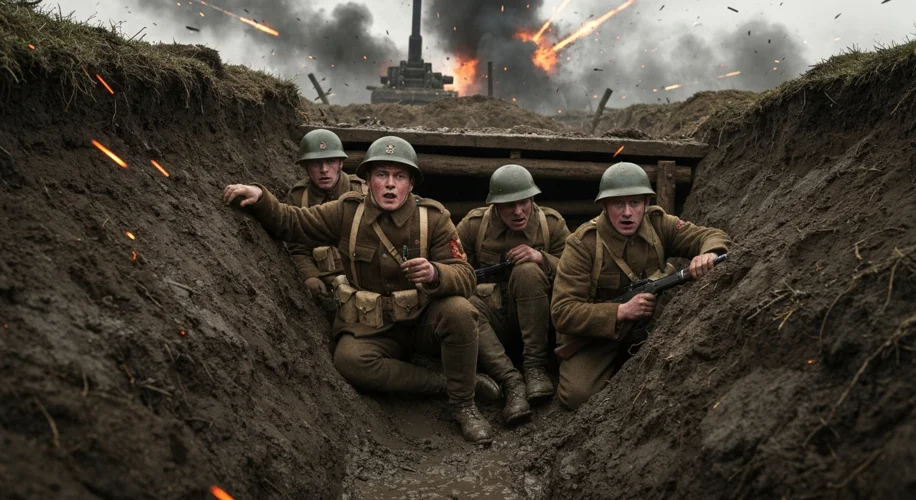
The year is 1917. The air over the Western Front hangs heavy, not just with the perpetual damp and the stench of mud and decay, but with a new, insidious terror. It is an invisible enemy, a silent killer that drifts on the breeze, transforming landscapes into gas-choked hellscapes. This is the chilling reality of chemical warfare, a terrifying chapter in the history of World War I.
Before the Great War, the idea of using poison gas on the battlefield was largely confined to the realm of sensational fiction. However, as the conflict devolved into a brutal stalemate of trench warfare, with unimaginable casualties and no end in sight, desperation spurred innovation – or rather, perversion. The initial attempts were crude, almost experimental. France introduced the relatively weak xylyl bromide tear gas in August 1914, and Germany followed with diphosgene. These early agents were more about harassment than destruction, intended to drive enemy soldiers from their trenches, but their effectiveness was limited by wind conditions and weak concentrations.
The true horror began in April 1915, at the Second Battle of Ypres. The German army, under the direction of chemist Fritz Haber, unleashed a massive cloud of chlorine gas. Released from thousands of cylinders, the greenish-yellow vapor drifted over the Allied trenches. The effect was devastating. Soldiers, caught completely unaware and lacking adequate protection, were overcome by the suffocating fumes. Their lungs burned, their eyes watered uncontrollably, and many collapsed, gasping for air. This horrific demonstration marked a turning point, ushering in a new era of chemical warfare.
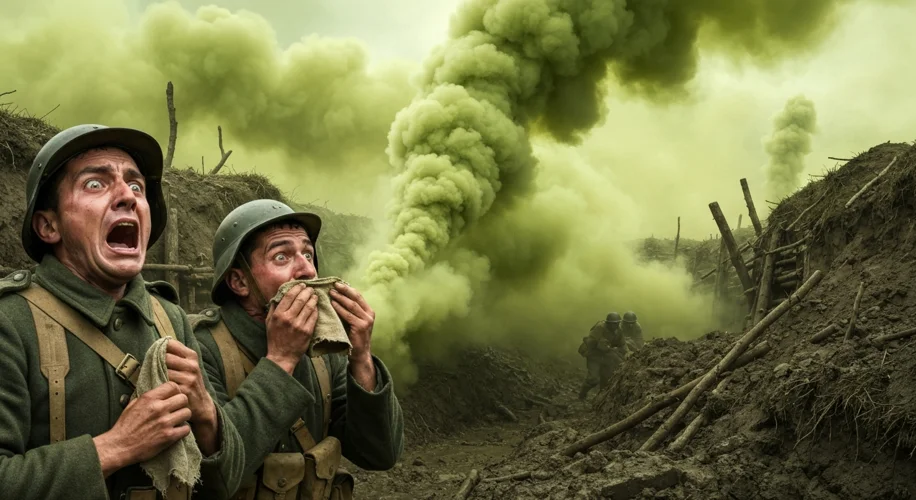
The use of chlorine gas was a brutal shock. It was a weapon that didn’t discriminate; it attacked anyone in its path, friend or foe if the wind shifted unfavorably. The immediate aftermath saw widespread panic and a desperate scramble for countermeasures. Soldiers used urine-soaked rags, handkerchiefs, and even mud to try and filter the air, a grim testament to their improvised ingenuity in the face of an unseen enemy.
Both sides quickly recognized the immense potential for terror and disruption that chemical weapons offered. The arms race that followed was swift and terrifying. Chemists on both sides worked feverishly to develop more potent and effective gases. Phosgene, a colorless gas that was more deadly than chlorine and harder to detect, soon followed. Then came the most feared of all: the blistering agents, like mustard gas. Introduced by the Germans in 1917, mustard gas was a game-changer. It didn’t just incapacitate; it caused severe burns to the skin, eyes, and lungs, often leading to slow, agonizing deaths or permanent disability. It could linger on clothing and equipment for days, turning trenches into deathtraps.
Soldiers’ lives were irrevocably altered. The constant threat of gas attacks created a pervasive sense of dread. Training drills became a grim routine: the shrill shriek of the gas alarm, the frantic scramble to don ill-fitting gas masks, the suffocating fear of a leak, the agonizing pain of exposure. A soldier’s most prized possession became his gas mask, a clunky, often unreliable piece of equipment that offered a fragile shield against an invisible foe. The psychological toll was immense. The sight of comrades writhing in agony, their skin blistered and their eyes swollen shut, haunted the survivors long after the war was over.
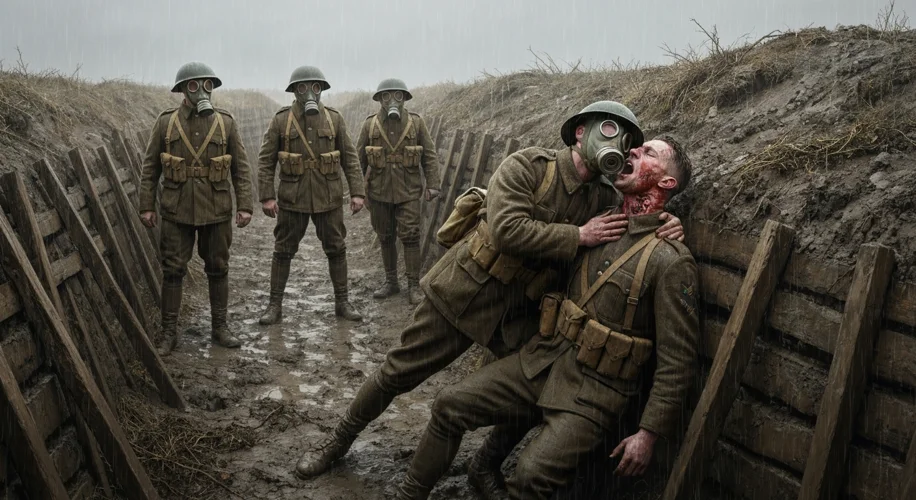
The consequences of chemical warfare were far-reaching. While gas attacks never fully achieved their strategic objectives of breaking through enemy lines consistently, they were undeniably effective at terrorizing the enemy and inflicting horrific casualties. The psychological impact alone was devastating. The use of these weapons was widely condemned, and after the war, international treaties, such as the Geneva Protocol of 1925, were established to ban their use. However, the genie was out of the bottle, and the specter of chemical warfare would continue to haunt global conflicts for decades to come.
The story of poison gas in World War I is a stark reminder of humanity’s capacity for both innovation and barbarity. It is a tale etched in the burning lungs and weeping eyes of those who first faced this invisible enemy, a chilling echo from the trenches that continues to resonate through history, serving as a somber warning against the weaponization of fear itself.