The year is 1494. Across the vast, tempestuous Atlantic, two European powers, Spain and Portugal, etched an invisible line across a world they barely understood. This was the Treaty of Tordesillas, a pact born of ambition and greed, which, with a stroke of a quill, divided the newly discovered lands of the Americas, Africa, and Asia between them. It was a monumental act of cartographic arrogance, a legal fiction that would unleash devastation upon millions of people who had called these lands home for millennia.
The ink on the treaty was barely dry when the tremors of its impact began to shake the foundations of indigenous societies. For the peoples of the Americas – the Taino in the Caribbean, the Aztec and Inca in the mainland, and countless others – this treaty wasn’t just a border dispute between distant kings; it was a death knell. It legitimized the relentless drive of European conquest, providing a theological and legal veneer to the dispossession of lands, the enslavement of peoples, and the systematic eradication of cultures.
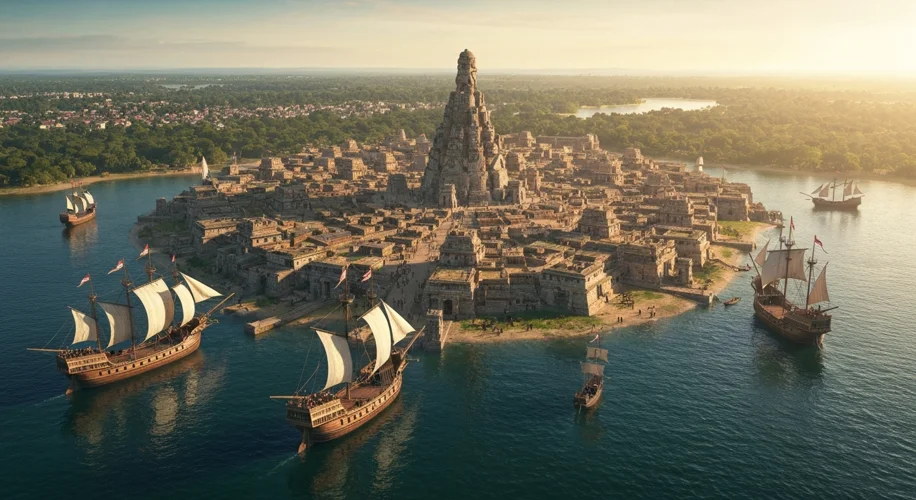
Imagine the shock, the utter disbelief, as ships bearing the flags of Castile and Aragon, or the unmistakable red cross of Portugal, began to appear on their shores. These were not traders seeking exchange, but conquerors armed with steel and a divine mandate. The Treaty of Tordesillas, brokered by Pope Alexander VI, asserted that any lands not already Christian were open for the taking. This made a mockery of existing indigenous sovereignty, spiritual beliefs, and complex social structures.
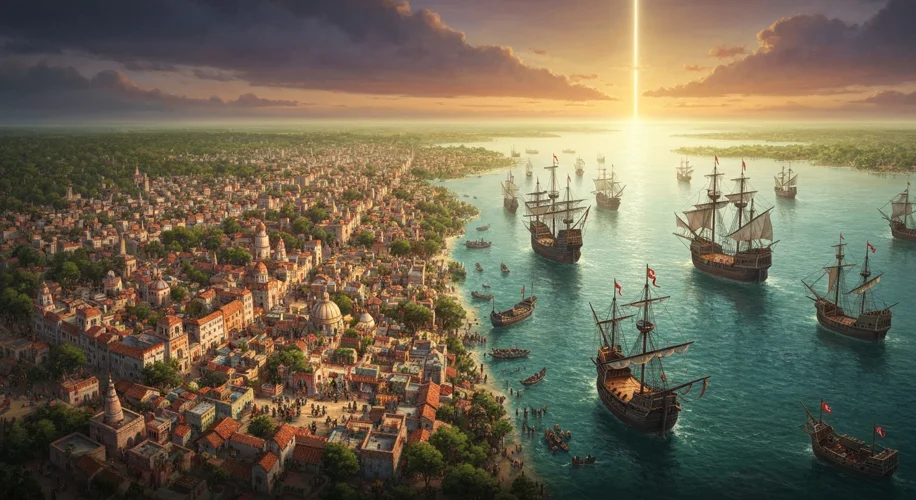
Consider the story of the Taino people of Hispaniola. Within a generation of Columbus’s arrival in 1492, their population plummeted from an estimated half-million to a mere few thousand. The Spanish, fueled by the treaty’s implicit permission to exploit, subjected them to brutal forced labor in gold mines and plantations, a system known as the encomienda. Disease, to which they had no immunity, swept through their communities like wildfire, further decimating their numbers. Their vibrant culture, their intricate spiritual practices, their very way of life, were systematically dismantled.
Across the vast expanse of South America, the line drawn by Tordesillas cleaved the continent. Portugal was granted dominion over the eastern bulge, which would become Brazil, while Spain claimed the rest. This division, arbitrary from an indigenous perspective, meant that the Guarani, the Tupinambá, and countless other groups found themselves under the dominion of one European power or another, their lands carved up for resource extraction and their people forced into labor or fleeing deeper into the interior. The echoes of this division still resonate in the linguistic and cultural landscape of South America today.
But the impact wasn’t confined to the Americas. The treaty’s spirit of division extended to Africa and Asia, influencing the burgeoning colonial enterprises of both Spain and Portugal. In Africa, it contributed to the partitioning of territories and the intensified transatlantic slave trade, as Portuguese interests, bolstered by the treaty, sought labor for their burgeoning sugar plantations in Brazil and the Atlantic islands. In Asia, the demarcation lines, though more complex and often contested, shaped spheres of influence, leading to conflicts and the disruption of established trade networks.
The consequences were profound and long-lasting:
- Dispossession and Land Loss: Indigenous peoples were systematically stripped of their ancestral lands, vital for their sustenance, culture, and identity.
- Enslavement and Forced Labor: The treaty provided a justification for the brutal exploitation of indigenous populations, leading to immense suffering and death.
- Cultural Disruption: European languages, religions, and social structures were imposed, often violently, leading to the erosion and loss of indigenous knowledge, traditions, and languages.
- Demographic Collapse: Disease, coupled with violence and forced labor, led to catastrophic population declines for many indigenous communities.
- Shaping of Modern Borders: The arbitrary lines drawn in Tordesillas laid the groundwork for many of the national borders that exist today, often disregarding pre-existing ethnic and cultural boundaries.
It is crucial to understand that the Treaty of Tordesillas was not merely a diplomatic agreement between two European nations. It was an act of profound violence against peoples who had no voice in its creation. It represents a stark historical lesson in how abstract political agreements, driven by the pursuit of power and profit, can have devastating, long-term consequences for those on the margins of history. The scars left by this treaty are invisible to the naked eye, etched not on maps, but in the enduring struggles and resilience of indigenous communities worldwide.