The year is 1492. The air in Granada, Spain, is thick with the scent of victory. For centuries, the Reconquista, the long struggle to expel Muslim Moors from the Iberian Peninsula, had defined the Spanish spirit. Now, Isabella I of Castile and Ferdinand II of Aragon stood triumphant, their banners flying over the last Moorish stronghold.
But as the dust settled on this monumental achievement, a different kind of ambition began to stir in the Spanish court, an ambition fueled by whispers of distant lands, glittering riches, and the fervent desire to spread the Catholic faith to the furthest corners of the known world. This was the dawning of an era that would forever alter the course of history: the Spanish colonization of the Americas.
The Seeds of Empire: A Kingdom Forged in Faith and Fire
Spain in the late 15th century was a nation transformed. The union of Castile and Aragon had created a powerful, centralized monarchy. The expulsion of Jews and Muslims, while a devastating loss of talent and diversity, had solidified a singular, fervent Catholic identity. This was a society eager to prove its prowess on a global stage, a society where faith and conquest were inextricably linked.
Into this charged atmosphere stepped a Genoese navigator named Christopher Columbus. Driven by a potent mix of ambition, religious zeal, and perhaps a touch of delusion, Columbus proposed a daring westward voyage to reach the East Indies. The monarchs, weary from war and eager for new sources of wealth and influence, initially hesitated. But after years of lobbying, and with the final victory in Granada providing a crucial boost of confidence and resources, they finally granted Columbus his royal charter in April 1492.
The ‘Discovery’ and the Dawn of Conquest
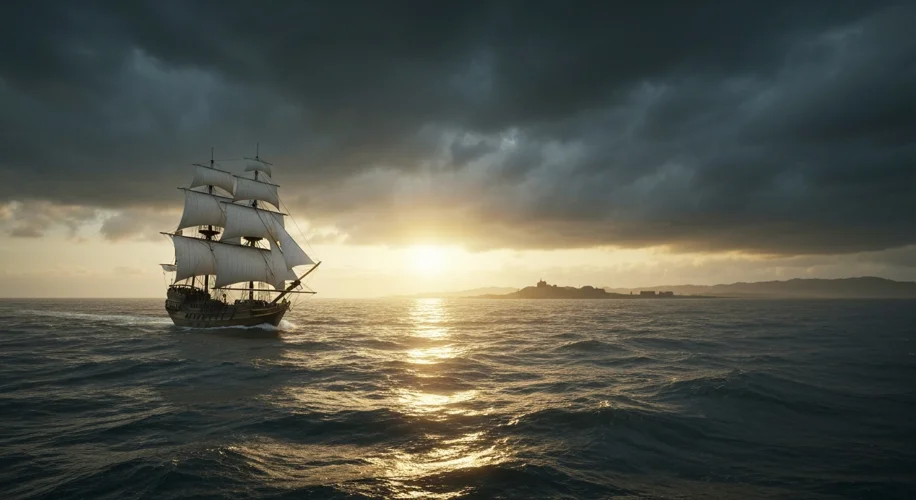
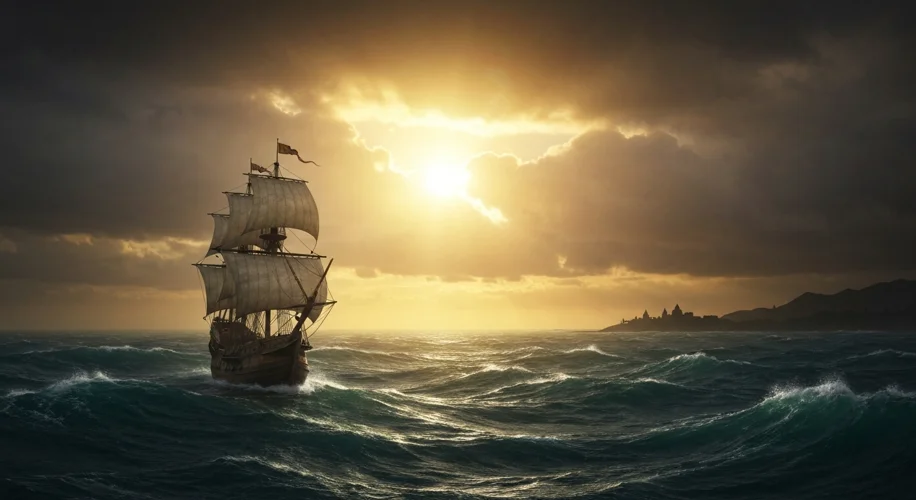
On August 3, 1492, Columbus set sail with three ships: the Niña, the Pinta, and the Santa María. After a grueling journey across the vast Atlantic, on October 12, 1492, land was sighted. Columbus believed he had reached the Indies, but in reality, he had made landfall in the Caribbean, on an island he named San Salvador. The indigenous people he encountered, the Taíno, were met not with diplomacy, but with a chillingly familiar Spanish declaration: the Requerimiento. This document, read aloud in Spanish (a language utterly incomprehensible to the natives), declared that God had granted dominion over these lands to the Pope, and by extension, to the Spanish monarchs. It demanded their submission to Christianity and Spanish rule. Refusal, it warned, would lead to war and enslavement.
This was the grim prelude to decades of brutal conquest. The initial voyages of Columbus, though driven by exploration, quickly morphed into a brutal quest for gold and labor. The Spanish, armed with superior weaponry like steel swords, arquebuses, and horses (creatures unknown to the Americas), found themselves in stark contrast to the indigenous peoples who often fought with stone tools and spears.
The Great Actors: Conquerors and the Conquered
The Spanish conquest was not a monolithic event. It was a series of campaigns spearheaded by ambitious, often ruthless, individuals. Hernán Cortés, a cunning and brutal conquistador, set his sights on the mighty Aztec Empire in present-day Mexico. Deceiving and exploiting the Aztec Emperor Moctezuma II, Cortés, with a small force of Spaniards and thousands of indigenous allies (many of whom resented Aztec rule), brought about the empire’s downfall in 1521. The legendary city of Tenochtitlan, a marvel of engineering and urban planning, was razed and rebuilt as Mexico City.
Meanwhile, in South America, Francisco Pizarro, a man of even greater ruthlessness, targeted the vast Inca Empire. Exploiting internal divisions and the recent death of the Inca emperor Huayna Capac, Pizarro ambushed and captured the new emperor, Atahualpa, in 1532. Despite a massive ransom of gold and silver being paid, the Spanish executed Atahualpa, plunging the empire into chaos and paving the way for Spanish dominance. The awe-inspiring Andean cities of the Incas, like Cusco, soon felt the heavy hand of Spanish rule.
The Devastating Impact: Disease and Encomienda
But it wasn’t just steel and gunpowder that decimated the indigenous populations. The greatest, most insidious weapon brought by the Europeans was disease. Smallpox, measles, influenza, and other pathogens to which Native Americans had no immunity swept through communities like a biblical plague. Entire villages were wiped out, leaving behind a landscape of devastation and despair. Some estimates suggest that up to 90% of the indigenous population perished in the century following Columbus’s arrival.
The Spanish crown, while eager for wealth, also sought to govern and convert the new territories. The encomienda system was established, granting Spanish settlers control over defined groups of indigenous people. Ostensibly, these settlers were to protect and Christianize the natives, but in practice, it became a brutal system of forced labor, akin to slavery, extracting tribute and labor for the enrichment of the colonizers.
A World Transformed: The Columbian Exchange and Global Power
The Spanish colonization was more than just a conquest; it was the catalyst for the Columbian Exchange, a vast transatlantic movement of plants, animals, culture, and people. Europeans brought horses, cattle, pigs, wheat, and sugar cane to the Americas. In return, they took back maize (corn), potatoes, tomatoes, tobacco, and chocolate, crops that would fundamentally change European diets and economies.
This era also marked a seismic shift in global power. Spain, fueled by the silver and gold extracted from its American colonies, became the dominant European power in the 16th century. This influx of wealth financed its European wars and funded its vast empire, but it also led to rampant inflation and ultimately contributed to Spain’s eventual decline.
Legacy: A Complex and Contested History
The Spanish colonization of the Americas is a period of profound complexity and enduring controversy. It brought the spread of Christianity and the Spanish language, laying the foundations for many modern nations in Latin America. It led to the creation of new, hybrid cultures, a testament to the resilience of both indigenous peoples and European settlers.
Yet, it is also a story of unparalleled violence, exploitation, and cultural destruction. The imposition of foreign rule, the brutal suppression of indigenous ways of life, and the devastating impact of disease left deep scars that continue to be felt today. Understanding this era requires confronting the harsh realities of conquest alongside the remarkable feats of exploration and cultural exchange. The echoes of 1492 and the centuries that followed continue to resonate, shaping the Americas and the world in ways we are still grappling with.