
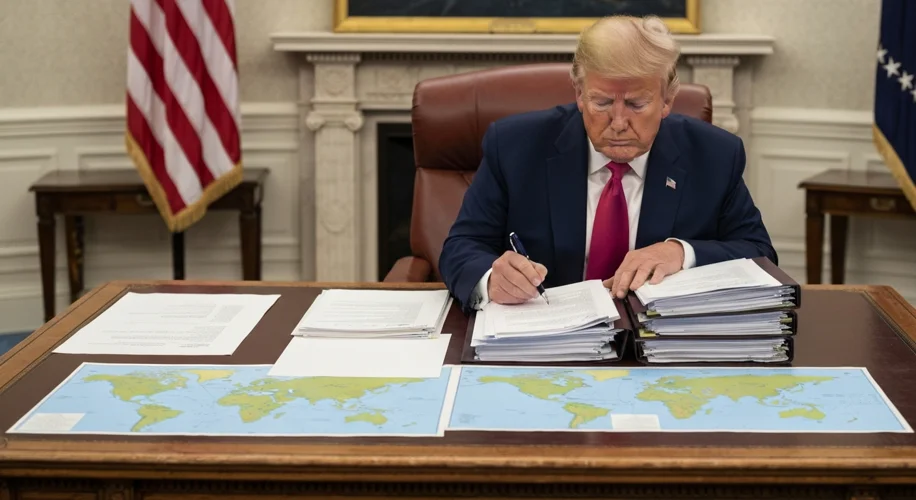
The year is 2026. The global stage, once a landscape of intricate alliances and predictable diplomatic dances, has been dramatically reshaped by a singular, often unpredictable force: Donald Trump’s ‘America First’ foreign policy. More than just a slogan, it was a seismic shift that challenged decades of international norms, plunging the world into a period of intense trade disputes and unconventional diplomacy.
For generations, the post-World War II international order had been meticulously constructed on pillars of multilateralism, free trade agreements, and a shared commitment to global security. Nations, in theory, worked together to address common challenges. But Trump’s arrival in the White House in 2017 signaled a stark departure. His vision was one of transactional relationships, where every international engagement was weighed against its immediate benefit to the United States, and often, its perceived detriment to others.
The ‘America First’ Doctrine: A Paradigm Shift
At its core, ‘America First’ was a nationalist ideology that prioritized perceived national interests above all else. This meant questioning the value of long-standing alliances, renegotiating trade deals that were deemed “unfair,” and adopting a more protectionist stance. The President himself was the architect and chief salesman of this doctrine, often bypassing traditional diplomatic channels in favor of direct, and sometimes bombastic, pronouncements via social media and rallies. His approach to leaders of other nations was often characterized by personal relationships, a stark contrast to the institutional diplomacy that had defined foreign policy for decades.
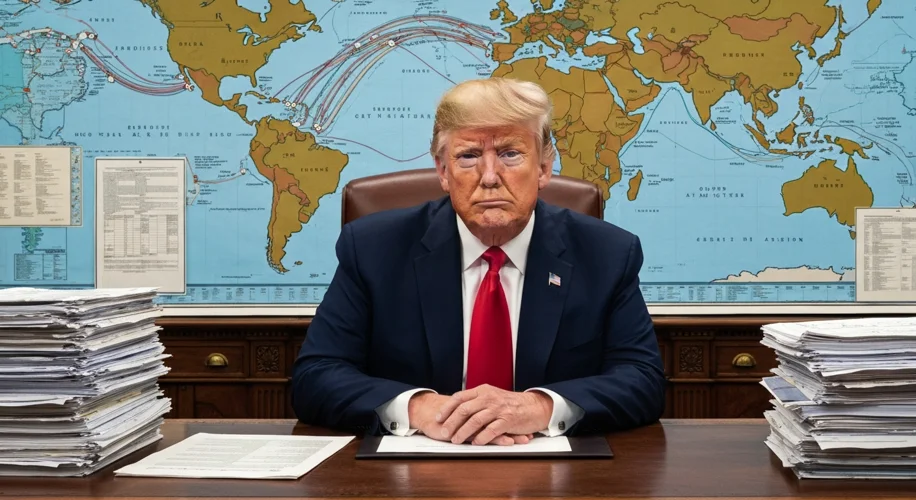
Trade Wars and Tariffs: A Global Economic Chess Match
No aspect of Trump’s foreign policy was more evident or more disruptive than his approach to trade. Citing unfair trade practices and massive trade deficits, particularly with China, Trump initiated a series of tariff escalations. The aim was to force a recalibration of global trade dynamics, bringing manufacturing jobs back to America. This led to tit-for-tat retaliatory tariffs from countries like China, the European Union, and Canada, impacting industries from agriculture to automotive manufacturing. The global supply chains, once thought to be robust, began to fray under the pressure of these escalating trade wars.
He famously renegotiated the North American Free Trade Agreement (NAFTA), replacing it with the United States-Mexico-Canada Agreement (USMCA). While proponents hailed it as a victory for American workers, critics pointed to its complexities and the ongoing economic disruptions.
Unconventional Diplomacy and Shifting Alliances
Beyond trade, Trump’s diplomatic methods were a constant source of both fascination and consternation. He engaged in direct summitry with leaders like North Korea’s Kim Jong Un, a move that broke decades of diplomatic isolation but yielded few concrete steps towards denuclearization. He questioned the value of NATO, a cornerstone of Western security since the Cold War, demanding that European allies increase their defense spending. This created unease within the alliance, even as it spurred some members to re-evaluate their contributions.
His administration also witnessed a significant shift in US policy towards the Middle East, including brokering normalization agreements between Israel and several Arab nations, known as the Abraham Accords. This was a remarkable diplomatic achievement, but it occurred against a backdrop of strained relations with traditional allies and a withdrawal from international agreements like the Iran nuclear deal.
A Glimpse of Grand Ambitions: Territorial Acquisition?
Perhaps one of the most surprising and unconventional aspects of Trump’s foreign policy discussions was his expressed interest in territorial acquisitions. In a notable instance, he publicly mused about the U.S. purchasing Greenland from Denmark. While such overtures were largely dismissed or rebuffed, they underscored a broader transactional and, some would argue, imperialistic undercurrent to his worldview. This was not about expanding borders in the traditional sense, but rather about a perceived opportunity to acquire strategic assets through financial means, reflecting a mindset that viewed international relations as a series of potential real estate deals.
The Legacy: A World Transformed?
By 2026, the full impact of Donald Trump’s ‘America First’ foreign policy continues to be debated. His supporters argue that he rightly challenged a global system that was no longer serving American interests, leading to better trade deals and a more realistic approach to international relations. Critics, however, contend that his policies eroded trust, destabilized alliances, and created global economic uncertainty, leaving a complex and divided world. The emphasis on bilateral deals over multilateral cooperation, the aggressive use of tariffs, and the unpredictable nature of his diplomacy have undoubtedly left an indelible mark. The question remains: was this a temporary detour, or a fundamental alteration in the trajectory of global affairs?