
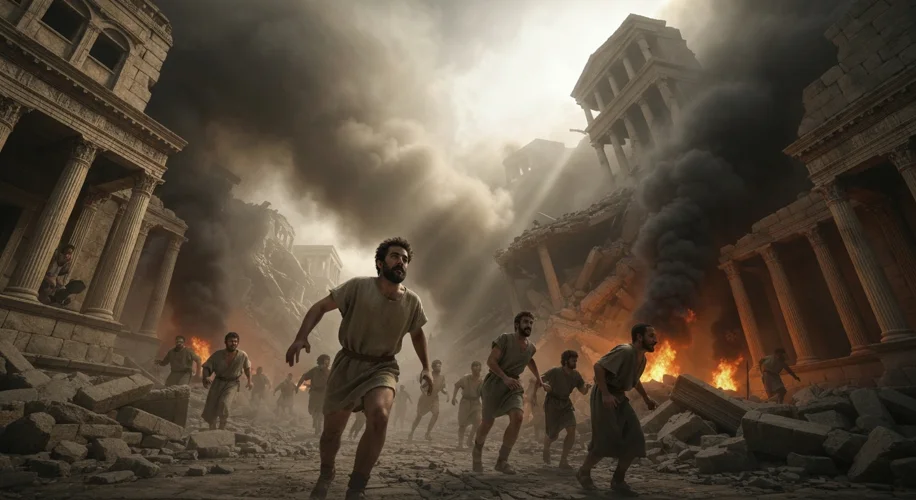
The year is 526 CE. The sun beat down relentlessly on Antioch, a jewel of the Byzantine Empire, a bustling metropolis of commerce, culture, and faith. Its magnificent buildings, a testament to centuries of Roman and Hellenistic influence, reached towards the heavens, promising permanence. Little did its inhabitants know that their city, and indeed their lives, were about to be irrevocably shattered.
Antioch, strategically located on the Orontes River, was more than just a city; it was a vital hub, a crossroads of empires. Its population, a vibrant tapestry of Greeks, Romans, Syrians, Jews, and Christians, pulsed with life. Philosophers debated in its academies, merchants haggled in its agora, and the faithful gathered in its numerous churches and temples. This was a city at its zenith, a proud pillar of Justinian’s burgeoning empire.
But nature, as it often does, harbored a different plan. On a seemingly ordinary day in late May, a tremor, subtle at first, began to shake the foundations of Antioch. Then, with a roar that rent the very sky, the earth convulsed. Buildings, once symbols of strength, twisted and buckled, their stones raining down upon the terrified populace. Churches, their domes a familiar sight against the horizon, collapsed, burying the devout within their sacred walls. The grand amphitheater, a place of spectacle and entertainment, became a tomb. The magnificent portico that lined the city’s main street, a marvel of engineering, was reduced to rubble.
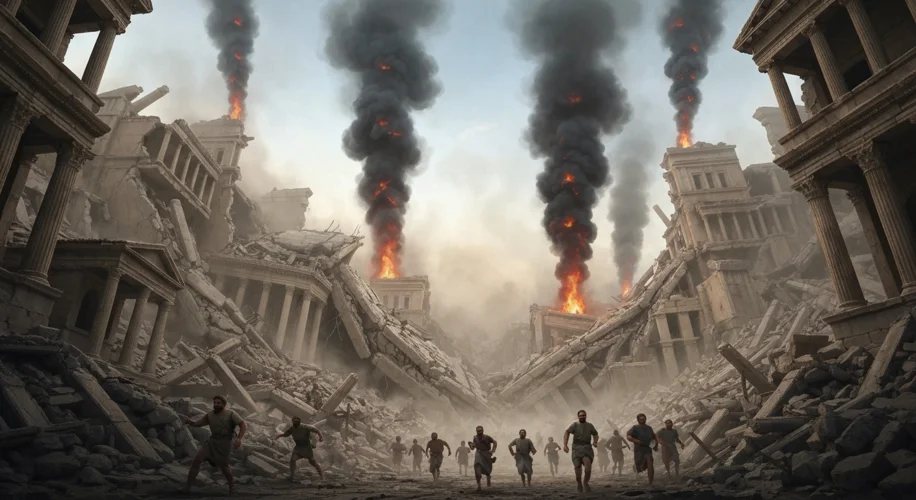
The devastation was immediate and apocalyptic. Accounts from the time, though fragmented, paint a grim picture. John Malalas, a chronicler from Antioch, describes the earth tearing open and swallowing people whole, while others were crushed by falling debris. The earthquake’s fury was not a single event, but a series of violent shakes that continued for days, thwarting any immediate attempts at rescue and recovery.
Fires, ignited by toppled lamps and ruptured hearths, added to the horror, consuming what the earth had spared. The Orontes River itself was not immune; its waters were churned and diverted by the seismic activity, adding to the chaos.
The human toll was staggering. Estimates vary, but contemporary sources suggest that anywhere from 250,000 to 300,000 souls perished in Antioch and its surrounding regions. This was not merely a natural disaster; it was a catastrophe of unprecedented scale for the Byzantine Empire, a wound that would take generations to heal.
In the face of such unimaginable destruction, the response of the Byzantine government, led by Emperor Justinian I, was swift, albeit constrained by the era’s capabilities. Justinian, known for his ambition and legal reforms, dispatched aid and officials to the stricken city. He ordered the construction of new buildings, aiming to restore Antioch to its former glory. However, the scale of the disaster and the empire’s limited resources meant that full reconstruction was a monumental, almost insurmountable, task.
But the resilience of the human spirit shone through the dust and despair. Survivors, even those who had lost everything, began the arduous process of digging through the rubble, searching for loved ones, and attempting to rebuild their lives. Religious fervor, a cornerstone of Byzantine society, provided solace and a framework for recovery. Churches were rebuilt, often with the help of imperial funding and the unwavering faith of the community.
The earthquake of 526 CE left an indelible scar on Antioch and the Byzantine world. It crippled a vital economic and cultural center, impacting trade routes and imperial revenues. It tested the resolve of Emperor Justinian, showcasing the limitations of even the most powerful empire in the face of nature’s wrath.
Yet, it also revealed the enduring strength of its people. The story of Antioch’s recovery, though fraught with hardship, is a testament to human perseverance. It is a reminder that even in the face of unimaginable devastation, the will to rebuild, to find hope amidst the ruins, and to carry on the echoes of the past, can ultimately prevail.
This event, often overshadowed by more famous historical moments, serves as a stark reminder of the fragility of human civilization and the profound impact of natural disasters. It underscores the importance of understanding our past, not just its triumphs, but its moments of profound vulnerability, for it is in these echoes that we often find our greatest lessons.