
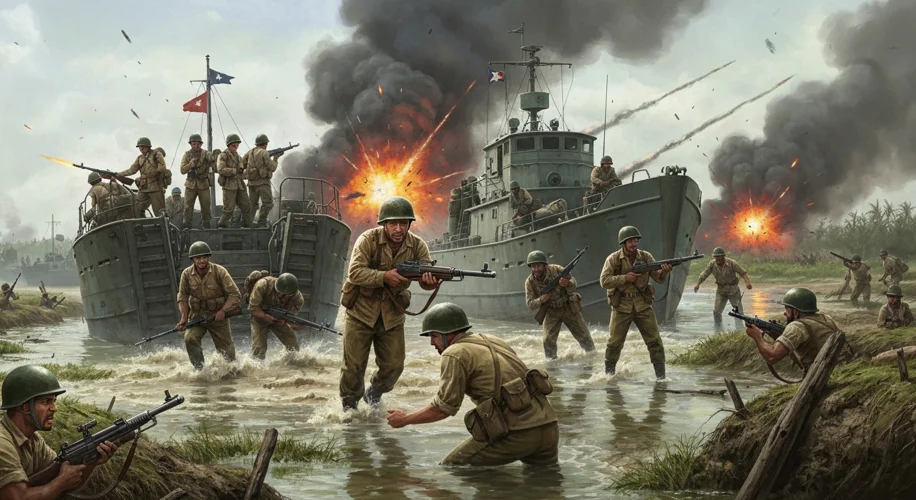
The humid air of the Caribbean hung heavy, thick with the scent of salt and the unspoken tension of a nation on the precipice. It was April 1961, and a storm was brewing, not of nature, but of man’s desperate machinations.
For years, the specter of Fidel Castro’s revolution had loomed large in the minds of American policymakers. The charismatic lawyer-turned-revolutionary had, in 1959, overthrown the US-backed dictator Fulgencio Batista, promising a new era for Cuba. But Castro’s embrace of socialist ideals, and increasingly, of the Soviet Union, sent shivers down the spines of those in Washington who saw a communist foothold just 90 miles off their coast.
Underneath the surface of diplomatic unease, a covert operation was taking shape, codenamed ‘Operation Zapata.’ The Central Intelligence Agency (CIA), under the direction of President John F. Kennedy’s administration, had recruited and trained a force of Cuban exiles, meticulously molded into an invading army. These were men who had lost their homes, their livelihoods, and their homeland to Castro’s rise. They were the Brigade 2506, a vanguard of hope and, as it would turn out, of profound disillusionment.
Their mission: to land on the shores of Cuba at the Bahía de Cochinos – the Bay of Pigs – and spark an internal uprising that would topple Castro’s regime. The plan was ambitious, relying on a delicate ballet of air support, naval bombardment, and the fervent belief that the Cuban people were ready to rise up against their new leader.
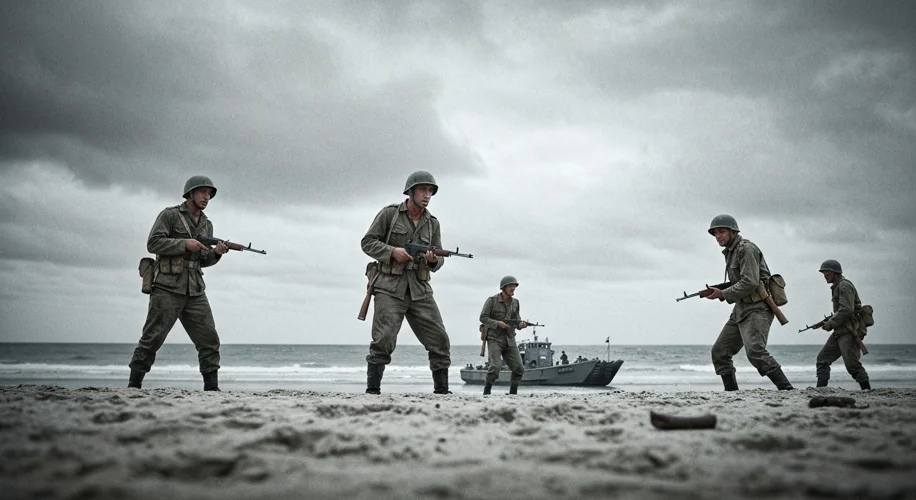
But the choreography was flawed from the start. The element of surprise, crucial to any invasion, evaporated like morning mist under the tropical sun. Castro’s intelligence network, surprisingly effective, had anticipated the move. The planned air strikes, intended to neutralize Cuba’s air force, were only partially successful, leaving enemy planes to wreak havoc on the invading fleet and ground forces.
The landing itself, on April 17, 1961, was a chaotic affair. The beachhead at Playa Girón was a swampy, inhospitable landscape, a far cry from the strategic advantage the planners had envisioned. Instead of a swift victory, the exiles found themselves bogged down, facing a rapidly mobilized and determined Cuban defense force, bolstered by civilian militias.
What followed was a three-day nightmare. The exiles, cut off and outgunned, fought bravely but without the promised air and artillery support. Radio communications crackled with desperate pleas for help that never came. The promised popular uprising failed to materialize; instead, the invasion seemed to galvanize Cuban nationalism in support of Castro.
By April 19, the game was up. The remnants of Brigade 2506 surrendered. Over 100 exiles were killed, and more than 1,200 were captured. The dream of a swift, decisive liberation had dissolved into a humiliating defeat.
The consequences were immediate and far-reaching. For the United States, it was a profound foreign policy embarrassment, a stain on the new Kennedy administration and a stark illustration of the dangers of covert operations gone awry. It exposed the deep divisions within the US government about how to confront communism and the overconfidence of intelligence agencies.
For Cuba, the victory was a monumental propaganda coup for Castro. It solidified his grip on power, solidified his anti-American stance, and further pushed him into the embrace of the Soviet Union, setting the stage for the even more perilous Cuban Missile Crisis just 18 months later.
The Bay of Pigs invasion stands as a cautionary tale, a stark reminder that even the most meticulously planned operations can crumble when reality fails to align with ambition. It’s a story of misplaced confidence, flawed intelligence, and the tragic human cost of geopolitical brinkmanship. The echoes of that failed invasion continue to resonate, a somber testament to a moment when a dream of liberation collided headfirst with the unforgiving shores of failure.