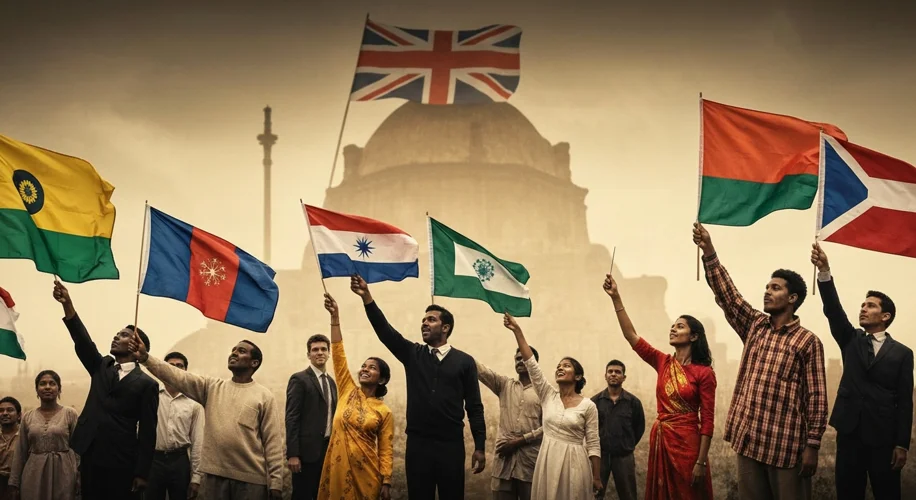
The mid-20th century was a seismic shift in global power. The once-vast British Empire, a sun that famously never set, began its dramatic contraction. Across continents, from the dusty plains of Africa to the vibrant islands of the Caribbean, a powerful current of change was rising – the unstoppable tide of decolonization.
For centuries, the Union Jack had been the symbol of dominion, a banner that represented British rule, law, and often, exploitation. But as nations that had long been under imperial control found their voices, they also sought to shed the old symbols and embrace new ones that reflected their unique aspirations and histories. The most potent symbol of this newfound sovereignty was often their national flag.
The Weight of History, The Hope of Tomorrow
The process was rarely smooth. Newly independent nations inherited borders drawn by colonial administrators, often lumping disparate ethnic groups together or dividing unified peoples. They grappled with economies structured to serve the metropole, and the lingering psychological impact of subjugation. Yet, amidst these challenges, a fervent desire to forge a distinct national identity pulsed through the veins of these emerging states.
Consider India, the jewel in the crown of the British Empire. After centuries of rule, independence arrived in 1947, accompanied by the harrowing partition of the subcontinent. The Indian National Congress, a leading force in the independence movement, debated the design of the new flag extensively. The tricolor – saffron, white, and green – with the Ashoka Chakra at its center, was not merely a visual representation; it was a deeply symbolic tapestry. Saffron represented courage and sacrifice, white stood for truth and peace, and green symbolized fertility and prosperity. The Chakra, a wheel from an ancient Buddhist edict, signified progress and the eternal wheel of dharma.

Ghana’s Star and the Pan-African Dream
In 1957, Ghana became the first sub-Saharan African nation to gain independence from colonial rule. Led by Kwame Nkrumah, a fervent advocate for Pan-Africanism, Ghana’s flag was a bold declaration of this emerging identity. It featured red, gold, and green stripes, echoing the colors of the Pan-African movement and the fertile lands of Ghana. The central black star, Nkrumah stated, was a symbol of African freedom and unity.
This choice was deliberate, aiming to inspire and unite people of African descent across the globe, signaling a new era where Africa would chart its own destiny. The colors resonated with other emerging African nations, many of whom would adopt similar palettes in their own flags, creating a visual language of solidarity.
A Spectrum of Identity
The Caribbean also saw a flurry of new flags. Jamaica, independent in 1962, adopted a flag of black, gold, and green. The black represented strength and creativity, the gold symbolized natural wealth and beauty, and the green stood for hope and agricultural resources. The stark absence of the Union Jack was a powerful statement in itself.
Canada, a dominion that had evolved gradually, eventually moved away from the Union Jack on its own flag. The iconic red maple leaf, adopted in 1965, became a powerful and universally recognized symbol of Canadian identity, distinct from its British heritage, yet acknowledging its historical roots. The debate over its adoption was fierce, reflecting the deep-seated questions about national identity that decolonization invariably provoked.

The Enduring Legacy of the Flag
These flags were more than just pieces of cloth; they were potent emblems of self-determination, hard-won freedoms, and the complex, ongoing project of nation-building. They symbolized a rejection of colonial pasts and a bold embrace of unique cultural, political, and social destinies.
The transition from imperial rule to independent nationhood was a turbulent and transformative period. The adoption of new national symbols, particularly flags, was a crucial step in this process, allowing newly sovereign states to project their identity to the world and foster a sense of unity among their citizens. The vibrant colors and unique designs that emerged from this era tell a compelling story of resilience, aspiration, and the enduring human quest for self-definition.