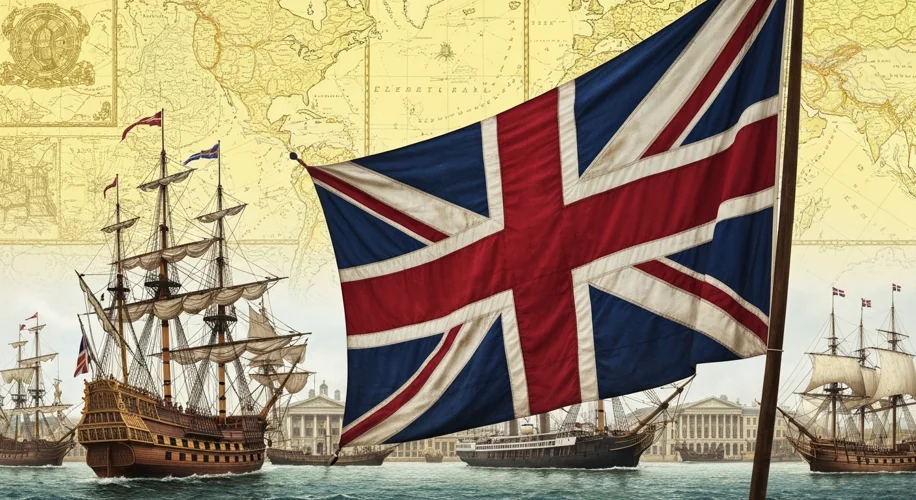
It flutters proudly from flagpoles, adorns military uniforms, and is stitched into the very fabric of national identity. But the Union Jack, that iconic cascade of red, white, and blue, is far more than just a pretty design. It is a potent symbol, a historical document etched in cloth, a testament to centuries of conquest, collaboration, and enduring legacy.
To understand the Union Jack is to embark on a journey through the dramatic, often turbulent, history of the British Empire. Its story begins not with a grand declaration, but with a royal union. In 1603, when King James VI of Scotland inherited the English throne as James I, the crowns of England and Scotland were united. This personal union, however, did not immediately create a single political entity. Yet, the desire for a shared symbol was palpable. The first ‘Union Flag’ emerged in 1606, a melding of the English St. George’s Cross and the Scottish St. Andrew’s Saltire, a proud declaration of this new, personal union.
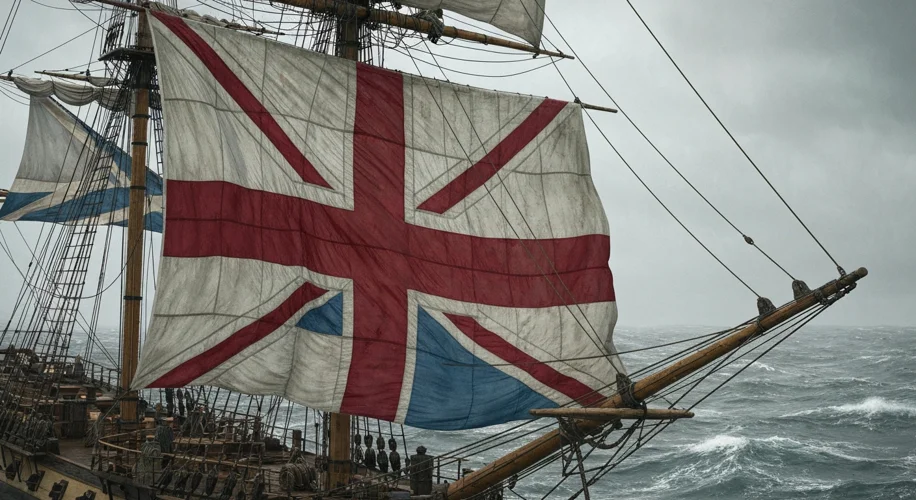
But the British Empire, as we know it, was still in its nascent stages. The true evolution of the Union Jack, its transformation into the symbol of a global behemoth, would take centuries. The 18th century brought Ireland into the fold, and with it, another significant alteration. The Act of Union 1707 had united England and Scotland into the Kingdom of Great Britain, and the flag was updated. Then, in 1801, with the Act of Union 1800, Ireland was formally incorporated into the United Kingdom. This momentous event necessitated another change to the flag, incorporating the St. Patrick’s Saltire, representing Ireland, into the design. The familiar red diagonal cross superimposed on the white saltire, a symbol of St. Patrick, was added, completing the Union Jack as we recognize it today.
The Union Jack, now a complex amalgamation of three national crosses, became the ubiquitous emblem of the burgeoning British Empire. From the icy reaches of Canada to the sun-drenched plains of India, from the bustling ports of Australia to the sprawling colonies of Africa, the Union Jack was planted. It was a banner under which explorers sailed, armies marched, and administrators governed. For the British, it was a symbol of their nation’s power, their civilization, and their perceived destiny to rule.
However, the perspective of those under the Union Jack’s shadow was often starkly different. For many in the colonies, the flag represented subjugation, the loss of sovereignty, and the imposition of foreign rule. Yet, the impact of the Union Jack was so profound that it left an indelible mark on the very symbols of emerging nations. As colonies gained independence, many grappled with their colonial past, and their new national flags often bore the imprint of the Union Jack, either as a deliberate nod to a shared history or as an unavoidable legacy of colonial cartography and vexillology.
Consider the flag of Australia, with its blue ensign and the Union Jack in the canton, a clear inheritance. Or New Zealand, whose flag also features the Union Jack in the upper hoist, alongside the Southern Cross. Even Canada, after gaining independence, retained the Union Jack in its flag for decades before adopting the iconic maple leaf in 1965, a decision that itself sparked considerable debate. These examples are not mere coincidences; they are echoes of the Union Jack’s pervasive influence, a visual dialogue between past and present, between colonizer and colonized.
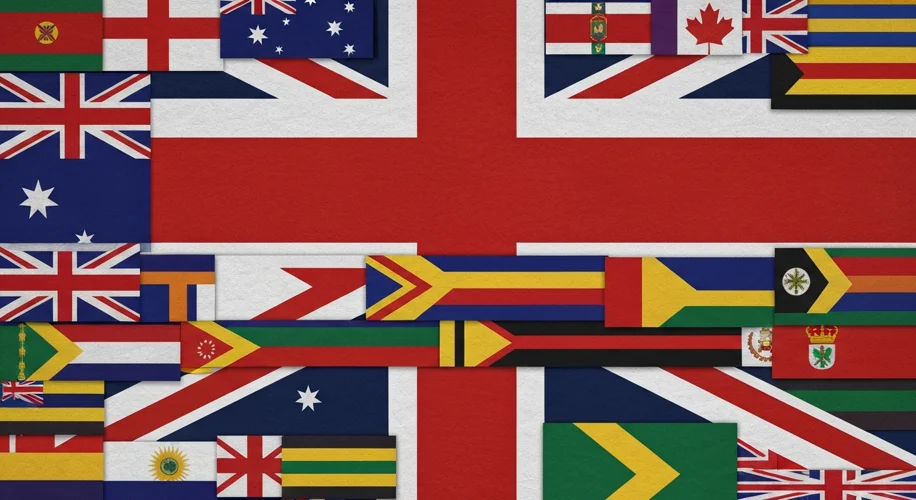
The Union Jack’s story is not static. It has been a symbol of imperial might, a rallying point for national pride, and, for many, a painful reminder of oppression. Its presence on national flags today is a complex inheritance, prompting ongoing discussions about national identity, historical reckoning, and the enduring impact of empire. The flags of the Commonwealth nations, many still bearing the Union Jack, are a constant reminder that the story of the British Empire, and its iconic banner, is far from over. It continues to be reinterpreted, debated, and understood in new ways, proving that symbols, like history itself, are never truly fixed.
As we look at the Union Jack today, let us see not just a flag, but a narrative woven from threads of ambition, power, resistance, and the indelible shaping of identities across the globe. It is a symbol that, for better or worse, has left an enduring mark on the world’s visual landscape.