
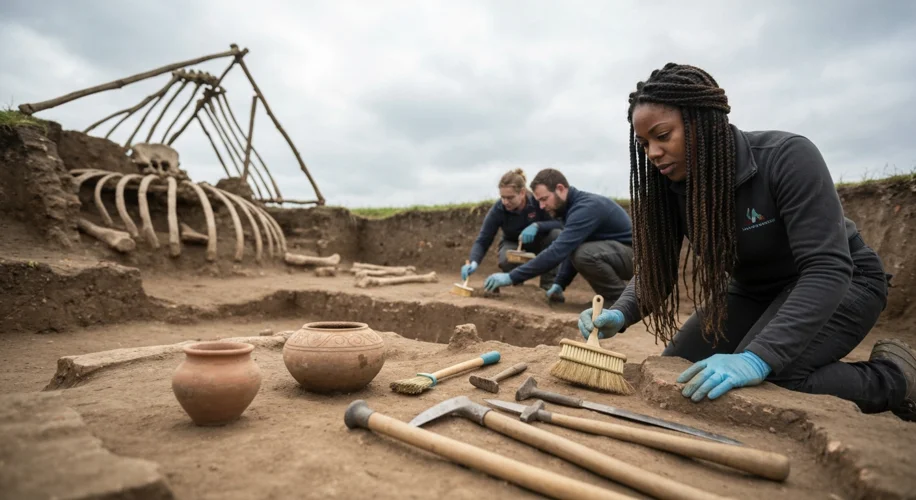
The relentless march of progress, it seems, often comes with a hidden price tag – one paid not in currency, but in the silent, buried stories of our past. When Britain’s High Speed 2 (HS2) rail project began its ambitious journey across the heart of England, few could have predicted the archaeological bounty that lay waiting beneath the earth. This isn’t just about laying tracks; it’s about unearthing a lost world, a testament to centuries of human endeavour, conflict, and daily life.
For millennia, the land destined to become HS2’s route has been a silent witness to the ebb and flow of history. From the sturdy farms of Roman Britain to the bustling medieval hamlets and the quiet villages of more recent centuries, life has unfolded, leaving its indelible mark. The HS2 archaeology programme, one of the largest undertaken in the UK, has been tasked with meticulously uncovering these fragments of our collective memory before they are lost forever.
Imagine, if you will, the ground beneath your feet being a living palimpsest. As excavators peel back the layers of soil, they’re not just removing earth; they’re revealing the foundations of Roman villas, the hearths of medieval hearths, and the burial grounds of generations long gone. One of the most significant discoveries emerged near Wendover, Buckinghamshire, where archaeologists unearthed a sprawling Roman settlement. This wasn’t merely a few scattered coins; it was a well-preserved microcosm of Roman life. They found evidence of extensive agricultural activity, the remnants of sophisticated buildings, and a wealth of artefacts – pottery shards, tools, and personal adornments – that speak volumes about the people who lived, worked, and died there nearly two millennia ago.
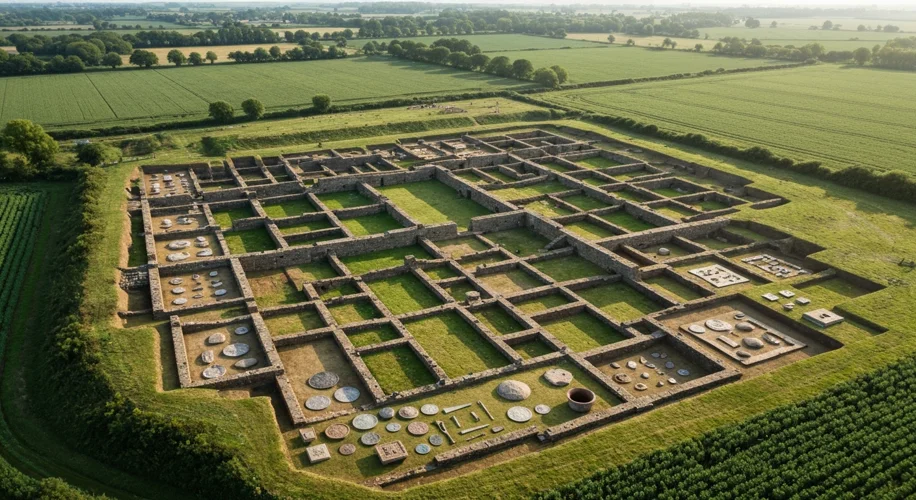
Further along the route, in Warwickshire, a medieval village that vanished from the maps centuries ago has been resurrected. The site, believed to be Bodenham, dates back to the 11th century and offers an extraordinary glimpse into the lives of ordinary people during the medieval period. Archaeologists have uncovered the foundations of homes, a church, and even a small moat, alongside a trove of domestic items. The sheer density of finds, from iron tools and weaving implements to decorative brooches and leather shoes, paints a vivid picture of a community thriving for centuries before its eventual decline and abandonment.
It’s not just settlements that are being brought back to light. The HS2 route has also yielded significant discoveries related to the nation’s more recent past. For instance, the remains of a Second World War air raid shelter were found, a stark reminder of the turbulent 20th century and the constant threat of conflict. Even more poignant are the numerous burial sites discovered, offering a chance to understand burial customs and social structures across different eras. Each grave, each artefact, is a whisper from the past, a fragment of a life story waiting to be told.
Consider the sheer scale of this undertaking. HS2 is covering 100 miles of ground, an unprecedented archaeological survey. Teams of archaeologists, historians, and specialists are working tirelessly, employing cutting-edge technologies like lidar scanning and geophysical surveys to identify potential sites before the physical excavation even begins. This meticulous approach ensures that as little as possible is missed, safeguarding our heritage for future generations.
The impact of these discoveries extends far beyond the academic. For the ordinary folk interested in history, HS2 is becoming a conduit to a tangible past. It’s transforming abstract historical accounts into concrete realities, allowing us to connect with the lives of those who walked the same land centuries ago. The sheer volume and variety of artefacts – from Bronze Age tools to Victorian pottery – are providing invaluable data for understanding Britain’s rich and complex history. This project is not just building a railway; it’s constructing a bridge to our past, a physical manifestation of our shared heritage.
The HS2 archaeological programme is a powerful reminder that history is not just found in grand monuments or famous battles. It is woven into the very fabric of our landscapes, buried beneath our feet, waiting to be discovered. As the high-speed trains prepare to thunder across the country, they will do so on a path that has been carefully, reverently, cleared of its ancient secrets, ensuring that the echoes of our past resonate not just in books, but in the very ground beneath us.